

Somnium VR1
More actions
| Somnium VR1 | |
|---|---|
 
| |
| Basic Info | |
| VR/AR | Virtual Reality, Mixed Reality |
| Type | Head-mounted display |
| Subtype | PC VR |
| Platform | SteamVR, OpenXR |
| Creator | Somnium Space |
| Developer | Somnium Space, VRgineers |
| Manufacturer | VRgineers |
| Announcement Date | October 2021 |
| Release Date | 12 July 2024 (general sale; reservation holders could order from 20 June 2024); deliveries in Europe from 2024, in the United States from January 2025 |
| Price | Launch (July 2024): €1,900 (Classic Edition) to €3,900 (Translucent Limited Edition); current (October 2026): €2,999 (Visionary), €3,399 (Titan), €4,299 (Ultimate), excluding tax |
| Website | https://store.somniumspace.com/ |
| Versions | Current: Visionary, Titan, Ultimate and Military editions; discontinued in January 2025: Classic, Striker, Specter and Translucent Limited editions |
| Requires | Gaming PC, SteamVR Tracking base stations (for 6DoF tracking) |
| Predecessor | None |
| Successor | None |
| System | |
| Operating System | Windows (Linux support in development, per Somnium Space) |
| Chipset | N/A (tethered PCVR) |
| CPU | N/A (PC-powered) |
| GPU | N/A (PC-powered) |
| Storage | |
| Storage | N/A |
| Memory | N/A |
| SD Card Slot | No |
| Display | |
| Display | Dual QLED Mini-LED Fast LCD with local dimming (576 zones per eye) |
| Subpixel Layout | RGB stripe |
| Peak Brightness | 210 nits |
| Resolution | 2880 × 2880 per eye (5760 × 2880 combined) |
| Pixel Density | 35 PPD (peak, manufacturer figure) |
| Refresh Rate | 72 Hz, 90 Hz, 120 Hz; 144 Hz listed as experimental at launch |
| Persistence | Low persistence |
| Image | |
| Field of View | 130° horizontal, 105° vertical (manufacturer figure) |
| Horizontal FoV | 130° |
| Vertical FoV | 105° |
| Rendered FoV | Up to 140° horizontal (manufacturer figure) |
| Peak Pixel Density | 35 PPD |
| Foveated Rendering | Yes (static and dynamic, with eye tracking) |
| Optics | |
| Optics | Dual aspheric lenses per eye (custom, non-Fresnel), anti-reflection and anti-scratch coating |
| Ocularity | Binocular |
| IPD Range | 57-76 mm, manual (Somnium Space FAQ); 58-76 mm in the 2024 launch specifications |
| Adjustable Diopter | No; optional magnetically attached prescription lenses from VR Optician |
| Passthrough | Optional mixed reality module: two 12 MP cameras (Ultimate and Military editions; also the discontinued Specter and Translucent Limited editions) |
| Tracking | |
| Tracking | 6DoF outside-in (SteamVR Lighthouse); 3DoF IMU mode without base stations (software update of June 2026) |
| Tracking Frequency | 1000Hz (base stations) |
| Base Stations | Required for 6DoF (sold separately); compatible with base station 1.0 and 2.0 |
| Eye Tracking | Yes (Visionary, Titan, Ultimate and Military editions; 120 Hz) |
| Face Tracking | No |
| Hand Tracking | Yes (Ultraleap; Titan, Ultimate and Military editions, and the discontinued Striker, Specter and Translucent Limited editions) |
| Body Tracking | Via VIVE Trackers |
| Rotational Tracking | Yes |
| Positional Tracking | Yes |
| Update Rate | Up to 144Hz |
| Tracking Volume | Lighthouse 2.0 |
| Play Space | Roomscale |
| Latency | <20ms motion-to-photon |
| Audio | |
| Audio | No integrated speakers; 3.5 mm headphone jack |
| Microphone | Built-in stereo microphones |
| 3.5mm Audio Jack | Yes |
| Camera | Two 12 MP passthrough cameras, 4056 × 3040, 125° × 100° (mixed reality editions) |
| Connectivity | |
| Connectivity | 6 m all-in-one hybrid active optical cable carrying DisplayPort (32 Gbps), USB 3.2 Gen 2 (10 Gbps) and power; second cable on mixed reality models |
| Ports | 3 × USB-C (USB 3.2 Gen 2, 10 Gbps), 3.5 mm headphone jack |
| Wired Video | Yes (DisplayPort) |
| Wireless Video | No (wireless operation planned, per Somnium Space) |
| WiFi | No |
| Bluetooth | No |
| Power | Through the all-in-one PC cable |
| Battery Capacity | N/A |
| Battery Life | N/A (tethered) |
| Charge Time | N/A |
| Device | |
| Dimensions | 191 mm × 124 mm × 94 mm (excluding headstrap) |
| Weight | 700-850 g including headstrap, depending on edition |
| Material | IR-transmissive matte polymer with anti-fingerprint surface texture |
| Headstrap | Double-knob memory foam adjustable headstrap with hinged side straps; modular anchor points |
| Haptics | Controller haptics (via SteamVR controllers) |
| Color | Black |
| Sensors | Lighthouse tracking photodiodes, eye tracking cameras, IMU |
| Input | SteamVR controllers (Valve Index, VIVE), Ultraleap hand tracking |
| Compliance | FCC, CE; Military Edition TAA compliant |
| Cable Length | 6 m (20 ft) |
The Somnium VR1 is a tethered PC VR head-mounted display from the Czech company Somnium Space, built with the Prague headset maker VRgineers. Somnium Space announced its own headset in October 2021, put the VR1 on general sale on 12 July 2024 and began deliveries in Europe in 2024 and in the United States in January 2025.[1][2][3] As of October 2026 it is still on sale in three consumer editions, Visionary (€2,999), Titan (€3,399) and Ultimate (€4,299), with prices excluding tax, plus a Military Edition for pilot training without a listed price.[4] At its July 2024 launch the range started at €1,900 for the Classic Edition, and the Ultimate Edition cost €3,500.[2]
The VR1 uses two 2880 × 2880 QLED Mini-LED fast LCD panels with local dimming. Road to VR reported that these are the same panels used in the Pimax Crystal and Pimax Crystal Light.[5] Somnium Space gives the field of view as 130° horizontal and 105° vertical, which it calls "real undistorted" values. In UploadVR's first impressions, David Heaney wrote that the VR1 delivers "the widest undistorted field of view of any consumer headset to date, noticeably wider than Meta Quest 3 and Valve Index".[4][6] Positional tracking uses SteamVR Lighthouse base stations, which are not included. Eye tracking, Ultraleap hand tracking and passthrough cameras are factory-installed modules, and the edition determines which ones a headset has.[7] UploadVR and Road to VR described its likely buyers as flight and racing simulation enthusiasts and businesses such as flight schools.[6][5]
History
Announcement and early plans (2021-2022)
Somnium Space, which operates the social VR platform of the same name, began planning a headset in early 2021 and announced it in October 2021. It showed first renderings at its own conference in December 2021.[1] The plans published that month described a standalone headset built on the Qualcomm Snapdragon XR2, with 6DoF inside-out tracking from four cameras, 2,800 × 2,800 displays (MIXED reported 2,880 × 2,880), a horizontal field of view above 115 degrees, custom lenses from VRgineers, the maker of the VRgineers XTAL, and wired and wireless PC connections for SteamVR. Somnium Space aimed to ship the first units in the fourth quarter of 2022 and said it would not run a pre-order campaign. Chief executive Artur Sychov told UploadVR: "We won't take your money until we're ready to ship."[8][1]
On 12 September 2022 Somnium Space announced a partnership with VRgineers and the Prague 3D printer maker Prusa Research to build what was then called the "Somnium VR One". Under that plan, the headset would work in standalone and tethered modes and run Android, with its source code published in a public Git repository. VRgineers would mass-manufacture the electronics and proprietary lenses, and Prusa Research would host 3D models of headset parts on Printables.com so that owners could print their own. The release said the project was backed by direct investments into VRgineers by Somnium Space and Prusa Research.[9]
Change to a PC VR headset and development kit (2022-2023)
In December 2022 Somnium Space said the VR1 would launch as a PC VR headset and the standalone version would be postponed. MIXED reported that "supply chain constraints and more complex than expected negotiations with key suppliers" had delayed the standalone launch, and that research and development on it continued.[10] Somnium Space, VRgineers and Prusa Research announced that they would jointly exhibit a development kit of the VR1 at CES 2023. The specifications published by VRgineers at the time listed two 3.2-inch 2880 × 2880 fast LCD panels, custom non-Fresnel lenses with a 120° × 100° field of view, passthrough cameras at 3864 × 2192 and 90 frames per second, Ultraleap hand tracking, custom eye tracking, and Wi-Fi 6E wireless PC VR streaming alongside a lossless wired mode.[11]
Updated specifications in mid-2023 widened the field of view. MIXED reported dual aspheric lenses with 125 degrees horizontal and 100 degrees vertical, 210-nit displays with local dimming, a maximum refresh rate of 120 Hz with 144 Hz under test, two 4,056 × 3,040 passthrough cameras, and a prototype weight of 700 to 850 grams including the head strap. Somnium Space still aimed for first deliveries in 2023.[12][13]
Launch (2024)
Orders opened to reservation holders on 20 June 2024. Sales opened to everyone on 12 July 2024, the day of Somnium Space's Somnium Connect event in Prague, where Sychov was scheduled to give the keynote.[7][2] The final specifications gave a field of view of 130° × 105° and an IPD range of 58-76 mm.[7] Somnium Space says the headset is designed, developed and manufactured in the Czech Republic.[4] Somnium Space offered eight editions at launch, from the €1,900 Classic Edition to the €3,900 Translucent Limited Edition. It did not publish a price for the Military Edition.[2]
Deliveries, US launch and price increase (2024-2025)
MIXED reported that the first five batches reached customers in 2024, in countries including Belgium, Denmark, Germany, the United Kingdom, the Czech Republic, Austria, Italy, Greece, Poland, Sweden and Finland. It also reported that Somnium Space had received FCC approval for sales in the United States.[14] Shipments to US customers began in January 2025.[3][15]
At the same time Somnium Space discontinued the Classic, Striker, Specter and Translucent Limited editions. UploadVR reported that the company described them as "the least popular among preorders", and existing orders for them were still fulfilled.[3] Somnium Space said production had been "far more complex than initially anticipated", with yield problems on displays and lenses that required extra quality checks and the rejection of some component stock.[3] From 16 January 2025 the remaining editions cost €2,999 (Visionary), €3,399 (Titan) and €4,299 (Ultimate), excluding local taxes.[14] Road to VR reported that the company gave "complex production processes" and the scrapping of some expensive components as reasons.[16] New orders then had a delivery window of March to April 2025, and Somnium Space said it aimed to cut the time from order to shipment to two weeks by mid-2025.[16]
Current status (2026)
As of October 2026 the official Somnium Space store lists the Visionary, Titan and Ultimate editions at €2,999, €3,399 and €4,299 excluding tax, with an estimated delivery time of 5 to 7 working days. The Military Edition is listed as TAA compliant and limited to professional pilot training and military applications, with no price shown.[4] The store also sells replacement cables for VR and mixed reality models at €299 each, following plans Somnium Space announced in January 2025 to sell spare parts and modules such as optical modules, motherboards, cables and displays.[4][14] Somnium Space says wireless operation is "planned for future development" and that Linux support is in development.[4]
Editions
| Edition | Modules | Launch price (July 2024) | Price from 16 January 2025 | Status (October 2026) |
|---|---|---|---|---|
| Classic | VR only | €1,900[2] | Not applicable | Discontinued January 2025[16] |
| Striker | VR, hand tracking | €2,300[2] | Not applicable | Discontinued January 2025[16] |
| Visionary | VR, eye tracking | €2,500[2] | €2,999[16] | On sale[4] |
| Titan | VR, eye tracking, hand tracking | €2,900[2] | €3,399[16] | On sale[4] |
| Specter | VR, hand tracking, passthrough | €3,100[2] | Not applicable | Discontinued January 2025[16] |
| Ultimate | VR, eye tracking, hand tracking, passthrough | €3,500[2] | €4,299[16] | On sale[4] |
| Translucent Limited | Ultimate Edition with a transparent shell | €3,900[2] | Not applicable | Discontinued January 2025[16] |
| Military (TAA compliant) | VR, eye tracking, hand tracking, passthrough | Not published | Not published | Listed for professional pilot training and military applications[4] |
Prices exclude local taxes, and SteamVR Tracking base stations must be bought separately.[16][6]
Design and hardware
Display and optics
Each eye has a 2880 × 2880 QLED Mini-LED fast LCD. Somnium Space lists 210 nits of brightness, 20,000:1 (HDR) contrast through local dimming, 100% NTSC color gamut and a peak of 35 pixels per degree.[7] According to the official store FAQ, there are 576 local dimming zones per eye.[4] The launch specifications gave refresh rates of 72, 90 and 120 Hz, with 144 Hz labeled experimental.[7] The software changelog still described 120 Hz as experimental in July 2026, because it "might cause image artifacts on some PC setups".[17]
Each eye uses a module of two aspheric lenses with anti-reflection and anti-scratch coatings. Somnium Space gives the field of view as 130° horizontal and 105° vertical.[7] It says the headset can render up to 140° horizontally, and that the field of view a user actually sees varies slightly with face and eye shape.[4] The interpupillary distance is adjusted by hand. The 2024 specifications gave a range of 58 to 76 mm, and the current store FAQ gives 57 to 76 mm.[7][4] Magnets around the lenses hold optional prescription lens inserts from VR Optician, the official launch partner for them.[4]
Tracking
The VR1 uses SteamVR Lighthouse tracking and works with HTC Vive and Valve Index base stations (versions 1.0 and 2.0). It also has built-in inertial measurement units.[4] A software update on 30 June 2026 added a "3DoF IMU" tracking provider. It uses only the internal IMU and needs no base stations, but tracks only the rotation of the headset.[17][18] For use on a motion simulator, the software can use a second Lighthouse tracker to cancel the motion of the platform. An "anchored tracking" mode ties the tracking origin to a tracker, which is used to align physical objects with the mixed reality mask.[18]
Eye and hand tracking
The optional eye tracking runs at 120 Hz with single-point calibration. Somnium Space lists foveated rendering in VR and mixed reality, gaze analysis and heat-map visualization among its uses.[7] The company describes the eye-tracking algorithm as open source, so it can be used and modified for any purpose.[4] The Ghost Howls reported that Somnium Space developed the eye tracking in-house and that developers can access the eye-tracking data and the passthrough camera stream.[19] The optional hand tracking uses an Ultraleap module with a 170° × 170° field of view at 120 Hz.[7] Each VR1 with hand tracking comes with an Ultraleap Enterprise License.[4]
Mixed reality cameras
The mixed reality module has two 12-megapixel cameras at 4,056 × 3,040 with a 125° × 100° field of view and foveated transport.[7] Somnium Space lists application-independent masking and CAD mesh upload among its mixed reality features, and gives interaction with real car or airplane cockpits through hand tracking and the mixed reality cameras as an example use.[4] The passthrough is not depth-correct.[6][19]
Connectivity and audio
A single detachable, 6-meter (20 ft) hybrid active optical cable carries DisplayPort (32 Gbps), USB 3.2 Gen 2 (10 Gbps) and power. Mixed reality models have a second cable. The cables are fixed with standard screws so that they can be replaced without replacing the headset.[7][4] The headset has three USB-C ports (USB 3.2 Gen 2, 10 Gbps) for accessories and a 3.5 mm headphone jack. Somnium Space also lists built-in stereo microphones.[7][4] It has no integrated speakers, so users need headphones or a USB-C wireless audio dongle.[5][6]
Physical design and modularity
The headset measures 191 × 124 × 94 mm without the head strap and weighs 700 to 850 g with the head strap, depending on the edition. The shell is an IR-transmissive matte polymer with an anti-fingerprint texture, and there are two programmable RGB status LEDs.[7] The adjustable memory foam head strap has two adjustment knobs and a hinge halfway along the side straps, so the rear padding can pivot independently of the visor.[7][6] The Ghost Howls reported that VRgineers assembles the headset in Prague without glue except for the lenses.[19] The VR1 has four modular anchor points for accessories, and Somnium Space provides CAD files for custom 3D-printed parts.[4]
Specifications
| Specification | Details |
|---|---|
| Display | Dual QLED Mini-LED fast LCD, local dimming, 20,000:1 (HDR), 100% NTSC[7] |
| Resolution | 2880 × 2880 per eye[7] |
| Brightness | 210 nits[7] |
| Refresh rates | 72, 90, 120 Hz; 144 Hz experimental at launch[7] |
| Lenses | Two aspheric lenses per eye, anti-reflection and anti-scratch coating[7] |
| Field of view (manufacturer) | 130° horizontal, 105° vertical[7] |
| Peak pixel density (manufacturer) | 35 PPD[7] |
| IPD | Manual, 57-76 mm (store FAQ); 58-76 mm (2024 specifications)[4][7] |
| Positional tracking | SteamVR Lighthouse (base stations 1.0 and 2.0); 3DoF IMU mode since June 2026[4][17] |
| Eye tracking (optional) | 120 Hz, single-point calibration, foveated rendering[7] |
| Hand tracking (optional) | Ultraleap, 170° × 170°, 120 Hz[7] |
| Passthrough cameras (optional) | 2 × 12 MP, 4,056 × 3,040, 125° × 100°[7] |
| Ports | 3 × USB-C (USB 3.2 Gen 2, 10 Gbps), 3.5 mm headphone jack[7] |
| Cable | 6 m hybrid active optical cable: DisplayPort (32 Gbps), USB 3.2 Gen 2 (10 Gbps), power[7] |
| Audio | No integrated speakers; built-in stereo microphones[5][4] |
| Dimensions | 191 × 124 × 94 mm (excluding head strap)[7] |
| Weight | 700-850 g including head strap, by edition[7] |
| Software support | Native SteamVR and OpenXR[7] |
| Operating system (PC) | Windows; Linux in development[4] |
Software and features
The VR1 supports SteamVR and OpenXR natively and has its own OpenXR runtime.[7][4] The headset is set up with the Somnium VR1 Tool, a service application documented on the Vrgineers portal. It updates the headset firmware, installs the Somnium OpenXR runtime and SteamVR driver, and configures the displays, the integrated sound card, eye tracking, mixed reality and other settings.[20] The first version was released on 26 September 2024. Several features advertised at launch, including eye tracking, foveated rendering and mixed reality, were added through updates in 2025:[17]
| Version | Date | Main changes |
|---|---|---|
| 1.0.0.28 | 26 September 2024 | First release of Somnium VR1 Tool[17] |
| 1.0.3.83 (SDK Beta1) | 19 February 2025 | Multiple display frequencies (72, 90 and 120 Hz); about 30-40% better performance with the native OpenXR runtime, per Somnium[17] |
| 1.0.3.89 (SDK Beta2) | 8 March 2025 | Mixed reality capabilities; VR upscaling algorithms[17] |
| 1.0.3.93 (SDK Beta3) | 23 April 2025 | Eye tracking (advanced calibration); static and dynamic foveated rendering[17] |
| 1.0.4.109 (SDK Beta5) | 12 August 2025 | Experimental spacewarp; dynamic foveated rendering in Microsoft Flight Simulator 2024; SteamVR overlays[17] |
| 1.1.0.45 | 23 October 2025 | Somnium OpenXR Runtime 1.0.0; new Somnium software components replace legacy VRgineers components; ultrawide mixed reality camera mode; calibration mode for VR Optician lens inserts[17] |
| 1.1.1.47 | 30 January 2026 | Easy Anti-Cheat compatibility fix; direct eye tracking and mixed reality camera access for SDKs and plugins; night-vision-goggle (NVG) filter; anchored tracking[17] |
| 1.1.2.50 | 31 March 2026 | Eye tracking data available through the SteamVR API; saving and loading of custom configuration profiles[17] |
| 1.2.0.53 | 30 June 2026 | 3DoF IMU tracking; optional local dimming modes; Lighthouse controller support (HTC Vive, Valve Index) in the Somnium OpenXR runtime[17] |
| 1.2.2.57 | 29 July 2026 | OpenXR Runtime 1.4.2; OpenXR applications run without SteamVR installed[17] |
The changelog lists compatibility work for simulation software including DCS World, IRacing, Le Mans Ultimate, Falcon BMS, Microsoft Flight Simulator and Autodesk VRED, as well as Virtual Desktop and Unreal Engine 5.2 and newer.[17] The June 2026 release notes state that the Somnium OpenXR runtime supports only Lighthouse-based controllers (HTC Vive and Valve Index), such as the Valve Index Controllers.[17]
Reception
Hands-on reports from the July 2024 launch event praised the display and field of view, and named the price and weight as the main drawbacks. Somnium Space paid travel and lodging for the Road to VR and UploadVR writers who attended.[5][6]
In Road to VR's hands-on, Scott Hayden found the screen door effect "essentially non-existent" and noticed no appreciable irregularities in brightness or color. He praised the clarity of the lenses and their large sweet spot, and called the 210-nit brightness the highest he had seen in a production headset. He described the 850 g headset as "decidedly front-heavy" and noted the lack of built-in audio. He concluded that the VR1 "delivers the bulk of what's promised", but was "simply too expensive for the average Valve Index user to consider a 'no-brainer' upgrade".[5]
UploadVR's David Heaney called the passthrough image better than on any other headset he had tried, including the Apple Vision Pro and Varjo XR-4. When he could focus, he found the image quality similar to the Varjo Aero, with better contrast and much higher brightness. However, he could not focus on certain areas of the lens, which produced a "cross-eyed" feeling at any IPD setting. Changing the lens distortion settings in the PC software reduced the problem. Because the experience "seems to vary considerably from person to person", he called the VR1 "a very difficult headset to recommend", though it could suit "relatively wealthy flight simulator and racing simulator enthusiasts".[6]
The Ghost Howls writer reported that he could not see the pixel grid. It noted chromatic and spherical aberration at the far periphery, a "very subtle warping", and a passthrough without depth reconstruction. Its verdict was that the headset is "too expensive, heavy, and technical" for most people but built with good quality.[19]
Comparison with other headsets
| Feature | Somnium VR1 | Valve Index |
|---|---|---|
| Display | Dual QLED Mini-LED fast LCD with local dimming[7] | Dual LCD, full RGB per pixel[21] |
| Resolution per eye | 2880 × 2880[7] | 1440 × 1600[21] |
| Refresh rates | 72/90/120 Hz, 144 Hz experimental at launch[7] | 80/90/120/144 Hz[21] |
| Positional tracking | SteamVR Lighthouse (base stations 1.0 and 2.0)[4] | SteamVR 2.0 sensors, base stations 1.0 and 2.0[21] |
| Integrated audio | None (3.5 mm jack)[5] | 37.5 mm off-ear speakers (Balanced Mode Radiators)[21] |
Road to VR named the Pimax Crystal (US$1,600) and Pimax Crystal Light (US$900) as the VR1's main competitors in July 2024. It also noted that the VR1 uses the same QLED Mini-LED panel as both Pimax headsets.[5]
See also
- Somnium Space
- VRgineers
- Pimax Crystal
- Valve Index
- SteamVR
- PC VR
- Wide FOV VR
- Comparison of virtual reality headsets
- VRgineers XTAL 3
Gallery
-
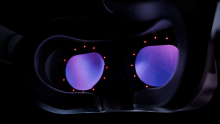 Somnium VR1 Visionary Edition lenses and eye-tracking sensors.
-
 Somnium VR1 Visionary Edition worn by a user.


References
- ↑ 1.0 1.1 1.2 Tomislav Bezmalinovic (2021-12-26). "Somnium VR goggles: self-sufficient, modular and open source". MIXED. https://mixed-news.com/en/somnium-vr-goggles-self-sufficient-modular-and-open-source/. Retrieved 2026-10-14.
- ↑ 2.00 2.01 2.02 2.03 2.04 2.05 2.06 2.07 2.08 2.09 2.10 Tomislav Bezmalinovic (2024-07-12). "The Somnium VR1 headset goes on sale today, starting at €1,900". MIXED. https://mixed-news.com/en/somnium-vr1-launch-date-price-specifications/. Retrieved 2026-10-14.
- ↑ 3.0 3.1 3.2 3.3 David Heaney (2025-01-03). "Somnium VR1 Starts Shipping To US As Price Increase Coming Soon". UploadVR. https://www.uploadvr.com/somnium-vr1-starts-shipping/. Retrieved 2026-10-14.
- ↑ 4.00 4.01 4.02 4.03 4.04 4.05 4.06 4.07 4.08 4.09 4.10 4.11 4.12 4.13 4.14 4.15 4.16 4.17 4.18 4.19 4.20 4.21 4.22 4.23 4.24 4.25 4.26 "Somnium Space e-shop". Somnium Space. Somnium Space. https://store.somniumspace.com/. Retrieved 2026-10-14.
- ↑ 5.0 5.1 5.2 5.3 5.4 5.5 5.6 5.7 Scott Hayden (2024-07-15). "Somnium VR1 Hands-on: Enthusiast Level PC VR at a Difficult Price Point". Road to VR. https://roadtovr.com/somnium-vr1-hands-on/. Retrieved 2026-10-14.
- ↑ 6.0 6.1 6.2 6.3 6.4 6.5 6.6 6.7 David Heaney (2024-07-21). "Somnium VR1 First Impressions: Impressive FOV With An Odd Focus Issue". UploadVR. https://www.uploadvr.com/somnium-vr1-first-impressions/. Retrieved 2026-10-14.
- ↑ 7.00 7.01 7.02 7.03 7.04 7.05 7.06 7.07 7.08 7.09 7.10 7.11 7.12 7.13 7.14 7.15 7.16 7.17 7.18 7.19 7.20 7.21 7.22 7.23 7.24 7.25 7.26 7.27 7.28 7.29 7.30 7.31 7.32 7.33 Scott Hayden (2024-06-18). "Somnium VR1 PC Headset Slated to Go on Sale June 20th with Broader Launch in July". Road to VR. https://roadtovr.com/somnium-vr1-pc-vr-headset-slated-to-go-on-sale-june-20th-with-broader-launch-in-july/. Retrieved 2026-10-14.
- ↑ Jamie Feltham (2021-12-21). "Somnium Space Plans Modular 3K Standalone Headset With XTAL Maker". UploadVR. https://uploadvr.com/somnium-space-plans-vr-headset/. Retrieved 2026-10-14.
- ↑ "Somnium Space partners with Vrgineers and Prusa Research to develop its open source "Somnium VR One" headset". Vrgineers. Vrgineers. 2022-09-12. https://vrgineers.com/press-release/somnium-space-partners-with-vrgineers-and-prusa-research-to-develop-its-open-source-somnium-vr-one-headset/. Retrieved 2026-10-14.
- ↑ Tomislav Bezmalinovic (2022-12-23). "Somnium VR1 high-end PC VR headset to be shown at CES 2023". MIXED. https://mixed-news.com/en/somnium-vr1-high-end-pc-vr-headset-to-be-shown-at-ces-2023/. Retrieved 2026-10-14.
- ↑ "Somnium VR1 Headset Development Kit available at CES 2023 (booth nr. 15167, Central Hall, Tech East)". Vrgineers. Vrgineers. 2022-12-22. https://vrgineers.com/?p=5846. Retrieved 2026-10-14.
- ↑ Tomislav Bezmalinovic (2023-05-31). "Somnium VR1 PC VR headset gets improved specs". MIXED. https://mixed-news.com/en/somnium-vr1-specifications-may-2023/. Retrieved 2026-10-14.
- ↑ David Heaney (2023-06-07). "Somnium VR1 Modular PC VR Headset Gets Wider Field Of View Before Launch". UploadVR. https://www.uploadvr.com/somnium-vr1-lens-weight-improvements/. Retrieved 2026-10-14.
- ↑ 14.0 14.1 14.2 Tomislav Bezmalinovic (2025-01-17). "Somnium VR 1: New pricing for premium PC VR headsets announced". MIXED. https://mixed-news.com/en/somnium-vr-1-price-hike/. Retrieved 2026-10-14.
- ↑ Scott Hayden (2025-01-06). "Somnium Begins Shipping VR1 PC VR Headset in the US, Announces Incoming Price Hike". Road to VR. https://roadtovr.com/somnium-begins-shipping-vr1-pc-vr-headset-in-the-us-announces-incoming-price-hike/. Retrieved 2026-10-14.
- ↑ 16.00 16.01 16.02 16.03 16.04 16.05 16.06 16.07 16.08 16.09 Scott Hayden (2025-01-17). "Somnium Space Announces New Pricing for VR1 Lineup, Putting Entry-level Headset North of $3,000". Road to VR. https://roadtovr.com/somnium-space-raises-prices-on-vr1-lineup/. Retrieved 2026-10-14.
- ↑ 17.00 17.01 17.02 17.03 17.04 17.05 17.06 17.07 17.08 17.09 17.10 17.11 17.12 17.13 17.14 17.15 "Somnium VR1 Tool - Changelog". Vrgineers Portal. Vrgineers. 2026-07-30. https://portal.vrgineers.com/user-guide/software/somnium-vr1-tool/changelog/. Retrieved 2026-10-14.
- ↑ 18.0 18.1 "Somnium VR1 Tool - Settings - Tracking". Vrgineers Portal. Vrgineers. https://portal.vrgineers.com/user-guide/software/somnium-vr1-tool/somnium-vr1-tool-ui/settings/tracking/. Retrieved 2026-10-14.
- ↑ 19.0 19.1 19.2 19.3 Skarredghost (2024-07-18). "Somnium VR1 hands-on: a high-res headset for simulators". The Ghost Howls. https://skarredghost.com/2024/07/18/somnium-vr1-hands-on-impressions/. Retrieved 2026-10-14.
- ↑ "Somnium VR1 Tool". Vrgineers Portal. Vrgineers. https://portal.vrgineers.com/user-guide/software/somnium-vr1-tool/. Retrieved 2026-10-14.
- ↑ 21.0 21.1 21.2 21.3 21.4 Sam Sprigg (2019-05-01). "Valve reveals full specs of its new Index VR headset, pre-orders to start today". Auganix. https://www.auganix.org/?p=1865. Retrieved 2026-10-14.