

VRgineers XTAL 3
More actions
| VRgineers XTAL 3 | |
|---|---|
 
| |
| Basic Info | |
| VR/AR | Virtual Reality |
| Type | Head-mounted display |
| Subtype | PC VR |
| Platform | SteamVR, OpenXR |
| Developer | VRgineers |
| Manufacturer | VRgineers |
| Announcement Date | 5 January 2022 (CES 2022) |
| Release Date | 2022 (shipping from April 2022) |
| Price | $8900 (US$8,900, VR-only version at launch; later sold by quote) |
| Website | https://vrgineers.com/xtal-3-vr-virtual-reality-headset/ |
| Versions | VRgineers XTAL 3 Mixed Reality |
| Requires | Windows 10 64-bit PC with an NVIDIA RTX-class GPU and at least 32 GB RAM |
| Predecessor | VRgineers XTAL 8K |
| Display | |
| Display | 2 x LCD binocular (fast-switching 4K LCD) |
| Resolution | 3840x2160 per-eye |
| Refresh Rate | 75 Hz at 3840x2160 per eye; 120 Hz at 2560x1440 (QHD) per eye |
| Image | |
| Field of View | 180° horizontal, 90° vertical (announced); 140° x 90° default, up to 180° x 120° maximum experimental (current spec sheet) |
| Horizontal FoV | 180° |
| Vertical FoV | 90° |
| Optics | |
| Optics | Proprietary non-Fresnel lenses with software warping; corrective lens inserts |
| Ocularity | Binocular |
| IPD Range | 56-74 mm, automatic (eye-tracking based) |
| Tracking | |
| Tracking | Inside-out (infrared cameras), Lighthouse (SteamVR), ART, OptiTrack, Polhemus, Vicon or custom |
| Eye Tracking | Yes, native 120 Hz (up to 210 Hz), one-dot calibration, foveated rendering |
| Hand Tracking | Yes, embedded Ultraleap sensor |
| Connectivity | |
| Connectivity | VirtualLink cable (5 m) or DisplayPort 1.4, USB 3.2 Gen 2, 12 V 3 A power |
| Device | |
| Dimensions | 293 x 123 x 113 mm |
| Weight | 600 g without head strap (manufacturer) |
VRgineers XTAL 3 is a virtual reality head-mounted display released in 2022. It was developed by VRgineers for professional and military pilot training and other simulation work, and was announced at CES 2022 on 5 January 2022.[1] The headset connects to a Windows PC and uses two 4K LCD panels with a resolution of 3840x2160 per eye, a 180-degree horizontal field of view and proprietary lenses that VRgineers says produce an undistorted image across that field of view.[1][2]
The VR-only model cost US$8,900 at launch and began shipping in April 2022. A version with pass-through cameras, the VRgineers XTAL 3 Mixed Reality, cost US$11,500.[3] The XTAL 3 succeeded the VRgineers XTAL 8K.[3]
Announcement and release
VRgineers presented the XTAL 3 VR and MR headsets at CES 2022 in Las Vegas. According to the company's press release, the headset was developed in cooperation with a team of international Air Force pilots, and its ergonomics were adjusted based on pilot feedback so that it could be worn for multiple hours of training.[1] VRgineers described it as "the first-ever pilot-dedicated headset on the market".[1]
MIXED reported the prices announced at the show: US$8,900 for the VR-only version and US$11,500 for the mixed reality version, with pre-orders open and shipping to start in April 2022. The same report said that sales of the older XTAL 8K would end in 2022 and that it would still cost US$4,800.[3] In its hands-on report from CES, UploadVR described the XTAL 3 as "a $10,000 headset, intended for use in enterprise and public sector training such as flight simulation."[4] A January 2023 MIXED article stated that the wired XTAL 3 had been available since April 2022 at US$8,900 for the VR version and US$11,500 for the MR version.[5]
In a review of its 2022 activities, VRgineers wrote that in April 2022 it combined a physical cockpit with the wide field-of-view mixed reality headset, integrated with the Prepar3D version 5 simulation platform from Lockheed Martin.[6]
As of September 2026, the XTAL 3 VR is still listed on the VRgineers website, where the price is available on request rather than published.[2]
Design and hardware
Display and optics
The XTAL 3 has two fast-switching 4K LCD displays with a resolution of 3840x2160 per eye.[2] The refresh rate depends on the resolution: 75 Hz at 4K per eye, or 120 Hz at QHD (2560x1440) per eye.[2][3]
VRgineers announced the field of view as 180 degrees horizontal and 90 degrees vertical, which it described as "currently the widest visual field on the market for professional simulations".[1] The current product page lists two sets of figures: 140 degrees horizontal and 90 degrees vertical as default values, and 180 degrees horizontal and 120 degrees vertical as "maximum experimental values".[2]
The optics are patented, custom-made non-Fresnel lenses.[2] In the launch announcement, VRgineers said its proprietary lenses and "advanced warping algorithms" produce undistorted images.[1] The headset accepts corrective lens inserts, so that pilots who normally wear glasses can train without glasses pressing on their nose.[1] VRgineers says it can make customized lenses based on each customer's anamnesis in cooperation with ophthalmologists.[2]
Tracking
At launch the XTAL 3 had proprietary inside-out tracking using a pair of fast-switching infrared cameras on the lower edge under the central cover. It also supported OptiTrack, ART and Vicon tracking systems, and VRgineers said it planned to add Lighthouse tracking later in 2022.[1] By January 2023, Road to VR listed support for inside-out, ART, OptiTrack, Polhemus, Vicon and Mosys tracking, as well as custom integrations.[7] The current product page lists Lighthouse (SteamVR), ART, OptiTrack, Polhemus, Vicon or custom tracking.[2]
The central cover of the headset is removable and reconfigurable. VRgineers said it can be swapped to change the headset from pure virtual reality to mixed reality, or to replace inside-out tracking with Ultraleap hand tracking.[1] Marek Polcak, CEO and co-founder of VRgineers, said: "We can assure all our clients that the XTAL 3 will be compatible with all existing and future technologies they might need while maintaining the highest levels of comfort and convenience."[1]
Eye and hand tracking
The XTAL 3 has a proprietary eye tracking system with what VRgineers calls "one-dot calibration". The system is used for automatic interpupillary distance adjustment and foveated rendering, and the gaze data can be visualized as heatmaps for behavioral analysis.[1] Polcak said that "the major bottleneck has always been the time-consuming calibration process necessary before every use of the foveated rendering feature", and that the one-dot process "creates a virtual mathematical model of the user's face".[1] The product page gives the eye tracker a native rate of 120 Hz (up to 210 Hz) and an automatic IPD range of 56-74 mm.[2]
Hand tracking is provided by an embedded Ultraleap sensor.[2]
Physical design and connectivity
The frame is made of lightweight compounds, and VRgineers says the weight was significantly reduced compared with earlier XTAL models while keeping the line's curved shape.[1] The manufacturer lists the weight as 600 g without the head strap and the dimensions as 293 x 123 x 113 mm.[2] MIXED reported a weight of 700 grams and described the headset as 30 percent lighter than its predecessor.[3]
The headset connects to the PC with a 5 m VirtualLink cable or with DisplayPort 1.4 and USB 3.2 Gen 2, and takes 12 V, 3 A power.[2] The box contains the headset, a VirtualLink cable, a VirtualLink adapter to DisplayPort and USB 3, a power source and a cleaning set.[8]
Software and system requirements
The XTAL 3 runs on Windows and supports SteamVR and OpenXR drivers.[2] MIXED reported that it works with DCS World, X-Plane 11 and Microsoft Flight Simulator.[3]
VRgineers lists these PC requirements:[8]
| Component | Requirement |
|---|---|
| Operating system | Windows 10 64-bit |
| Processor | Intel Core i7/i9 recommended |
| Memory | Minimum 32 GB RAM |
| Graphics | NVIDIA GeForce RTX 3090, 3080, 3070 Ti, 3070, 3060 Ti, 2080 Ti, 2080, 2070 or 2060, or an RTX/Quadro workstation card (A6000, A5000, A4500, A4000, A2000, 8000, 6000, 5000) |
Specifications
| Specification | XTAL 3 |
|---|---|
| Display | 2 x LCD binocular (two fast-switching 4K LCD displays)[2] |
| Resolution | 3840x2160 per-eye[2] |
| Refresh rate | 75 Hz at 4K per eye; 120 Hz at QHD (2560x1440) per eye[2][3] |
| Field of view | 180° horizontal, 90° vertical (announced)[1]; 140° x 90° default, 180° x 120° maximum experimental (current spec sheet)[2] |
| Lenses | Custom non-Fresnel lenses; corrective inserts available[2] |
| IPD range | 56-74 mm, automatic[2] |
| Eye tracking | Native 120 Hz (up to 210 Hz)[2] |
| Hand tracking | Embedded Ultraleap sensor[2] |
| Tracking | Lighthouse (SteamVR), ART, OptiTrack, Polhemus, Vicon or custom[2] |
| Connection | VirtualLink (5 m) or DisplayPort 1.4 and USB 3.2 Gen 2[2] |
| Weight | 600 g without head strap[2] |
| Dimensions | 293 x 123 x 113 mm[2] |
| Price | $8900 (US$8,900, VR-only version at launch)[3] |
Wireless module
At CES 2023, VRgineers and IMRNext announced a wireless version of the XTAL headset.[9] The headset keeps its native 4K resolution per eye when wired, but in wireless mode it runs a compressed resolution of 2560x1440 at 70 Hz per eye. A belt-worn module holds a battery pack and antennas and receives the stream over Wi-Fi 6E from an IMRNext access point connected to the PC by USB and DisplayPort.[9][10]
According to the press release, the prototype shown at CES weighed 920 grams and the final version was expected to weigh under 500 grams; the release also said the weight of the headset itself remained the same because the battery and antennas moved to the belt.[9] Road to VR reported the 920-gram figure as the weight of the prototype belt module.[7] Polcak said the wireless XTAL was intended for "machine and aircraft maintenance, rescue or firefighting operations as well as special forces training."[9] MIXED reported that existing wired XTAL 3 headsets would be upgradeable with separately sold wireless modules.[5] Delivery to pre-order customers was planned for the third quarter of 2023.[9][7]
Later XTAL 3 models
By November 2023, VRgineers was selling three headsets: the XTAL 3 VR, the XTAL 3 NEO mixed reality headset and the XTAL 3 CAVU, a premium MR-capable model. MIXED reported that customers of the company include NASA, ESA, Lockheed Martin and the U.S. Air Force.[11] VRgineers unveiled the XTAL 3 CAVU MR at I/ITSEC 2023. The company said it has a carbon-fibre construction that is lighter than "previous 700g XTAL Vrgineer headsets" and that it would reach the market in 2024 as part of VRgineers' mixed reality classroom simulators.[12]
Reception
UploadVR's David Heaney tried the XTAL 3 at CES 2022 in a demo running the DCS flight simulator. He noted that few headsets had offered a very wide field of view; the exceptions he named were earlier XTAL models (about 150 degrees) and headsets from the startup Pimax (about 170 degrees). He first tried the previous XTAL model at the booth before being moved to the XTAL 3, and wrote: "Not only was the field of view actually wider, the distortion was gone." He called the XTAL 3 "the most immersive VR headset I have ever used" and wrote that both headsets were comfortable to wear despite their large design.[4] Polcak told UploadVR that the price was mainly a function of the low-volume, high-support professional audience, and that the company was in initial talks with mass-market consumer electronics companies such as Razer, with the eventual goal of a more affordable headset at the high end of the consumer market.[4]
See also
- Virtual Reality
- Head-mounted display
- VR Headset
- VRgineers XTAL
- VRgineers XTAL 8K
- VRgineers XTAL 3 Mixed Reality
- Varjo VR-3
- Pimax 8K X
Gallery
-
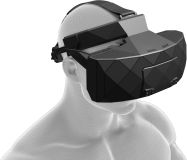 XTAL 3 VR headset on a mannequin.

References
- ↑ 1.00 1.01 1.02 1.03 1.04 1.05 1.06 1.07 1.08 1.09 1.10 1.11 1.12 1.13 "Introducing the XTAL 3 - The World's Most Advanced Virtual & Mixed Reality Simulation Headset". PR Newswire. VRgineers. 2022-01-05. https://www.prnewswire.com/news-releases/introducing-the-xtal-3---the-worlds-most-advanced-virtual--mixed-reality-simulation-headset-301454694.html. Retrieved 2026-09-27.
- ↑ 2.00 2.01 2.02 2.03 2.04 2.05 2.06 2.07 2.08 2.09 2.10 2.11 2.12 2.13 2.14 2.15 2.16 2.17 2.18 2.19 2.20 2.21 2.22 2.23 2.24 "XTAL 3 VR - Virtual Reality Headset". Vrgineers.com. VRgineers. https://vrgineers.com/xtal-3-vr-virtual-reality-headset/. Retrieved 2026-09-27.
- ↑ 3.0 3.1 3.2 3.3 3.4 3.5 3.6 3.7 Tomislav Bezmalinovic (2022-01-06). "XTAL 3: High-end VR glasses with 4K displays & 180-degree field of view". MIXED. https://mixed-news.com/en/xtal-3-high-end-vr-glasses-with-4k-displays-180-degree-field-of-view/. Retrieved 2026-09-27.
- ↑ 4.0 4.1 4.2 David Heaney (2022-01-10). "CES Hands-On: XTAL 3 Finally Delivers Distortion-Free Wide Field Of View VR". UploadVR. https://www.uploadvr.com/xtal-3-ces-hands-on/. Retrieved 2026-09-27.
- ↑ 5.0 5.1 Jan Wöbbeking (2023-01-06). "High-end VR headset Xtal 3 gets wireless version". MIXED. https://mixed-news.com/en/high-end-vr-headset-xtal-3-gets-wireless-version/. Retrieved 2026-09-27.
- ↑ "The Best of 2022: A Year with Vrgineers". Vrgineers.com. VRgineers. 2023-03-13. https://vrgineers.com/2023/03/13/the-best-of-2022-a-year-with-vrgineers/. Retrieved 2026-09-27.
- ↑ 7.0 7.1 7.2 "Vrgineers Announce Wireless Module for XTAL Ultrawide FOV Headset". Road to VR. 2023-01-06. https://www.roadtovr.com/vrgineers-wireless-module-xtal-ces-2023/. Retrieved 2026-09-27.
- ↑ 8.0 8.1 "XTAL 3 VR". XTAL Shop. VRgineers. https://xtal.pro/product/xtal-3-vr/. Retrieved 2026-09-27.
- ↑ 9.0 9.1 9.2 9.3 9.4 "XTAL Goes Wireless - The First Professional Wireless Headset from Vrgineers is Here". PR Newswire. VRgineers. 2023-01-03. https://www.prnewswire.com/news-releases/xtal-goes-wireless---the-first-professional-wireless-headset-from-vrgineers-is-here-301712205.html. Retrieved 2026-09-27.
- ↑ Henry Stockdale (2023-01-04). "CES 2023: Wireless XTAL 3 Aims For Q3 2023 Release". UploadVR. https://www.uploadvr.com/new-wireless-xtal-headset-ces-2022/. Retrieved 2026-09-27.
- ↑ Tomislav Bezmalinovic (2023-11-30). "Vrgineers is about to announce a new high-end XTAL headset". MIXED. https://mixed-news.com/en/vrgineers-series-a-investment-new-xtal-headset/. Retrieved 2026-09-27.
- ↑ "Spotlight on XTAL 3 CAVU MR: A New Era of Immersive Simulation". Vrgineers.com. VRgineers. 2023-12-20. https://vrgineers.com/2023/12/20/spotlight-on-xtal-3-cavu-mr-a-new-era-of-immersive-simulation/. Retrieved 2026-09-27.