

Viture Luma Ultra
More actions
| Viture Luma Ultra | |
|---|---|

| |
| Basic Info | |
| VR/AR | Augmented reality |
| Type | AR Glasses |
| Subtype | Phone-Powered AR, PC-Powered AR |
| Platform | Windows, macOS, Android |
| Creator | VITURE Inc. |
| Developer | VITURE Inc. |
| Manufacturer | VITURE Inc. |
| Announcement Date | 8 July 2025 |
| Release Date | Late August 2025 (first shipments); 18 November 2025 (Japan) |
| Price | US$599 (official US store, October 2026); 89,880 yen in Japan at launch |
| Website | https://www.viture.com/product/viture-luma-ultra-xr-glasses |
| Versions | Luma Ultra (single size, Regular) |
| Requires | A host device with a USB-C port that outputs video (DisplayPort Alt Mode), or the VITURE Pro Neckband |
| Predecessor | VITURE Pro |
| System | |
| Operating System | None on the glasses; content comes from the host device, the SpaceWalker app or the VITURE Pro Neckband |
| Chipset | Proprietary on-glasses chip for 6DoF calculations (per VITURE) |
| Display | |
| Display | Dual Micro-OLED (by Sony) |
| Peak Brightness | 1500 nits peak perceived brightness (VITURE figure; 1250 nits quoted at the September 2025 launch) |
| Resolution | 1920×1200 per eye (3840×1200 combined) |
| Refresh Rate | Up to 120 Hz |
| Image | |
| Field of View | 52° diagonal |
| Optics | |
| Optics | Birdbath optics |
| Ocularity | Binocular |
| IPD Range | 58-70 mm (Regular size) |
| Adjustable Diopter | Myopia adjustment up to -4.0D |
| Passthrough | Optical see-through |
| Tracking | |
| Tracking | 6DoF inside-out head tracking (front RGB camera plus two grayscale depth cameras), applied through SpaceWalker for Windows or macOS, the VITURE Pro Neckband, the INAIR Pod or SDK apps |
| Base Stations | None (inside-out via onboard cameras) |
| Hand Tracking | Supported; full gesture control requires the VITURE Pro Neckband; not yet available in desktop SpaceWalker (as of October 2026) |
| Rotational Tracking | Yes |
| Positional Tracking | Yes |
| Audio | |
| Audio | Built-in spatial speakers tuned with HARMAN AudioEFX |
| Microphone | Built-in microphone (count not stated by VITURE) |
| Camera | 1× front RGB + 2× grayscale depth (temples) |
| Connectivity | |
| Connectivity | USB-C video (DisplayPort Alt Mode) through the included magnetic cable; VITURE Pro Neckband |
| Ports | Magnetic pogo-pin glasses cable to USB-C |
| Wired Video | USB-C DisplayPort Alt Mode |
| Wireless Video | Via Pro Neckband / host apps (content origin), not native on glasses |
| WiFi | via host or Pro Neckband |
| Bluetooth | via host or Pro Neckband |
| Power | Powered by host / Pro Neckband (no internal battery) |
| Device | |
| Dimensions | Glasses (folded): 155.0 × 50.1 × 56.5 mm; Case: 191 × 85 × 85 mm |
| Weight | 83 g (glasses); 290 g (case) |
| Material | Translucent matte frame with electrochromic film lenses |
| Headstrap | Glasses-style temples (nose pads 3 sizes) |
| Color | Black (translucent accents; dynamic lighting effects) |
| Sensors | IMU; front RGB camera; dual grayscale depth cameras; wear detection |
| Input | On-frame buttons for brightness, volume and electrochromic dimming; hand gestures with the VITURE Pro Neckband |
| Size | Regular |
| Cable Length | 1.2 m (USB-C to magnetic connector) |
The Viture Luma Ultra (styled VITURE Luma Ultra) is a pair of tethered AR glasses (also marketed as XR glasses) made by VITURE, a company founded in August 2021 by former Google and Apple employees, with headquarters in San Francisco and Beijing.[1] VITURE announced it on 8 July 2025 as the top model of its Luma series and began shipping it in late August 2025; it costs US$599 on VITURE's US store and is still on sale as of October 2026.[2][3] VITURE calls it its first "true AR-capable" glasses.[2]
The glasses show the picture from a phone, computer or games console on a virtual screen through two Sony Micro-OLED panels at 1920 x 1200 per eye, with a 52-degree field of view and a rated peak perceived brightness of 1,500 nits. A front RGB camera and two grayscale depth cameras on the temples give the Luma Ultra six degrees of freedom (6DoF) head tracking, which the other three launch models of the Luma series lack, and support hand-gesture input; the tracking only works through VITURE's own SpaceWalker software, the VITURE Pro Neckband, the INAIR Pod or apps built with VITURE's SDK.[3][4] It sits above the Viture Luma and Viture Luma Pro in the series.
Overview
VITURE describes the Viture Luma Ultra as the flagship of the Luma series, an AR model with a triple-camera system that enables 6DoF tracking and hand gesture recognition.[3] Its siblings in the Luma series (Luma, Luma Pro and The Beast) lack the depth cameras, and Road to VR noted at launch that only the Luma Ultra has spatial tracking for that reason.[4] VITURE describes the combination of one RGB camera and dual grayscale depth cameras as its only such camera system in the series.[3]
The device works as an external display that connects to smartphones, personal computers and gaming consoles over USB-C, so it is a tethered AR product rather than a standalone one.[4] VITURE positioned it as the series model for power users and enterprise customers, at US$599 for the glasses.[5]
History
Company background
VITURE was founded in August 2021 by former employees of Google and Apple, with dual headquarters in San Francisco, California, and Beijing, China. TrendForce reported that it completed a seed round and a Series A round of more than US$10 million in 2022.[1] On 2 September 2025, VITURE announced two further Series B rounds totaling US$100 million.[2] On 26 February 2026, VITURE announced that it had closed another US$100 million financing round, led by Legend Capital, bringing the capital it raised within six months to more than US$200 million.[6]
AR Insider reported, citing IDC, that VITURE captured a 52 percent share of US display-glasses sales in the fourth quarter of 2024.[7]
Announcement and release
VITURE launched the Luma series on 8 July 2025 with four models: Luma, Luma Pro, Luma Ultra and The Beast.[2] The Luma Pro went on sale that day, while Android Central reported that the Luma Ultra would roll out in August 2025 for US$599 and that the rest of the lineup would follow "over the next few weeks and months."[5] TechWeLike reported the same August timing and price, and described the Ultra as built for "enterprise and prosumer workflows."[8] UploadVR's David Heaney tried all four models at AWE 2025 in June 2025, before the formal announcement.[9] VITURE said that the Luma Ultra received "strong feedback from professional demos" at Gamescom in August 2025.[2]
In its funding announcement of 2 September 2025, VITURE stated that Luma Ultra shipping "began last week", which places the first shipments in late August 2025.[2] On 17 September 2025, Road to VR reported that the glasses were priced at US$600 and shipping worldwide, with an estimated delivery of two weeks from ordering.[4] In Japan, the Luma Ultra went on sale on 18 November 2025 at 89,880 yen (tax included), through VITURE's Japanese official store, Amazon, Rakuten Ichiba and Yahoo! Shopping, with some electronics retailers such as Yodobashi Camera also stocking it.[10][11]
The series prices on VITURE's US store are US$399 for the Luma, US$499 for the Luma Pro, US$549 for The Beast and US$599 for the Luma Ultra.[3][12][13][14] In September 2025, Road to VR reported The Beast as slated to ship in November.[4] VITURE began shipping limited early batches of it in December 2025, and it became fully available through Amazon, Best Buy and VITURE's own store on 27 April 2026.[15]
Luma Cyber edition
In December 2025, VITURE released the Luma Cyber, a Cyberpunk 2077 fifth-anniversary edition made with CD Projekt Red and numbered to 10,000 units, at US$549. GameSpot described it as combining the lighter form factor of the Luma Pro with Luma Ultra technology, including 1,500-nit peak brightness, 6DoF tracking and hand gesture recognition.[16]
Patent dispute
On 15 January 2026, Xreal announced that its subsidiary Matrixed Reality Technology had sued two VITURE affiliates, Eden Future HK Limited and Beijing Xingzhe Wujiang Technology, in the US District Court for the Eastern District of Texas. The complaint asserts US Patent No. 11,988,839 ("Augmented Reality Apparatus and Optical System Therefor") and names "at least the VITURE Pro, VITURE Luma Pro, VITURE Luma Ultra" among the accused products. Xreal's announcement also referred to a preliminary injunction that the Munich Regional Court I issued on 13 November 2025 against Eden Future HK Limited under European patent EP3754409B1, which names the Viture Pro XR.[17][18] A VITURE spokesperson told Tom's Guide that "Our product does not infringe upon the cited patent in any way", called the patent "weak and questionable", and said the company was appealing the German injunction.[19]
Design and hardware
Luma Ultra uses dual Micro-OLED displays supplied by Sony behind Birdbath optics, giving a see-through AR image that can reach high brightness at the cost of more bulk than waveguide optics.[3][4] The frame is a matte translucent design with electrochromic lenses and dynamic lighting effects.[3]
The glasses weigh 83 grams, and VITURE suggests a wearing time of 3 to 4 hours.[3] They have no internal battery and draw power from the connected device through a USB-C to magnetic pogo-pin cable, 1.2 m long, which is included.[3] The box also contains three swappable nose pads (sizes 1, 2 and 3), a glasses case, a hair-friendly cover, a cloth and printed guides. VITURE gives a one-year warranty and promises lifetime firmware updates.[3]
Cameras and sensors
The Luma Ultra has these sensors:
- 1× front-facing RGB camera (center) for color image capture and environment recognition
- 2× grayscale depth cameras (temples) for inside-out depth sensing
- IMU (Accelerometer, Gyroscope) for motion tracking
- Wear detection
These enable on-glasses 6DoF calculation (positional and rotational) and gesture input when used with SpaceWalker, the VITURE Pro Neckband or SDK apps on supported platforms.[3][20] UploadVR described the temple cameras as greyscale fisheye cameras for 6DoF head tracking and hand tracking.[9]
VITURE's buying guide addresses camera privacy. When no app is running, the glasses work in what VITURE calls a "dumb monitor" mode. An indicator light turns on when the front camera is active, the front camera works only when the user enables it, and the side grayscale cameras are activated only for 6DoF tracking and by default capture nothing else.[20]
Display and optics
The Luma Ultra uses Sony micro-OLED panels that VITURE describes as "never-before-seen" displays, with an image "50% sharper" than the earlier VITURE Pro.[3] At launch the glasses were rated at 1,250 nits peak brightness.[4][5] Japanese launch coverage in November 2025 already quoted 1,500 nits, and VITURE's product page lists a peak perceived brightness of 1,500 nits for the Luma Ultra, against 1,000 nits for the Luma Pro.[10][3]
The device uses a birdbath optical system, in which a curved, semi-transparent mirror projects the image to the eye. Road to VR describes birdbath optics as typically cheaper to make than the slimmer waveguides of some AR glasses, and able to reach higher brightness at the expense of more bulk and weight.[4]
VITURE lists the virtual screen as 152 inches at a simulated distance of 4 meters, at up to 120 Hz and 1200p.[3] The display is SGS A+ certified for eye comfort, and the myopia adjustment has an axis adjustment to fine-tune focus.[3] The product page notes that some phones with DisplayPort Alt Mode cannot output the resolution needed for 3D video; VITURE gives the Google Pixel 8 and 9 series as examples, and says Immersive 3D needs a source that can output 4K or higher.[3] In its review, Gaming Nexus wrote that VITURE "uses the term 4K like, but it's really a very clear, bright, and vivid 1080P display".[21]
Tracking and interaction
VITURE states that the Luma Ultra is the first of its kind to have a proprietary chip that handles all 6DoF calculations on the glasses themselves, rather than on an external computing unit.[20] According to VITURE, this lets it support 6DoF with the Pro Neckband, Windows and macOS, but the tracking data still has to be applied to the image by software: either SpaceWalker or an app built with VITURE's SDK.[20] The same July 2025 guide said there was no separate 3DoF-only mode because the glasses always operate in 6DoF, although VITURE's October 2026 product page lists only 3DoF for SpaceWalker on Android and iOS (see the table below).[20][3] Gaming Nexus disputed the chip description, writing that the glasses lack "an internal chip to facilitate the processing needed for 6DoF" of the kind in the Xreal One Pro, so 6DoF needs software on a phone, computer or the Neckband.[21] UploadVR reported that none of the Luma models has built-in 3DoF when simply plugged into a phone.[9]
What the glasses can do depends on the host. VITURE lists the following support as of October 2026:[3][22][23]
| Host or software | Head tracking | Hand gestures | Notes |
|---|---|---|---|
| VITURE Pro Neckband (SpaceWalker mode) | 6DoF | Full gesture control | Both devices need the latest firmware; up to 1200p at 90 Hz[3][22] |
| SpaceWalker for Windows | 6DoF (spatial anchor) | Not yet available; VITURE says it will come in a future update | Six multi-screen layout types; 1200p at 60, 90 or 120 Hz; mirror or extended display[3] |
| SpaceWalker for macOS | 6DoF (spatial anchor) | Not yet available; VITURE says it will come in a future update | Same features as the Windows version[3] |
| SpaceWalker for Android | 3DoF only | Not supported | Requires a USB-C XR Charging Adapter or the Mobile Dock Mini[3] |
| SpaceWalker for iOS | 3DoF Pin Mode only | Not supported | Requires the USB-C XR Charging Adapter Ultra or the Mobile Dock Mini[3] |
| INAIR Pod | 6DoF | Not stated | Partnership announced at CES 2026[23] |
| Other USB-C video sources (no app) | None | None | Head-locked screen ("dumb monitor" mode)[20][9] |
VITURE's buying guide says that hand gestures work best with the Pro Neckband, and that its development team used gestures on Windows for testing, though use cases in SpaceWalker were "still being explored".[20] VITURE announced its partnership with INAIR, maker of the INAIR Pod portable spatial computing system, at CES 2026 in January 2026, citing "stable 6DoF experiences with Luma Ultra on INAIR POD".[23]
Audio and communication
The Luma Ultra has a HARMAN-tuned acoustic system, HARMAN AudioEFX, with spatial speakers in the temples; VITURE says it gives "fuller, richer sound" than the VITURE Pro. Volume has nine levels, and VITURE lists the fundamental frequency as 250 Hz ± 50.[3] The glasses also have a built-in microphone, which VITURE describes as improving communication and voice-enabled experiences; it does not state how many microphones there are.[3]
Adjustability and comfort features
The Luma Ultra has several adjustability features:
- Myopia adjustment: Built-in diopter adjustment up to -4.0D for nearsighted users.[3] A separately sold prescription lens frame covers myopia beyond -4.0D and astigmatism.[24]
- Electrochromic film lenses: One click switches the lenses from clear to nearly full blackout. VITURE lists an optical transmittance of 0.5-40%, a switching time of 0.1 seconds and haze below 1%.[3]
- Fit: Three swappable nose pad sizes are included.[3] Gaming Nexus noted angle-adjustable temples with flexible ends, though it found the angle too easy to change by accident.[21]
- Dynamic lighting: VITURE lists "new dynamic lighting effects" on the frame.[3]
- Suggested wear time: 3-4 hours.[3]
The Luma Ultra comes in one size only, Regular, for interpupillary distances of 58-70 mm; unlike the Luma Pro, it is not offered in a Large size.[3]
Software and compatibility
SpaceWalker application
The Viture Luma Ultra works with SpaceWalker, VITURE's free companion application for iOS, Android, Windows and macOS. The glasses work as a USB-C display with supported devices, and SpaceWalker adds multiple virtual screens, 3DoF or 6DoF screen pinning and "Immersive 3D", which converts 2D media to stereoscopic 3D in real time.[3][25] In Android Central's test of Immersive 3D on several Android phones, the app crashed regularly on the Samsung Galaxy S24 Ultra but ran on the OnePlus 13 and Honor Magic V3.[25]
The iOS version of SpaceWalker lists these features:[26]
- Multi-screen virtual workspace with up to three screens, and 3DoF Pin Mode
- Real-time 2D-to-3D conversion, branded "Immersive 3D" (an in-app purchase on iOS)
- A media player for 2D, side-by-side 3D, spatial and VR video, including 360-degree and 180-degree formats
- Ambient Mode, which keeps content visible while the wearer moves around
- Xbox remote play and cloud gaming, Moonlight PC streaming and streaming services such as Netflix, Disney+ and Prime Video
The iOS app requires iOS 17.0 or later; the iPhone 16e is not supported, and iPhone 14 and earlier models cannot play 3D or spatial video.[26] On the desktop versions, SpaceWalker provides 6DoF spatial anchoring for the Luma Ultra.[3]
Platform support
Luma Ultra connects over USB-C DisplayPort Alt Mode to compatible hosts (phones, tablets and PCs) and integrates most closely with the VITURE Pro Neckband, an Android-based wearable computer, for hand gestures and mobile use.[3][22] VITURE lists these compatible device types and accessories:[3]
- Personal computers running Windows or macOS
- Smartphones and tablets with DisplayPort Alt Mode over USB-C
- Handheld gaming PCs, including the Steam Deck and Steam Deck OLED, ROG Ally and ROG Xbox Ally models, Legion Go models, Claw, AYANEO, GPD Win, Odin, Loki and OneXPlayer devices
- Nintendo Switch and Switch 2 through the Mobile Dock Mini, Pro Mobile Dock or USB-C XR Charging Adapter Ultra
- PlayStation and Xbox consoles through the Pro Mobile Dock (HDMI), or by remote play on the Pro Neckband
- VITURE Pro Neckband (standalone Android-based accessory)
As of October 2026, full gesture control requires the VITURE Pro Neckband, and gesture tracking on Windows and macOS is still listed as a future update.[3]
Development
VITURE offers two developer kits that cover the Luma Ultra:[27]
- VITURE XR SDK for Unity: for building apps that run on the VITURE Neckband, with 6DoF tracking, hand tracking and native Unity XR integration.
- VITURE XR Glasses SDK: a cross-platform toolkit for Android, Linux, Windows and macOS with APIs for 3DoF and 6DoF tracking, raw IMU data, camera access and device control.
The Luma Ultra product page lists 6DoF head tracking and access to both the RGB and grayscale cameras through the glasses SDK.[3] VITURE said in July 2025 that the first Unity SDK for the Pro Neckband would offer full hand gesture support and that a Windows SDK might follow later.[20]
Technical specifications
| Category | Spec |
|---|---|
| Display | Dual Micro-OLED (Sony); 1920×1200 per eye (3840×1200 combined); up to 120 Hz; ≥100,000:1 contrast; 108% sRGB[3] |
| Optics | Birdbath optics (see-through AR)[4] |
| Field of view | 52° diagonal[3][9] |
| Peak brightness | Up to 1500 nits (perceived peak, VITURE figure; 1250 nits at launch)[3][4] |
| Brightness control | 9 levels[3] |
| Virtual screen size | 152 inches at a simulated 4-meter distance[3] |
| 3D support | Binocular fusion; 2D and 3D display[3] |
| Myopia adjustment | Up to -4.0D, with axis adjustment; SGS A+ eye-care certification[3] |
| IPD range | 58-70 mm (Regular size)[3] |
| Audio | Built-in spatial speakers; HARMAN AudioEFX; fundamental frequency 250 Hz ± 50; 9-level volume[3] |
| Microphone | Built-in[3] |
| Electrochromic film | 0.5-40% optical transmittance; haze below 1%; 0.1 s switching[3] |
| Cameras and sensors | 1× RGB (front), 2× grayscale depth (temples); IMU; wear detection[3] |
| Tracking | On-glasses 6DoF calculation; applied through SpaceWalker, the Pro Neckband or SDK apps[20] |
| Connectivity | Magnetic pogo-pin cable to USB-C (DisplayPort Alt Mode)[3] |
| Power | No internal battery; powered by the host or the Pro Neckband[3] |
| Weight | 83 g (glasses); 290 g (case)[3] |
| Dimensions (glasses) | Folded: 155.0 × 50.1 × 56.5 mm[3] |
| Dimensions (case) | 191 × 85 × 85 mm[3] |
| Cable length | 1.2 m (USB-C to magnetic connector)[3] |
| Suggested wear time | 3-4 hours[3] |
| Warranty | 1 year; lifetime firmware updates[3] |
| Price | US$599 (official US store, October 2026)[3] |
Model comparison
The table below summarizes the main differences between the Luma Ultra and the other models of the Luma series as listed on VITURE's product pages in October 2026.
| Feature | Luma | Luma Pro | Luma Ultra | The Beast |
|---|---|---|---|---|
| Price (USD) | $399[12] | $499[13] | $599[3] | $549[14] |
| Virtual display | 146"[12] | 152"[13] | 152"[3] | 174"[14] |
| Resolution / FOV | 1200p per eye; 50° FOV[12] | 1200p per eye; 52° FOV[13] | 1200p per eye; 52° FOV[3] | 1200p per eye; 58° FOV[14] |
| Peak brightness | 1000 nits[12] | 1000 nits[13] | 1500 nits (1250 nits at launch)[3] | 1250 nits[15] |
| Cameras | None[12] | Front RGB camera[13] | Front RGB + dual grayscale depth for 6DoF + hand gestures[3] | RGB camera[14] |
| Head tracking | 3DoF in SpaceWalker (software)[12] | 3DoF (software)[20] | 6DoF (on-glasses calc) across Windows/macOS/Pro Neckband[20] | Native 3DoF[14] |
| Myopia adjustment | -6.0D[12] | -4.0D[13] | -4.0D[3] | None[14] |
| Sizes | Regular (IPD 56-72 mm)[12] | Regular and Large[13] | Regular only[3] | Regular and Large[14] |
| Key features | Entry model, direct USB-C connection[12] | RGB lighting effects, two frame sizes[13] | Full AR, hand gestures, enterprise-focused[3] | Largest FOV, built-in 3DoF, aluminum-magnesium frame[14] |
Market position and enterprise use
Road to VR described the Luma Ultra as aimed at "prosumers, enterprise and business professionals" who want a portable personal workspace, and Android Central called it the model for "power users and enterprise folks".[4][5] At US$599 it is the most expensive model of the Luma series, US$200 more than the base Luma.[3][12]
At launch, TechWeLike listed AI training, virtual walkthroughs and spatial collaboration as target uses, and reported that VITURE was "working closely with partners including NVIDIA, Harvard, and Stanford" on spatial computing and enterprise applications for the Luma Ultra and The Beast.[8] VITURE's own buying guide named NVIDIA and Stanford University as partners and said a VITURE for Business page would follow.[20]
At CES 2026 in January 2026, VITURE showed the Luma Ultra at NVIDIA's exhibit and described it as extending "into enterprise-grade XR with full 6DoF and hand-gesture tracking". The company also said it was collaborating with NVIDIA and Stanford Medicine on XR and AI applications in healthcare, as part of NVIDIA's XR and AI initiative (NVIDIA XR AI).[23]
Accessories
VITURE sells these optional accessories for the Luma Ultra; prices are from its US store on 17 October 2026.[3]
| Accessory | Price (USD) | Purpose |
|---|---|---|
| VITURE Pro Neckband | $328 (list $399) | Android-based wearable computer; required for full hand gesture control; 6DoF in SpaceWalker mode[22] |
| VITURE Mobile Dock Mini | $99 | Pocket-sized dock with a 10,000 mAh battery for Switch and Switch 2 that doubles as a USB-C hub; enables SpaceWalker features on iOS[3][28] |
| VITURE Pro Mobile Dock | $99 (list $129) | HDMI input for the Switch, Switch 2, PlayStation and Xbox; co-op gaming[3][29] |
| USB-C XR Charging Adapter Ultra | $89 | Enables 3DoF Pin Mode and other SpaceWalker features on iOS[3] |
| VITURE x 8BitDo Ultimate Mobile Gaming Controller | $59 (list $79) | Controller for Android phones[3] |
| VITURE Luma Prescription Lens Frame With Lenses | $79 | Custom lenses for myopia beyond -4.0D or for astigmatism[3] |
| Lens Shade for VITURE Beast & Luma Series (Regular) | $9 (list $19) | Blocks outside light[3] |
The VITURE Pro Neckband is a standalone Android computer with up to 12 GB of RAM and 256 GB of storage, Wi-Fi 6E and Bluetooth 5.2, and a 3,280 mAh battery that VITURE rates for four or more hours of video playback, remote play or cloud gaming.[22] The VITURE Mobile Dock Mini opened for pre-order on 6 August 2026; VITURE states that it works with every VITURE XR glasses model.[28] VITURE also sells a Luma Ultra Dock Pack that bundles the glasses with the Pro Mobile Dock for US$698, against a combined list price of US$767.[29]
Images


Retail availability
The Viture Luma Ultra is sold through VITURE's official website, which offers free shipping within the US, worldwide shipping and 30-day returns.[3] VITURE named Best Buy, AT&T, Micro Center and B&H among the retail partners for its products in September 2025.[2] In Japan it launched through VITURE's Japanese official store, Amazon, Rakuten Ichiba, Yahoo! Shopping and some electronics retailers.[11] It comes in one size (Regular, IPD 58-70 mm).[3]
Reception
Coverage at launch highlighted the Sony micro-OLED panels and VITURE's "4K-like" claim, and that the Luma Ultra targets spatial computing with 6DoF, dual depth cameras and hand gestures.[5][4] UploadVR's David Heaney, who tried all four Luma series models at AWE 2025, wrote that their brightness "made for a noticeably more vibrant virtual screen than Xreal One Pro".[9]
Gaming Nexus scored the Luma Ultra 7.5 ("Above Average") in December 2025. Reviewer John Yan found it comfortable for a few hours at a time and praised the picture for media, but wrote that "You can definitely see the jagged edges of text". With the Neckband he found 6DoF "OK", though the pinned play area often moved away from where he had placed it, and hand tracking took a few tries to register a grab. He also found that the prescription lenses did not stay on the glasses well. He called it a developer device and advised buyers who did not need 3DoF or 6DoF to wait for The Beast.[21]
Writing for 9to5Mac in February 2026, Ben Lovejoy said that with the added position tracking and cameras, virtual monitors were "dramatically better at remaining where you put them", though "There is still a small amount of drift". He found the glasses comfortable for many hours at a time, noted that the myopia adjustment had dropped to -4.0D from the -5.0D of the earlier VITURE glasses he had used, and concluded that the Luma Ultra "doesn't quite deliver the solidity I'm waiting for, but both comfort and price are massive advantages."[30]
Sportskeeda's Angshuman Dutta called the Luma Ultra "one of the best AR glasses with a display that money can currently buy in this market", but found the speakers struggled in noisy places and was concerned about the long-term sturdiness of the plastic translucent temples. He wrote that the glasses need the Pro Neckband "to function best".[24]
See also
Gallery
-
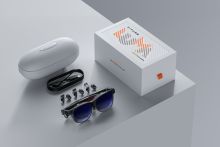 VITURE Luma Ultra glasses and packaging.

External links
References
- ↑ 1.0 1.1 "VITURE Unveiled New Micro OLED XR Smart Glasses". TrendForce. 2025-07-16. https://www.trendforce.com/news/2025/07/16/news-viture-unveiled-new-micro-oled-xr-smart-glasses/. Retrieved 2026-10-17.
- ↑ 2.0 2.1 2.2 2.3 2.4 2.5 2.6 "VITURE Secures $100M In Two New Series B Rounds To Lead The Future Of XR Innovation!". VITURE Blog. VITURE Inc.. 2025-09-02. https://www.viture.com/en-US/blog/viture-secures-100m-in-two-new-series-b-rounds-to-lead-the-future-of-xr-innovation. Retrieved 2026-10-17.
- ↑ 3.00 3.01 3.02 3.03 3.04 3.05 3.06 3.07 3.08 3.09 3.10 3.11 3.12 3.13 3.14 3.15 3.16 3.17 3.18 3.19 3.20 3.21 3.22 3.23 3.24 3.25 3.26 3.27 3.28 3.29 3.30 3.31 3.32 3.33 3.34 3.35 3.36 3.37 3.38 3.39 3.40 3.41 3.42 3.43 3.44 3.45 3.46 3.47 3.48 3.49 3.50 3.51 3.52 3.53 3.54 3.55 3.56 3.57 3.58 3.59 3.60 3.61 3.62 3.63 3.64 3.65 3.66 3.67 3.68 3.69 3.70 3.71 3.72 3.73 3.74 3.75 "VITURE Luma Ultra XR/AR Glasses". VITURE. VITURE Inc.. https://www.viture.com/product/viture-luma-ultra-xr-glasses. Retrieved 2026-10-17.
- ↑ 4.00 4.01 4.02 4.03 4.04 4.05 4.06 4.07 4.08 4.09 4.10 4.11 Scott Hayden (2025-09-17). "VITURE Launches 'Luma Ultra' AR Glasses with Sony Micro-OLED Panels". Road to VR. https://www.roadtovr.com/viture-luma-ultra-ar-glasses-release-oled/. Retrieved 2026-10-17.
- ↑ 5.0 5.1 5.2 5.3 5.4 Jay Bonggolto (2025-07-09). "VITURE's new smart glasses lineup is here, and it's not holding back". Android Central. https://www.androidcentral.com/gaming/virtual-reality/vitures-new-smart-glasses-lineup-is-here-and-its-not-holding-back. Retrieved 2026-10-17.
- ↑ "VITURE Starts 2026 Strong with Another $100M Raise, Surpassing $200M in Six Months". VITURE Blog. VITURE Inc.. 2026-02-26. https://www.viture.com/blog/viture-starts-2026-strong-with-another-100m-raise-surpassing-200m-in-six-months. Retrieved 2026-09-27.
- ↑ Mike Boland (2025-08-14). "The Art of Display Glasses: Hands-On with VITURE Luma Pro". AR Insider. https://arinsider.co/2025/08/14/the-art-of-display-glasses-hands-on-with-viture-luma-pro/. Retrieved 2026-10-17.
- ↑ 8.0 8.1 Analie Cruz (2025-07). "Viture Luma Pro XR Glasses Available Now With More Models Coming Soon". TechWeLike. https://www.techwelike.com/2025/07/viture-luma-pro-xr-glasses/. Retrieved 2026-10-17.
- ↑ 9.0 9.1 9.2 9.3 9.4 9.5 David Heaney (2025-07-21). "Viture's 'The Beast' Display Glasses Have Industry-Leading FOV & Brightness". UploadVR. https://www.uploadvr.com/viture-luma-viture-the-beast-display-glasses-announce-preorders/. Retrieved 2026-10-17.
- ↑ 10.0 10.1 酒井隆文 (2025-11-18). "VITURE、ソニー製有機ELパネルのスマートグラス3種". AV Watch. Impress. https://av.watch.impress.co.jp/docs/news/2064179.html. Retrieved 2026-10-17.
- ↑ 11.0 11.1 "VITURE、新型ARグラス3モデル「Luma Ultra」「Luma」「Beast」を発表 ソニー製OLEDパネル採用". MoguLive. 2025-11-20. https://www.moguravr.com/?p=280269. Retrieved 2026-10-17.
- ↑ 12.00 12.01 12.02 12.03 12.04 12.05 12.06 12.07 12.08 12.09 12.10 "VITURE Luma XR Glasses". VITURE. VITURE Inc.. https://www.viture.com/en-US/product/viture-luma-xr-glasses. Retrieved 2026-10-17.
- ↑ 13.0 13.1 13.2 13.3 13.4 13.5 13.6 13.7 13.8 "VITURE Luma Pro XR Glasses". VITURE. VITURE Inc.. https://www.viture.com/en-US/product/viture-luma-pro-xr-glasses. Retrieved 2026-10-17.
- ↑ 14.0 14.1 14.2 14.3 14.4 14.5 14.6 14.7 14.8 "VITURE Beast XR Glasses". VITURE. VITURE Inc.. https://www.viture.com/en-US/product/viture-beast-xr-glasses. Retrieved 2026-10-17.
- ↑ 15.0 15.1 Scott Hayden (2026-04-27). "VITURE's Widest Field-of-view XR Glasses are Now Available at Amazon & Best Buy". Road to VR. https://www.roadtovr.com/vitures-widest-field-of-view-ar-glasses-are-now-available-at-amazon-best-buy/. Retrieved 2026-09-27.
- ↑ Steven Petite (2025-12-10). "Viture Reveals High-Tech Cyberpunk 2077 Limited-Edition XR Glasses". GameSpot (via Yahoo Tech). https://tech.yahoo.com/ar-vr/articles/viture-reveals-high-tech-cyberpunk-140000605.html. Retrieved 2026-09-27.
- ↑ "XREAL Files U.S. Patent Infringement Lawsuit against Viture to Defend Foundational Augmented Reality Technology". PR Newswire. XREAL. 2026-01-15. https://www.prnewswire.com/news-releases/xreal-files-us-patent-infringement-lawsuit-against-viture-to-defend-foundational-augmented-reality-technology-302662707.html. Retrieved 2026-10-17.
- ↑ Scott Hayden (2026-01-16). "Google's Leading AR Glasses Partner XREAL Files Patent Lawsuit Against VITURE". Road to VR. https://www.roadtovr.com/google-ar-xreal-patent-lawsuit-viture/. Retrieved 2026-10-17.
- ↑ Scott Younker (2026-01-16). "Viture fires back at Xreal lawsuit, calling it 'weak and questionable'". Tom's Guide. https://www.tomsguide.com/computing/smart-glasses/viture-fires-back-at-xreal-lawsuit-calling-it-weak-and-questionable. Retrieved 2026-10-17.
- ↑ 20.00 20.01 20.02 20.03 20.04 20.05 20.06 20.07 20.08 20.09 20.10 20.11 "The Ultimate Guide To Choosing Your New VITURE Glasses: Luma Pro, Luma Ultra, Luma, And The Beast!". VITURE Blog. VITURE Inc.. 2025-07-17. https://www.viture.com/en-US/blog/the-ultimate-guide-to-choosing-your-new-viture-glasses-luma-pro-luma-ultra-luma-and-the-beast. Retrieved 2026-10-17.
- ↑ 21.0 21.1 21.2 21.3 John Yan (2025-12-30). "VITURE Luma Ultra". Gaming Nexus. https://www.gamingnexus.com/Article/16314/VITURE-Luma-Ultra/. Retrieved 2026-10-17.
- ↑ 22.0 22.1 22.2 22.3 22.4 "VITURE Pro Neckband". VITURE. VITURE Inc.. https://www.viture.com/en-US/product/viture-pro-neckband. Retrieved 2026-10-17.
- ↑ 23.0 23.1 23.2 23.3 "VITURE Introduces The Beast, Its New Flagship XR Glasses Redefining Clarity and Ultra-Wide Immersion". PR Newswire (via Yahoo Finance). VITURE. 2026-01-06. https://finance.yahoo.com/news/viture-introduces-beast-flagship-xr-140000498.html. Retrieved 2026-09-27.
- ↑ 24.0 24.1 Angshuman Dutta (2026-01-08). "Viture Luma Ultra Review: A stunning display and almost all the right ingredients". Sportskeeda. https://tech.sportskeeda.com/wearables/viture-luma-ultra-review. Retrieved 2026-10-17.
- ↑ 25.0 25.1 Nicholas Sutrich (2025-07-17). "Viture's Immersive 3D video is the kind of voodoo magic I expect from XR glasses". Android Central. https://www.androidcentral.com/gaming/virtual-reality/viture-immersive-3d-video. Retrieved 2026-10-17.
- ↑ 26.0 26.1 "SpaceWalker by VITURE". App Store. Apple. https://apps.apple.com/us/app/spacewalker-by-viture/id6450915765. Retrieved 2026-10-17.
- ↑ "VITURE Developer". VITURE. VITURE Inc.. https://www.viture.com/en-US/developer. Retrieved 2026-10-17.
- ↑ 28.0 28.1 "VITURE Marks Five Years with the 5th Anniversary Collection, Led by VITURE Pro 2". PR Newswire. VITURE. 2026-08-06. https://www.prnewswire.com/news-releases/viture-marks-five-years-with-the-5th-anniversary-collection--led-by-viture-pro-2-the-classic-evolved-sharper-than-ever-with-ultraclarity-3-0--302844915.html. Retrieved 2026-09-27.
- ↑ 29.0 29.1 "VITURE Luma Ultra Dock Pack". VITURE. VITURE Inc.. https://www.viture.com/en-US/product/viture-luma-ultra-dock-pack. Retrieved 2026-10-17.
- ↑ Ben Lovejoy (2026-02-06). "The Viture Luma Ultra is almost the Apple Vision Air I'd like to see". 9to5Mac. https://9to5mac.com/2026/02/06/the-viture-luma-ultra-is-almost-the-apple-vision-air-id-like-to-see/. Retrieved 2026-10-17.