

Varjo VR-3
More actions
| Varjo VR-3 | |
|---|---|

| |
| Basic Info | |
| VR/AR | Virtual Reality |
| Type | Head-mounted display |
| Subtype | PC-Powered VR, Enterprise VR |
| Platform | SteamVR, Varjo Base[1] |
| Creator | Varjo[2] |
| Developer | Varjo[2] |
| Manufacturer | Varjo[3] |
| Announcement Date | December 1, 2020[2] |
| Release Date | 2021; shipping worldwide by March 4[4] |
| Price | Announced: US$3,395 hardware; subscription from US$795 for one year (historical)[2] |
| Website | https://varjo.com/products/varjo-vr-3 |
| Versions | Varjo VR-3[3] |
| Requires | Compatible Windows PC, Varjo Base 3.0-4.14, powered headset adapter(s); base stations for SteamVR Tracking[5][1] |
| Predecessor | Varjo VR-2, Varjo VR-2 Pro[6] |
| Successor | XR-4 Series (manufacturer replacement range)[7] |
| System | |
| Operating System | Windows 10/11 (host PC; compatibility subject to end-of-support limits)[5][7] |
| CPU | Host PC; documented minimum includes Intel Core i7-9700K or AMD Ryzen 7 2700X[5] |
| GPU | Host PC; documented supported minimum examples include NVIDIA GeForce RTX 2080 Ti, RTX 3070, RTX 4070 Ti or Quadro RTX 6000[5] |
| Storage | |
| Storage | Host PC; 2 GB for Varjo Base installation[5] |
| Memory | 32 GB host RAM in the documented desktop requirements[5] |
| Display | |
| Display | Two uOLED focus displays and two LCD context displays[8][3] |
| Resolution | Focus: 1920 × 1920 per eye; context: 2880 × 2720 per eye[3] |
| Pixel Density | Manufacturer specifies 70 PPD in the 27° × 27° focus area and over 30 PPD in the peripheral area[3] |
| Refresh Rate | 90 Hz (manufacturer specification)[9] |
| Image | |
| Field of View | 115° horizontal; product book also specifies 134° diagonal at 12 mm eye relief[9] |
| Horizontal FoV | 115° (manufacturer specification)[3] |
| Peak Pixel Density | 70 PPD focus area (manufacturer technical table)[3] |
| Foveated Rendering | Gaze-based or fixed, with compatible application rendering paths[8] |
| Optics | |
| Optics | Non-Fresnel, aspheric lenses; optically combined focus and context images[3][9][10] |
| Ocularity | Binocular[8] |
| IPD Range | 59-71 mm automatic adjustment (current exact-model specification)[3] |
| Passthrough | No video passthrough[9] |
| Tracking | |
| Tracking | Positional and rotational SteamVR Tracking; third-party tracking integrations also documented[11] |
| Base Stations | SteamVR 2.0 recommended or 1.0; required for SteamVR Tracking[11] |
| Eye Tracking | Integrated; up to 200 Hz, with manufacturer-claimed sub-degree accuracy[3] |
| Hand Tracking | Integrated Ultraleap module; Gemini (v5)[12][3] |
| Body Tracking | Compatible external Vive Trackers; application integration required[11] |
| Rotational Tracking | Yes, with configured tracking system[11] |
| Positional Tracking | Yes, with configured tracking system[11] |
| Tracking Volume | Depends on tracking system and base-station layout[11] |
| Play Space | Seated/stationary or movement in a room, with appropriate base-station coverage[11] |
| Audio | |
| Audio | External headphones via 3.5 mm AHJ (CTIA) connector[13] |
| Microphone | Supports a microphone in connected headphones[13] |
| 3.5mm Audio Jack | Yes, front left side; microphone support[13] |
| Camera | Eye tracking cameras and integrated hand-tracking module; no video passthrough[14][12][9] |
| Connectivity | |
| Connectivity | Two 5 m USB-C headset cables to adapter(s); desktop: two DisplayPort 1.4 and two USB-A 3.0/3.1 connections[9][5] |
| Ports | 3.5 mm headset audio connector; USB-C cable connections[15] |
| Wired Video | Yes; two DisplayPort connections through adapter(s)[1] |
| Power | External power supply unit(s) connected to headset adapter(s)[1] |
| Device | |
| Dimensions | Width 200 mm, height 170 mm, length 300 mm (manufacturer specification)[3] |
| Weight | 558 g headset plus 386 g headband; 944 g combined by addition[9] |
| Material | Replaceable polyurethane face cushions; other construction materials not specified here[3] |
| Headstrap | 3-point precision fit headband with rear/front wheels and side knobs[3][16] |
| Sensors | Integrated eye tracker and Ultraleap hand-tracking module[3] |
| Input | Compatible SteamVR controllers; hand tracking; Action and Menu headset buttons[17][12][18] |
| Compliance | Manufacturer guide: EU Radio Equipment Directive; FCC Part 15 Class A; Canadian ICES-003 and RSS-247; RoHS[15] |
The Varjo VR-3 is a PC-tethered virtual reality head-mounted display developed by Varjo for professional design, training, simulation and research. Announced on December 1, 2020 alongside the Varjo XR-3, it was reported to be shipping worldwide by March 4, 2021. Its Bionic Display combines a high-resolution central micro-OLED image with a wider LCD context image for each eye. Integrated eye tracking, Ultraleap hand tracking and automatic lens-spacing adjustment are part of the headset.[2] [4] [3]
Varjo has discontinued production of the VR-3, and general support ended on January 1, 2026. The manufacturer's final compatible ordinary software release is Varjo Base 4.14. Existing use and a separately offered business compatibility package have different support limits.[7]
History and development
Varjo was founded in 2016 and is headquartered in Helsinki, Finland. Its goal was to combine virtual and real imagery at what it called "human-eye resolution". Its first commercial headset, the Varjo VR-1, was announced on February 19, 2019; Varjo said that sales and shipping would begin immediately. The Varjo VR-2 and Varjo VR-2 Pro followed in October 2019 with changes to the display, calibration and software integration; integrated Ultraleap hand tracking was a VR-2 Pro feature. The VR-3 retained the enterprise focus of these products.[19] [20] [6]
The December 2020 announcement introduced the VR-3 and XR-3 together. It described a larger high-resolution focus region, a 90 Hz refresh rate, integrated Ultraleap tracking, a three-point headband and active cooling. The launch announcement accepted orders immediately and scheduled shipments for early 2021; the March 2021 shipping report establishes actual availability rather than an exact first-delivery date.[2] [4]
| Date | Documented event |
|---|---|
| December 1, 2020 | VR-3 announced with XR-3; enterprise ordering opened and shipments were planned for early 2021.[2] |
| March 4, 2021 | Contemporary report stated that both models were shipping worldwide.[4] |
| March 8, 2021 | Varjo Base 3.0 release notes introduced full VR-3 support, single-dot foveation calibration, Gemini Preview hand tracking, and 200 Hz eye-tracking APIs.[21] |
| December 15, 2021 | Base 3.4 added VR-3 virtual monitors and Workspace, Simple rendering, single-adapter support and OpenXR Vive Tracker support.[21] |
| January 1, 2026 | General support ended. Varjo states that production is discontinued and the headsets are permanently sold out.[7] |
Design philosophy
The VR-3 is a VR display for a host workstation. Varjo promoted it for tasks involving small text and detailed visual models, such as cockpit instruments and design review. These are intended uses; the headset's resolution specification does not by itself establish training effectiveness or visual equivalence to the physical world.[2]
The VR-3 shares its focus/context display arrangement with the XR-3 but does not provide that model's stereo video passthrough, LiDAR depth sensing or camera-based inside-out tracking. It can display an entirely virtual scene while SteamVR base stations, or an integrated third-party tracking system, supply its position and orientation.[9] [11]
Display technology
Bionic Display system
There are four physical displays: a micro-OLED focus display and an LCD context display for each eye. The images are optically combined. The high-resolution hardware focus area occupies the center of the display; a gaze-following software render window is a separate part of the rendering system.[8] [10]
| Display area | Panel resolution per eye | Manufacturer-specified angular detail |
|---|---|---|
| Focus | 1920 × 1920 pixels, micro-OLED | 70 pixels per degree across a 27° × 27° area |
| Context | 2880 × 2720 pixels, LCD | Over 30 pixels per degree in the peripheral area |
These are Varjo's technical specifications. Its promotional text also describes the central region as "over 70 PPD". The two resolutions describe separate images blended through the optics, rather than a single rectangular panel whose dimensions can be obtained by adding them.[3]
The manufacturer specifies a 90 Hz refresh rate and color figures of 99% sRGB and 93% DCI-P3. Those color-space figures are different from a measurement of the accuracy of a particular rendered stimulus; the software rendering path and calibration remain relevant for research and design work.[9]
Field of view
Varjo specifies 115° horizontally. Its Product Book available in the 2023 exhibitor archive also lists 134° diagonally at 12 mm eye relief. Eye relief is part of that diagonal specification. The earlier VR-2/VR-2 Pro sheet listed 87° without identifying an axis, so it does not establish a measured horizontal percentage improvement.[9] [22]
Optical system
Varjo describes the VR-3 lenses as non-Fresnel and aspheric. The headset automatically adjusts the interpupillary spacing; the current exact-model product page gives a range of 59-71 mm. Most single-vision eyeglasses can be worn inside the headset according to the fit documentation, although fit and eye-tracking calibration still need checking for the individual wearer.[3] [9] [16]
The Product Book's comparison table gives 57-73 mm for the VR-3, while the exact-model page specifies 59-71 mm. These are differing manufacturer documents, rather than evidence that every unit or software configuration supports a wider range.[9] [3]
Eye tracking
Sampling, calibration and data
The integrated eye tracker supports output up to 200 Hz. Varjo's stated sub-degree accuracy is a manufacturer claim, not a guarantee for every user or gaze position. The documented calibration choices include a single-dot method for general use and a more detailed method for demanding gaze-data applications. Varjo warns that eye tracking is not guaranteed to work with every eye condition or medical device, even though it is designed to accommodate most single-vision eyeglasses.[3] [23]
The native API exposes per-eye and combined gaze rays, timestamps, tracking status and an IPD estimate. It distinguishes valid tracking from missing or compromised eye data. Pupil diameter, iris diameter and eye-openness estimates in the 4.14 documentation are experimental and carry no accuracy guarantee.[14]
Software version matters for data collection: before Varjo Base 4.1, the native gaze initialization defaulted to 100 Hz; from 4.1 it defaults to the connected headset's maximum supported output frequency. Applications can request a specific frequency and either raw or smoothed gaze output. The "Allow eye tracking" privacy control gates native gaze-data access, but the documentation says it does not prevent the system from using eye tracking for foveated rendering.[14]
Foveated rendering
Foveated rendering depends on the application and runtime path. Varjo's quad-view method renders two context views and two smaller focus views; the focus views can follow the user's gaze or stay fixed. Quad views are logical software views, independent of the physical display arrangement. OpenVR applications and OpenXR applications that do not implement the relevant Varjo extensions use stereo rendering.[8]
Mismatch between the two rendered views can produce a visible square or blending artifacts, particularly with differing levels of detail and some screen-space or temporal effects. Simple render disables the hardware focus displays while retaining the possibility of quad-view rendering. It therefore changes how the headset uses its displays without automatically changing an application to stereo rendering.[8]
Processing requirements
The headset uses a Windows workstation for application rendering. Varjo's documented desktop requirements, checked in October 2026, distinguish minimum and recommended examples. They describe a compatible setup, rather than guaranteeing that every scene will sustain 90 frames per second. General support has ended, so later operating-system and driver changes require separate attention to the lifecycle limits below.[5] [7]
| Component | Documented minimum | Documented recommendation |
|---|---|---|
| CPU | Eight-core processor; Intel Core i7-9700K or AMD Ryzen 7 2700X are examples | Premium eight-core processor; Intel Core i9-9900K, Xeon W-2245 or AMD Ryzen 7 3700X are examples |
| GPU | NVIDIA GeForce RTX 2080 Ti, RTX 3070, RTX 4070 Ti or Quadro RTX 6000 | NVIDIA GeForce RTX 3080, RTX 4070 Ti, RTX 6000 Ada or RTX A6000 |
| Host RAM | 32 GB | 32 GB |
| Installation space | 2 GB for Varjo Base | 2 GB for Varjo Base |
| Desktop video and USB | Two DisplayPort 1.4 outputs and two USB-A 3.0/3.1 ports | Same connectivity requirements |
| Host software | Windows 10 (64-bit) or Windows 11; Varjo Base 3.0-4.14 | SteamVR is also required for SteamVR Tracking |
The table follows the manufacturer's archived-model system requirements. AMD graphics cards are listed as unsupported. Laptop GPU names alone do not establish equivalent performance: Varjo specifies dedicated-GPU routing and power requirements, and recommends simpler applications on laptops. Its documented laptop routes use compatible Mini DisplayPort adapters, Varjo laptop adapters with USB-C Alternate Mode, or a combination. A USB-C connector alone does not establish compatibility.[5]
Tracking system
SteamVR and third-party tracking
SteamVR Tracking provides headset position and rotation through external base stations. Both 1.0 and 2.0 base stations are documented; 2.0 is recommended. Up to four 2.0 stations or two 1.0 stations can operate together. Varjo recommends four 2.0 stations for movement around a room and states that two 1.0 or 2.0 stations suffice for seated or stationary use. Controllers and trackers must match the base-station generation.[11]
For example, the compatibility table lists original black Vive controllers with 1.0 stations, while blue Vive controllers and Valve Index Controllers can work with 1.0 or 2.0 stations. Compatible Vive Trackers can provide tracked external objects or body-mounted inputs when the application uses them; that does not make full-body animation a built-in VR-3 function. Varjo also documents an API for third-party positional tracking integrations.[11]
Integrated hand tracking
The Ultraleap module is built into the VR-3. Varjo Base supplies the needed sensor drivers, and the 4.14 developer documentation states that it is enabled by default without a separate Gemini software installation. Supported applications can use actions such as pinching and grabbing instead of physical controllers. The integrated module is distinct from the external Ultraleap addon sold for XR-4.[12]
Base stations, SteamVR-compatible controllers and external trackers were separate accessories, rather than items in the ordinary VR-3 sales box. Hand tracking and controller support still depend on the software being used.[17]
Audio system
The VR-3 accepts external headphones through a 3.5 mm AHJ (CTIA) connector on its front left side, including headphones with a microphone. Audio routing is handled by the host computer. The documented VR-3 package contains the headset, adapters, power supplies and cleaning cloth; it does not list integrated over-ear headphones.[13] [1] [15]
Physical design
The manufacturer's listed mass is 558 g for the headset plus a 386 g headband, totaling 944 g by addition. Its dimensions are specified as 200 mm wide, 170 mm high and 300 mm long. Active cooling and a three-point headband are documented design features. These specifications do not establish comfort for every wearer or session length.[3] [9]
The rear wheel tightens the headband, the front wheel moves the headset vertically, and side knobs adjust its position around the face. Replaceable polyurethane cushions are attached with hook-and-loop strips. The fitting instructions emphasize a secure position and a sharp image, and say that cushions from other product generations are not interchangeable.[16] [3]
Two buttons and an indicator are on the right: the Action button has an application-dependent function, while the Menu button opens the headset menu.[18]
The manufacturer user guide describes optical wipes or a microfiber lens cloth for lenses and non-abrasive antibacterial wipes for the headset and cushions. It warns against exposing the lenses to direct sunlight and against blocking ventilation. Its regulatory section identifies HS-5/HS-6, gives a 2.402-2.48 GHz radio frequency range, and lists EU radio, FCC Part 15 Class A, Canadian ICES-003/RSS-247 and RoHS compliance statements. These manufacturer declarations do not specify a Wi-Fi or Bluetooth feature set.[15]
Connectivity
Two five-meter USB-C headset cables connect to adapter hardware. In the original two-adapter arrangement each adapter connects to a DisplayPort output, a USB-A port and a separate external power supply. Later setup documentation also covers a single adapter that connects both headset cables and still needs two DisplayPort and two USB-A connections. The headset is not powered solely by a PC USB cable in either documented desktop arrangement.[9] [1]
The version 2.0 user guide illustrates two adapters and two power supplies. Base 3.4 added single-adapter support in December 2021; different package or adapter generations should therefore be checked against their own connection instructions.[15] [21]
Software platform
Varjo Base manages headset configuration, fit and eye calibration, runtime selection and presentation tools. VR-3 software integration includes OpenXR, OpenVR, Unity and Unreal Engine, with support for custom engines through Varjo's native SDK. These integration paths offer different access to focus views, gaze data and hand input.[1] [8] [14] [12]
The documented professional software range included Autodesk VRED, Prepar3D and VBS Blue IG. The original announcement positioned these integrations around design review and training. Compatibility with a particular application version or rendering feature still needs to be checked, particularly after the end of general support.[3] [2] [7]
Enterprise applications and research
Varjo marketed the VR-3 for flight simulation, automotive and industrial design, training and research. Displaying cockpit instruments, inspecting full-scale prototypes and collecting gaze data were proposed workflows. The manufacturer user guide separates such visualization and simulation uses from certification for control of aviation, industrial or medical equipment.[2] [15]
The following original studies illustrate specific research uses of the VR-3. Their findings concern the stated tasks and software configurations.
| Original research | VR-3 setup and sample | Findings and limits |
|---|---|---|
| Foveated image-quality assessment (2025)[10] | A Unity 2021.3.11f1 viewer presented seven outdoor 360° scenes to 41 participants aged 16-60; 39 completed both sessions. Participants sat on a swivel chair, explored each image for 15 seconds and rated quality. The authors disabled the physical focus displays because of a visible seam and evaluation complexity, while using gaze-based software foveation. | Gaze-weighted pooling improved FovVideoVDP predictions against subjective ratings in this dataset. The work tested image-quality metrics, rather than VR-3 training benefits or GPU savings. Score screening excluded seven or ten observers depending on the score method; optical transfer characteristics were not included in metric predictions. |
| Working-memory use during object copying (2026)[24] | Only Study 3 used the VR-3: 100 participants aged 18-51, a Vive controller, waist/ankle trackers and two Lighthouse stations. Unity 2022.3, OpenXR 1.8.2 and Varjo's Unity plugin 3.5.0 ran on Windows 10. Gaze was sampled at 200 Hz, with five-point recalibration each round or after removing the headset. | Participants copied arrangements of eight objects in 80 trials and separately completed memory-capacity and attentional-control tasks. A joint model explained about 8% of variation in spontaneous memory use. Six incomplete participants were replaced for mixed reasons including sickness, calibration problems or nonattendance. The paper's pooled N=220 includes other-headset studies, and its across-day retest used the earlier Vive setup. These are cognitive-task findings, not a headset accuracy benchmark or evidence that VR-3 improves memory. |
Subscription model and lifecycle
Historical hardware and software prices
Varjo's dated December 2020 announcement lists US$3,395 for VR-3 hardware and a required one-year subscription starting at US$795. Its Product Book in the AWE 2023 archive gives €3,395 plus €795 and states that the numeric prices are the same in euros and US dollars. A March 2021 shipping report instead quoted US$3,195. The documents do not establish an explanation for that price discrepancy; the reported figure is not a current offer.[2] [9] [4]
The subscription was a seat-based software license associated with XR-3 and VR-3. General support ended on January 1, 2026, and Varjo states that subscriptions are no longer required. Base 4.14 is the last ordinary compatible release; earlier compatible versions can continue operating without a license or login. This does not guarantee compatibility with future Windows, NVIDIA-driver or SteamVR changes. Varjo says that warranty coverage remains intact, while ordinary updates, out-of-warranty support, spare-parts sales and repairs have ended.[25] [7] [26]
Extended compatibility package
Varjo offers a separate package to business customers with a Commercial Varjo Account, covering specified SteamVR Tracking, NVIDIA-driver and Windows 11 25H2 compatibility issues and critical security patches until January 1, 2028. It excludes new Base features, general technical or SDK support, physical repairs, future GPU models and later Windows versions. The NVIDIA coverage is described as a best effort rather than a guaranteed solution for every driver issue.[26]
Comparison with XR-3
The following comparison concerns the standard VR-3 and XR-3, not later XR-4 editions. Price figures are from the dated manufacturer announcement.[2]
| Feature | Varjo VR-3 | Varjo XR-3 |
|---|---|---|
| Announced hardware and one-year subscription price | US$3,395 + from US$795 | US$5,995 + from US$1,495[2] |
| Video passthrough | Not available | Dual 12-megapixel video passthrough at 90 Hz[9] |
| LiDAR | Not available | LiDAR/RGB depth fusion[9] |
| Headset mass, excluding headband | 558 g | 594 g; each has a separately listed 386 g headband[9] |
| Mixed reality and positional tracking | Virtual display; SteamVR or integrated third-party tracking | Video-based mixed reality; SteamVR tracking or Varjo inside-out tracking (beta)[27] [11] |
| Display | Micro-OLED focus and LCD context images | Same specified Bionic Display arrangement[9] |
| Horizontal field of view | 115° | 115°[9] |
Strengths and limitations
The VR-3 combines a small, high-resolution hardware focus area with a wider context image, eye tracking and integrated hand input. Its announced hardware and subscription cost was lower than the XR-3's, and it omits that model's mixed-reality imaging system. Its 944 g combined listed mass, workstation and adapter requirements, and external SteamVR tracking equipment affect deployment.[3] [2] [9] [1] [11]
The quality and workload of a rendered scene depend on its integration path. Focus/context seams and rendering artifacts can matter in particular applications, as the manufacturer's rendering guidance and the image-quality experiment describe. Current use must also account for the stopped production and ended general support.[8] [10] [7]
Technical specifications summary
These are manufacturer specifications unless a qualification is stated.
| Specification | Details |
|---|---|
| Display | Two micro-OLED focus displays and two LCD context displays.[3] |
| Focus resolution | 1920 × 1920 per eye, covering 27° × 27°.[3] |
| Context resolution | 2880 × 2720 per eye.[3] |
| Angular resolution | 70 PPD in the focus-area technical table; over 30 PPD in the peripheral area.[3] |
| Field of view | 115° horizontal; 134° diagonal at 12 mm eye relief in the Product Book.[9] |
| Refresh rate | 90 Hz.[9] |
| Eye tracking | Integrated, up to 200 Hz; application/calibration conditions matter.[3] [14] |
| Tracking | SteamVR 1.0 or 2.0 base stations; separate third-party integrations documented.[11] |
| Mass | 558 g headset plus 386 g headband (944 g by addition).[9] |
| Historical price | Manufacturer announcement: US$3,395 hardware plus a one-year subscription from US$795; production discontinued.[2] [7] |
See Also
Gallery
-
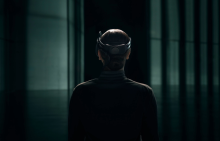 Rear view of Varjo VR-3 in use. (c) Varjo.

References
- ↑ 1.0 1.1 1.2 1.3 1.4 1.5 1.6 1.7 "Setting up XR-3 and VR-3". Varjo Support. https://support.varjo.com/hc/en-us/setting-up-xr-3-vr-3. Retrieved 2026-10-14.
- ↑ 2.00 2.01 2.02 2.03 2.04 2.05 2.06 2.07 2.08 2.09 2.10 2.11 2.12 2.13 2.14 "Varjo Launches XR-3 and VR-3 to Bring Immersive Tech to All Workplaces". Varjo. 2020-12-01. https://varjo.com/news/varjo-launches-xr-3-and-vr-3-headsets-to-bring-the-next-generation-of-immersive-technology-to-every-workplace. Retrieved 2026-10-14.
- ↑ 3.00 3.01 3.02 3.03 3.04 3.05 3.06 3.07 3.08 3.09 3.10 3.11 3.12 3.13 3.14 3.15 3.16 3.17 3.18 3.19 3.20 3.21 3.22 3.23 3.24 3.25 3.26 3.27 3.28 "Varjo VR-3". Varjo. https://varjo.com/products/varjo-vr-3. Retrieved 2026-10-14.
- ↑ 4.0 4.1 4.2 4.3 4.4 Harry Baker (2021-03-04). "Varjo XR-3 And VR-3 Headsets Now Shipping Worldwide". UploadVR. https://www.uploadvr.com/varjo-xr-3-shipping/. Retrieved 2026-10-14.
- ↑ 5.0 5.1 5.2 5.3 5.4 5.5 5.6 5.7 5.8 "System requirements for XR-3 and VR-3". Varjo Support. https://support.varjo.com/hc/en-us/xr-3-and-vr-3-system-requirements. Retrieved 2026-10-14.
- ↑ 6.0 6.1 "Varjo Announces Two New Human-Eye Resolution Virtual Reality HMDs For Professionals, Incorporating Support for SteamVR Content at Industry’s Highest Fidelity and Integrated Hand Tracking". Varjo. 2019-10-15. https://varjo.com/news/varjo-announces-two-new-human-eye-resolution-hmds-for-professional-vr-incorporating-support-for-steamvr-content-at-industrys-highest-fidelity-and-integrated-hand-tracking. Retrieved 2026-10-14.
- ↑ 7.0 7.1 7.2 7.3 7.4 7.5 7.6 7.7 7.8 "What does end-of-support for older-generation models XR-3, VR-3, and Varjo Aero mean?". Varjo Support. https://support.varjo.com/hc/en-us/end-of-support-for-older-generation-models-xr-3-vr-3-and-varjo-aero. Retrieved 2026-10-14.
- ↑ 8.0 8.1 8.2 8.3 8.4 8.5 8.6 8.7 "Achieving performance with high resolution rendering, documentation version 4.14.0". Varjo for developers. https://developer.varjo.com/docs/v4.14.0/get-started/achieving-performace-with-high-resolution-rendering. Retrieved 2026-10-14.
- ↑ 9.00 9.01 9.02 9.03 9.04 9.05 9.06 9.07 9.08 9.09 9.10 9.11 9.12 9.13 9.14 9.15 9.16 9.17 9.18 9.19 9.20 9.21 9.22 9.23 "Product Book". Varjo; AWE USA 2023 exhibitor media. https://aweusa2023.expofp.com/data/exhibitors/517179/media/Varjo_ProductBook_2023.pdf. Retrieved 2026-10-14.
- ↑ 10.0 10.1 10.2 10.3 Ali Bozorgian; Marius Pedersen; Jean-Baptiste Thomas; Mohamed-Chaker Larabi (2025-03-28). "Subjective Quality Assessment of Foveated Omnidirectional Images in Virtual Reality". IEEE Open Journal on Immersive Displays 2: 5-16. doi:10.1109/OJID.2025.3556364. Retrieved 2026-10-14.
- ↑ 11.00 11.01 11.02 11.03 11.04 11.05 11.06 11.07 11.08 11.09 11.10 11.11 11.12 "Positional tracking technologies". Varjo Support. https://support.varjo.com/hc/en-us/system-requirements-positional-tracking-technologies. Retrieved 2026-10-14.
- ↑ 12.0 12.1 12.2 12.3 12.4 "Hand Tracking, documentation version 4.14.0". Varjo for developers. https://developer.varjo.com/docs/v4.14.0/get-started/hand-tracking. Retrieved 2026-10-14.
- ↑ 13.0 13.1 13.2 13.3 "What kind of headphones can I use with Varjo headsets?". Varjo Support. https://support.varjo.com/hc/en-us/what-kind-of-headphones-can-i-use-with-varjo-headsets. Retrieved 2026-10-14.
- ↑ 14.0 14.1 14.2 14.3 14.4 "Eye tracking, documentation version 4.14.0". Varjo for developers. https://developer.varjo.com/docs/v4.14.0/native/eye-tracking. Retrieved 2026-10-14.
- ↑ 15.0 15.1 15.2 15.3 15.4 15.5 "XR-3 and VR-3 User guide, version 2.0". Varjo. https://downloads.varjo.com/docs/XR-3_VR-3_User_guide_2.0.pdf. Retrieved 2026-10-14.
- ↑ 16.0 16.1 16.2 "Fitting the headset – XR-3, VR-3, and Varjo Aero". Varjo Support. https://support.varjo.com/hc/en-us/fitting-the-headset-xr-3-vr-3-aero. Retrieved 2026-10-14.
- ↑ 17.0 17.1 "Compatible accessories". Varjo Support. https://support.varjo.com/hc/en-us/compatible-accessories. Retrieved 2026-10-14.
- ↑ "About Us". Varjo. https://varjo.com/company. Retrieved 2026-10-14.
- ↑ "Varjo Announces VR-1, World’s First Human Eye-Resolution VR Headset For Industrial Use". Varjo. 2019-02-19. https://varjo.com/news/varjo-announces-vr-1-worlds-first-human-eye-resolution-vr-headset-for-industrial-use. Retrieved 2026-10-14.
- ↑ 21.0 21.1 21.2 "Release notes – Varjo Base 4.7.1 and older". Varjo Support. https://support.varjo.com/hc/en-us/varjo-base-release-notes-4.7.1-and-older. Retrieved 2026-10-14.
- ↑ "Introducing the next level of professional VR: VR-2 and VR-2 Pro technical specifications". Varjo; Hannover Messe exhibitor archive. https://www.messe.de/apollo/hannover_messe_2020/obs/Binary/A1004612/General%20%E2%80%93%20VR-2%20and%20VR-2%20Pro%20Spec%20Sheet.pdf. Retrieved 2026-10-14.
- ↑ "Using eye tracking". Varjo Support. https://support.varjo.com/hc/en-us/using-eye-tracking. Retrieved 2026-10-14.
- ↑ Levi Kumle; Amy X. Li; Joel Kovoor; Amelia G. Rock; Emily Hesselink; Ellen Jones; Méadhbh B. Brosnan; Anna C. Nobre; Dejan Draschkow (2026-08-24). "Stable tendencies in spontaneous working memory usage during flexible behaviour". Psychonomic Bulletin & Review 33. doi:10.3758/s13423-026-02955-y. Retrieved 2026-10-14.
- ↑ "What are Varjo XR and VR subscriptions?". Varjo Support. https://support.varjo.com/hc/en-us/what-are-varjo-xr-and-vr-subscriptions. Retrieved 2026-10-14.
- ↑ 26.0 26.1 "Extended compatibility package for XR-3, VR-3, and Varjo Aero". Varjo Support. https://support.varjo.com/hc/en-us/extended-compatibility-package-xr-3-vr-3-varjo-aero. Retrieved 2026-10-14.
- ↑ "Varjo XR-3". Varjo. https://varjo.com/products/varjo-xr-3. Retrieved 2026-10-14.