

Varjo XR-3
More actions
| Varjo XR-3 | |
|---|---|

| |
| Basic Info | |
| VR/AR | Mixed Reality, Virtual Reality |
| Type | Head-mounted display |
| Subtype | PC-Powered VR |
| Platform | SteamVR, OpenXR |
| Developer | Varjo |
| Manufacturer | Varjo |
| Announcement Date | December 1, 2020[1] |
| Release Date | Shipping worldwide by March 2021[2] |
| Price | Historical pricing and subscription: see History; discontinued[3] |
| Website | https://varjo.com/products/varjo-xr-3/ |
| Versions | XR-3; XR-3 Focal Edition (close-focus cameras)[4] |
| Requires | Compatible Windows PC, powered adapters and Varjo Base[5] |
| Predecessor | Varjo XR-1 (Developer Edition)[2] |
| Successor | Varjo XR-4[6] |
| System | |
| Operating System | Windows 10/11 on host PC; compatibility depends on Varjo Base version[7] |
| Display | |
| Display | uOLED (focus) + LCD (peripheral)[8] |
| Resolution | Focus: 1920 x 1920 per eye; peripheral: 2880 x 2720 per eye[8] |
| Pixel Density | 70 PPD focus; over 30 PPD peripheral (manufacturer figures)[8] |
| Refresh Rate | 90 Hz[8] |
| Image | |
| Field of View | 115° horizontal (manufacturer figure)[8] |
| Horizontal FoV | 115°[8] |
| Peak Pixel Density | 70 PPD focus area[8] |
| Foveated Rendering | Eye-tracked, application-dependent[8] |
| Optics | |
| Optics | Non-Fresnel lenses[8] |
| Ocularity | Binocular[8] |
| IPD Range | 59-71 mm; automatic adjustment[8] |
| Passthrough | Dual 12-megapixel color cameras; 90 Hz[8] |
| Tracking | |
| Tracking | SteamVR 1.0/2.0; Varjo inside-out tracking (Beta)[8] |
| Base Stations | Required for SteamVR Tracking; camera-tracking route available[5] |
| Eye Tracking | 200 Hz; manufacturer-stated sub-degree accuracy[8] |
| Hand Tracking | Integrated Ultraleap Gemini; software-version dependent[8] |
| Rotational Tracking | Headset orientation via configured tracking system[5] |
| Positional Tracking | SteamVR, Varjo inside-out or integrated third-party system[5] |
| Latency | Passthrough below 20 ms (manufacturer claim)[8] |
| Audio | |
| Audio | External headphones via 3.5 mm connector[5] |
| Microphone | External microphone support via 3.5 mm connector[8] |
| 3.5mm Audio Jack | Yes; microphone support[8] |
| Camera | Two 12-megapixel color cameras; LiDAR/RGB depth awareness[8] |
| Connectivity | |
| Connectivity | Two headset USB-C cables to powered adapters[8] |
| Ports | Desktop PC: two DisplayPort 1.4 and two USB-A 3.0/3.1[7] |
| Wired Video | Two DisplayPort 1.4 PC outputs[7] |
| Power | External power supply via headset adapter(s)[5] |
| Device | |
| Dimensions | 200 x 170 x 300 mm (width x height x length)[8] |
| Weight | 594 g headset plus 386 g headband[8] |
| Headstrap | 3-point precision fit headband[8] |
| Color | Black |
| Sensors | Color cameras, LiDAR depth awareness, integrated eye/hand tracking[8] |
| Input | Headset buttons; hand/eye input; SteamVR controllers with SteamVR Tracking[9][10] |
| Compliance | Manufacturer EU/FCC declarations; Focal Edition TAA claim discussed in body[9][4] |
| Cable Length | Two 5 m USB-C cables[8] |
The Varjo XR-3 is a professional PC-powered mixed reality and virtual reality head-mounted display by Varjo Technologies, announced on December 1, 2020.[1][11][12] Introduced alongside the Varjo VR-3, it combines overlapping high-resolution and peripheral displays with dual 12-megapixel video passthrough cameras and LiDAR depth sensing. Its camera view can be combined with virtual content or replaced by a fully virtual scene.[8] Worldwide shipping was reported in March 2021.[2]
The XR-3 is discontinued. General support ended on January 1, 2026, and Varjo Base 4.14 is the last ordinarily compatible software release. Existing headsets can continue to operate with compatible software without a subscription or login; a separate business package provides limited compatibility maintenance.[3][13]
History
The XR-3 followed the XR-1 Developer Edition. Varjo announced the XR-3 and VR-3 together on December 1, 2020, with immediate enterprise orders and shipments planned for early 2021. The launch targeted design, engineering, training, simulation, medical work and research. The XR-3 added video passthrough and LiDAR/RGB depth awareness to the display and eye-tracking features shared with the VR-3.[1][14] On March 4, 2021, UploadVR reported that both models were shipping worldwide; this is evidence of availability by that date rather than an exact first-shipment day.[2]
Historical price records differ. Varjo's December 2020 announcement, as retained on its website, lists US$5,995 for the XR-3 and a required one-year subscription starting at US$1,495. Auganix's original December 1 report instead lists US$5,495 plus US$1,495, while Road to VR rounds the hardware and annual fee to US$5,500 and US$1,500. UploadVR's March 2021 shipping report prints US$5,496. These are dated source quotations, not current offers or evidence of a particular price-change date.[1][11][14][2] The old subscriptions were seat-based software licenses; they are no longer required following the end of general support.[15]
Technical specifications
The following figures are Varjo's published XR-3 specifications. Display pixel density, eye-tracking accuracy and passthrough latency are manufacturer figures rather than independent measurements.[8]
| Component | Published specification |
|---|---|
| Focus displays | uOLED, 1920 x 1920 pixels per eye; 27° x 27° focus area at 70 pixels per degree |
| Peripheral displays | LCD, 2880 x 2720 pixels per eye; over 30 pixels per degree |
| Display color coverage | 99% sRGB and 93% DCI-P3 |
| Field of view | 115° horizontal |
| Display and passthrough refresh | 90 Hz |
| Mixed reality cameras | Two 12-megapixel color cameras |
| Depth awareness | LiDAR and stereo RGB fusion; stated operating range 40 cm-5 m |
| Eye tracking | 200 Hz; stated sub-degree accuracy; one-dot calibration for foveated rendering |
| Hand tracking | Integrated Ultraleap Gemini (v5) |
| Interpupillary distance | Automatic adjustment, 59-71 mm |
| Headband and cushions | Three-point precision-fit headband; replaceable polyurethane face cushions |
| Mass | 594 g headset body plus 386 g headband |
| Dimensions | 200 mm wide, 170 mm high, 300 mm long |
| Headset cabling | Two 5 m USB-C cables to powered adapters |
| Desktop PC connections | Two DisplayPort outputs and two USB-A 3.0 or later ports |
| Audio | 3.5 mm connector with external microphone support |
Display technology and fit
The XR-3 uses two displays per eye: a high-density focus display superimposed on a wider peripheral display. The central and peripheral pixel densities describe different regions of the view; the display is not uniformly 70 pixels per degree. Varjo calls this arrangement the Full Frame Bionic Display. The product documentation specifies non-Fresnel lenses, automatic lens-spacing adjustment and active cooling.[8][16]
The user guide describes rear and front adjustment wheels and side knobs for fitting the headset. It allows most single-vision eyeglasses under the visor. Automatic IPD adjustment can be disabled when it does not work for a particular user. Cleaning instructions distinguish optical wipes or a microfiber cloth for the lenses from non-abrasive antibacterial wipes for the body and cushions.[9]
The 594 g figure excludes the headband. The combined published mass is 980 g, the figure discussed in Ben Lang's 2021 hands-on account. He found the adjustable headstrap and visor-tilt controls an improvement, while describing the headset as bulky.[8][17]
Mixed reality features
Video passthrough and camera settings
Varjo specifies dual 12-megapixel video passthrough at 90 Hz and advertises latency below 20 ms. That latency claim should be read as a manufacturer description of the passthrough system, rather than a separately measured guarantee for VR rendering, every application or every PC configuration.[8] The developer datastream is another distinct specification: documentation version 4.5.0 lists two 1152 x 1152 CPU NV12 color streams at 90 Hz for XR-3. This application-facing stream size is not the camera sensor's native pixel count.[18]
The archived Unity camera-settings documentation describes automatic brightness and color adjustment and API controls for exposure, ISO/gain, white balance, flicker compensation and sharpness. Applications must acquire the camera-configuration lock before changing shared settings. Varjo Base 3.6 added XR-3 exposure, ISO, white-balance and flicker controls in June 2022; release 3.8 added a sharpness setting in December 2022.[19][20]
Depth-based occlusion
LiDAR and stereo RGB information allow physical objects, hands and other people to occlude virtual content according to depth. Applications must configure this composition: in the documented Unity workflow, the application submits a depth buffer and enables depth estimation, with near and far limits controlling the region that uses depth testing.[8][21] The OpenXR documentation similarly uses alpha blending for the camera view and Varjo extensions for environment-depth estimation and depth-tested composition.[22]
Varjo's version 3.8.0 documentation describes experimental point-cloud and meshing APIs for reconstructing real geometry. It distinguishes point clouds used for detailed rendering from meshes intended for ray casting, placement and physics. That release's meshing was limited to an 8 m x 8 m x 8 m region around the tracking origin and had incomplete update filtering. These are software capabilities and limitations of an experimental API, not an assertion that every XR-3 application automatically performs collision detection or persistent mapping.[23]
Masking and chroma keying
A developer can mask a physical object into an otherwise virtual scene. Varjo's XR-3 example uses a Volvo XC40 Recharge: the real steering wheel, dashboard and doors remain visible while virtual scenery appears outside the windows. The mask is a 3D model that must be aligned with the physical object through markers, external trackers or manual positioning.[24]
Chroma key replaces a selected camera-image color with virtual content. The documented examples retain real cockpit controls against a green or blue background, and can support shared environments. Varjo warns in its developer documentation that lighting, shadows, reflections and camera noise affect the result, and that processing the passthrough image adds computational cost.[25]
Tracking and input
Headset and controller tracking
The XR-3 supports SteamVR Tracking, with SteamVR 2.0 recommended and 1.0 also listed by Varjo, and Varjo inside-out tracking labeled Beta. The latter uses the RGB passthrough cameras, rather than a separate set of four tracking cameras. The setup guide also documents integration with third-party tracking methods.[8][5]
Base stations are optional for the camera-tracking route but necessary for the documented XR-3 SteamVR route. Varjo specifically requires SteamVR Tracking for running SteamVR/OpenVR applications on XR-3. SteamVR-compatible controllers work when SteamVR Tracking is in use; Varjo's controller guide says they do not work with the other tracking methods.[26][10]
Camera tracking depends on recognizable physical features and lighting. Varjo provides a reference marker to add a detectable feature in sparse rooms; application object markers have a different role, anchoring virtual content to physical markers, and require application support.[27] Varjo Base 4.3, released June 6, 2024, upgraded XR-3 inside-out tracking to the XR-4-series engine. Later room-setup instructions describe floor-level and forward-direction calibration, with XR-3 controls under Settings > System in Base 4.10 or later.[20][28]
Eye and hand tracking
The integrated eye tracker supports foveated rendering and access to gaze information for applications and research. Varjo's native documentation version 3.6.0 distinguishes the left and right eye rays, combined gaze, timestamps, tracking status and a focus-distance value bounded to 0-2 m. It offers smoothed or raw gaze output and 100 Hz or 200 Hz data rates. Its experimental pupil and iris measurements carried no accuracy guarantee in that release.[8][29]
One-dot calibration is intended for foveation, while the documented five-dot Fast calibration and other options serve different data-collection needs. A gaze direction or focus-distance field is not itself a map of the surrounding scene; environment-depth composition uses the separate camera/LiDAR pipeline.[29][22]
Integrated Ultraleap Gemini hand tracking provides another input method. The original launch identified XR-3 and VR-3 as the first headsets bringing Ultraleap's fifth-generation system into use.[1] Software evolved during the product's life: Varjo Base 4.5's November 2024 release notes specifically describe Hyperion support in the integrated Ultraleap software on XR-3.[20]
Software capabilities
Varjo Base runs the headset on a Windows PC and provides setup, presentation and developer tools. The manufacturer lists Unity, Unreal Engine, OpenXR, Autodesk VRED, Prepar3D and VBS Blue IG among compatible platforms. The December 2020 launch treated OpenXR 1.0 support as forthcoming in early 2021, so it should not be assumed to have been available on the announcement day.[5][8][1]
The SDKs expose mixed-reality composition, depth occlusion, masking, chroma keying, camera controls and eye data, with different capabilities and maturity across integrations. Versioned documentation is important: for example, version 3.8.0 listed experimental meshing in the native Experimental SDK while Unity and Unreal meshing support remained future work.[22][21][24][25][23]
Some post-processing effects require care because of the overlapping displays. Varjo's version 3.4.0 guidance warns that screen-space or per-pixel effects can produce discoloration or other artifacts in the focus/foveated area. Its recommendations discourage effects including bloom, motion blur, depth of field and screen-space ambient occlusion, while listing fixed exposure and several color adjustments as compatible.[16]
Varjo Reality Cloud
Varjo Base 3.6 added support for the separately subscribed Reality Cloud streaming platform in June 2022 for XR-3, VR-3 and Aero. December 2022's Base 3.8 release added uploading and storing VRED files, starting single-user or collaborative VRED sessions, and launching Unity or Unreal sessions without storing files in the service. These are historical software features, rather than a promise that an original headset subscription currently includes a cloud service or persistent AR annotations.[20]
System requirements
Varjo's retained XR-3/VR-3 requirements page gives the following desktop examples for local applications. It separates minimum from recommended hardware and lists compatible Varjo Base versions 3.0-4.14. The end of general support limits how these archived-model requirements should be interpreted for later Windows, GPU-driver or SteamVR updates.[7][3][13]
| Component | Minimum listed examples | Recommended listed examples |
|---|---|---|
| Processor | Eight-core Intel Core i7-9700K or AMD Ryzen 7 2700X, or better | Premium eight-core Intel Core i9-9900K, Xeon W-2245 or AMD Ryzen 7 3700X, or better |
| Graphics | NVIDIA GeForce RTX 4070 Ti, RTX 3070, RTX 2080 Ti or Quadro RTX 6000 | NVIDIA GeForce RTX 4070 Ti, RTX 3080, RTX 6000 Ada or RTX A6000 |
| Memory | 32 GB RAM | |
| Installation space | 2 GB for Varjo Base; application storage is separate | |
| Desktop video/USB | Two DisplayPort 1.4 outputs and two USB-A 3.0/3.1 ports | |
| Operating system | Windows 10 64-bit, version 1809 or later; Windows 11, version 21H2 or later, subject to software compatibility | |
The listed desktop setup uses powered headset adapters between the two headset USB-C cables and the PC's DisplayPort/USB-A connections. Varjo documents both two-adapter and later single-adapter layouts; both retain two DisplayPort and two USB-A PC connections.[5]
Laptops have separate constraints. Varjo lists high-end NVIDIA laptop GPUs with specified power budgets, 32 GB RAM and compatible video routing. Mini DisplayPort adapters must support DisplayPort 1.4 with Display Stream Compression; the separately sold Varjo laptop-adapter route requires USB-C Alternate Mode routed directly to the dedicated NVIDIA GPU. A USB-C connector alone does not establish compatibility. The requirements page excludes AMD graphics cards and cautions that laptop GPUs can be less capable than similarly named desktop parts.[7]
For sound or voice input, external headphones or a headset with a standard 3.5 mm connector plug into the XR-3. The setup instructions describe selecting the corresponding Windows audio input/output devices.[5]
Industry applications and research
Design and simulation
Varjo's launch announcement describes industrial design and flight-simulation uses, including Autodesk VRED and Prepar3D. Its partner quotations include Kia's design team discussing the XR-3's depth awareness and Lockheed Martin describing Prepar3D 5.1 support. These are named partner accounts, not controlled measurements of design productivity or proof that every related company used this exact model for every task.[1]
A manufacturer case study specifically identifies Panasonic Automotive's XR-3 use for virtual cockpit and head-up-display prototyping. It describes simulated driving conditions, design reviews before physical prototypes and customer demonstrations. The reported workflow benefits come from the customer and manufacturer account rather than an independently controlled evaluation.[30]
The Focal Edition's 2022 announcement includes FlightSafety International reporting completed customer installations, and Lockheed Martin describing mixed-reality simulators retaining physical cockpit controls. Those accounts concern the close-focus Focal Edition and should be distinguished from the standard model.[4]
Thoracic imaging proof of concept
A 2024 paper by Jan Arensmeyer and colleagues describes three oncological cases at University Hospital Bonn using an XR-3, an RTX 3090 workstation, four SteamVR 2.0 base stations and Vive controllers. Modified Medical Imaging XR versions 0.9.9 and 0.10.0 rendered CT data and manually aligned it with the patient's body. Each examination involved two surgeons; the later software version added LiDAR depth mapping to allow nearby hands and physical surfaces to obscure the overlay.[31]
The cases demonstrated image overlays, but the work did not change treatment protocols, perform interventions or evaluate clinical outcomes. Manual landmark registration and changes in body position limited alignment. The authors discussed regulatory barriers to intraoperative passthrough use; two authors disclosed minority interests in the software company. This is evidence of a research configuration rather than validated surgical navigation or a general clinical benefit.[31]
Outdoor AR-interface experiment
In a 2024 TU Delft study, 28 participants aged 19-59 stood in a campus area closed to normal traffic while an XR-3 displayed a virtual approaching vehicle over the real surroundings. Unity 2021.3.13f1 and the Varjo XR Plugin presented four AR signaling interfaces and a baseline without an interface. Participants pressed a handheld button when they felt safe to cross; they did not actually cross the road. Two SteamVR 2.0 base stations tracked the headset after an attempted marker-based approach proved unreliable outdoors.[32]
Participants generally preferred an AR interface to the baseline, but the results depended on interface placement and visibility. The experiment used simulated vehicle behavior and stationary observers; occasional tracking loss and potentially unreliable response-button data limited interpretation. It did not establish safe untethered pedestrian navigation or a capability to communicate with a real automated vehicle. The manufacturer's user guide specifies indoor adult use and cautions against use while walking, driving or in moving vehicles.[32][9]
Variants and security configurations
XR-3 Focal Edition
Varjo announced the XR-3 Focal Edition on November 28, 2022. Its dual 12-megapixel cameras were calibrated for improved clarity at 30-80 cm compared with standard XR-3, particularly for nearby instruments, displays and cockpit controls. Varjo lists the standard model's other features and compatible software for the edition, and identifies assembly at its Helsinki headquarters.[4][33]
The announcement describes manufacturer-claimed TAA compliance, a perpetual offline license without account creation, and an option with radio-frequency capability removed for security requirements. These were purchasing configurations of the Focal Edition. Its closer camera calibration is distinct from the gaze-directed autofocus that Varjo introduced for the later XR-4 Focal Edition.[4][6] The retained Focal Edition product page now marks it sold out.[33]
Deployment and device limits
The standard XR-3 product page also describes an offline-subscription option and optional removal of the controller radio transmitter. Those historical subscription arrangements are superseded by the current XR-3 end-of-support policy.[8][3]
The XR-3/VR-3 guide identifies XR-3 as a Class 1 laser product and gives EU radio-equipment and FCC Part 15 Class A declarations. These manufacturer declarations concern the specified equipment and do not certify the headset to control medical, aviation or other hazardous machinery. The same manual explicitly excludes such high-risk control uses from its design/certification scope.[9]
Market reception
Ben Lang's July 29, 2021 hands-on assessment praised the display resolution and less visible boundary between focus and peripheral displays. He also reported pupil swim during head motion, without establishing whether the cause lay in lens design or calibration.[34]
In the passthrough demonstration, he could interact with a virtual car while seeing his real hands, but observed jagged hand-occlusion edges and some mismatch in timing between real and virtual imagery. He described the camera view as covering nearly the full lens view, rather than measuring it as exactly 115°. His positive comments on clarity and adjustment are observations from that demonstration, not an all-user comfort, latency or artifact guarantee.[17]
Discontinuation and continued use
The successor Varjo XR-4 series was announced on November 27, 2023, with new cameras, displays and integrated audio. XR-4 Focal Edition added gaze-directed autofocus; these specifications belong to that generation.[6]
Varjo's current support notice states that XR-3 production is discontinued and the headset permanently sold out. General support ended January 1, 2026. It identifies Base 4.14 as the final ordinarily compatible release, ends general software updates, subscriptions and out-of-warranty repairs/support, and says existing warranty coverage remains intact.[3]
The Extended compatibility package is available only to business customers with a Commercial Varjo Account. Its stated coverage lasts until January 1, 2028 for SteamVR Tracking, NVIDIA GPU-driver compatibility, Windows 11 version 25H2 and critical security patches. It excludes new Base features, general technical/developer support, application-level issues and out-of-warranty hardware repair. NVIDIA-driver issues are handled on a best-effort basis, and later Windows versions or newly released GPUs are outside the stated scope.[13]
See Also
- Mixed reality
- Varjo Technologies
- Varjo VR-3
- Varjo XR-4
- LiDAR
- Video pass-through
- Depth sensing
- TAA compliance
Gallery
-
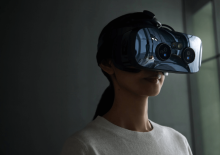 Varjo XR-3 worn by a user. (c) Varjo.

References
- ↑ 1.0 1.1 1.2 1.3 1.4 1.5 1.6 "Varjo Launches XR-3 and VR-3 to Bring Immersive Tech to All Workplaces". Varjo. 2020-12-01. https://varjo.com/news/varjo-launches-xr-3-and-vr-3-headsets-to-bring-the-next-generation-of-immersive-technology-to-every-workplace. Retrieved 2026-10-15.
- ↑ 2.0 2.1 2.2 2.3 2.4 Harry Baker (2021-03-04). "Varjo XR-3 And VR-3 Headsets Now Shipping Worldwide". UploadVR. https://www.uploadvr.com/varjo-xr-3-shipping/. Retrieved 2026-10-15.
- ↑ 3.0 3.1 3.2 3.3 3.4 "What does end-of-support for older-generation models XR-3, VR-3, and Varjo Aero mean?". Varjo Support. https://support.varjo.com/hc/en-us/end-of-support-for-older-generation-models-xr-3-vr-3-and-varjo-aero. Retrieved 2026-10-15.
- ↑ 4.0 4.1 4.2 4.3 4.4 "Varjo Releases XR-3 Focal Edition Mixed Reality Headset for Advanced Training Operations". Varjo. 2022-11-28. https://varjo.com/news/varjo-releases-xr-3-focal-edition-mixed-reality-headset-for-advanced-training-operations. Retrieved 2026-10-15.
- ↑ 5.00 5.01 5.02 5.03 5.04 5.05 5.06 5.07 5.08 5.09 "Setting up XR-3 and VR-3". Varjo Support. https://support.varjo.com/hc/en-us/setting-up-xr-3-vr-3. Retrieved 2026-10-15.
- ↑ 6.0 6.1 6.2 "Varjo Releases New XR-4 Series to Deliver Mixed Reality Experiences Indistinguishable from Natural Sight". Varjo. 2023-11-27. https://varjo.com/news/varjo-releases-new-xr-4-series-to-deliver-mixed-reality-experiences-indistinguishable-from-natural-sight. Retrieved 2026-10-15.
- ↑ 7.0 7.1 7.2 7.3 7.4 "System requirements for XR-3 and VR-3". Varjo Support. https://support.varjo.com/hc/en-us/xr-3-and-vr-3-system-requirements. Retrieved 2026-10-15.
- ↑ 8.00 8.01 8.02 8.03 8.04 8.05 8.06 8.07 8.08 8.09 8.10 8.11 8.12 8.13 8.14 8.15 8.16 8.17 8.18 8.19 8.20 8.21 8.22 8.23 8.24 8.25 8.26 8.27 8.28 8.29 8.30 8.31 8.32 8.33 8.34 "Varjo XR-3". Varjo. https://varjo.com/products/varjo-xr-3/. Retrieved 2026-10-15.
- ↑ 9.0 9.1 9.2 9.3 9.4 "XR-3 and VR-3 User guide, version 2.0". Varjo. https://downloads.varjo.com/docs/XR-3_VR-3_User_guide_2.0.pdf. Retrieved 2026-10-15.
- ↑ 10.0 10.1 "My controllers are not working". Varjo Support. https://support.varjo.com/hc/en-us/my-controllers-are-not-working. Retrieved 2026-10-15.
- ↑ 11.0 11.1 Sam Sprigg (2020-12-01). "Varjo launches its next generation XR-3 and VR-3 headsets for businesses and enterprise". Auganix. https://www.auganix.org/varjo-launches-its-next-generation-xr-3-and-vr-3-headsets-for-businesses-and-enterprise/. Retrieved 2026-10-15.
- ↑ "Varjo Launches its XR-3 and VR-3 Headsets to Bring the Next Generation of Immersive Technology to Every Workplace". Symetri. 2020-12-01. https://www.symetri.co.uk/news-events/news/press-release-varjo-launch-xr-3-headsets/. Retrieved 2026-10-15.
- ↑ 13.0 13.1 13.2 "Extended compatibility package for XR-3, VR-3, and Varjo Aero". Varjo Support. https://support.varjo.com/hc/en-us/extended-compatibility-package-xr-3-vr-3-varjo-aero. Retrieved 2026-10-15.
- ↑ 14.0 14.1 Ben Lang (2020-12-01). "Varjo’s New High-end XR-3 & VR-3 Headsets Expand Retina FoV While Reducing Weight & Price". Road to VR. https://www.roadtovr.com/varjo-xr-3-vr-3-announcement-specs-release-date-price/. Retrieved 2026-10-15.
- ↑ "What are Varjo XR and VR subscriptions?". Varjo Support. https://support.varjo.com/hc/en-us/what-are-varjo-xr-and-vr-subscriptions. Retrieved 2026-10-15.
- ↑ 16.0 16.1 "Post-processing (documentation version 3.4.0)". Varjo for developers. https://developer.varjo.com/docs/v3.4.0/get-started/Post-processing. Retrieved 2026-10-15.
- ↑ 17.0 17.1 Ben Lang (2021-07-29). "Varjo XR-3 Hands-on: Varjo’s Headsets Keep Getting Better, Even as They Get Cheaper, page 2". Road to VR. https://www.roadtovr.com/varjo-xr-3-hands-on-display-field-of-view-passthrough-ar/2/. Retrieved 2026-10-15.
- ↑ "DataStream API (documentation version 4.5.0)". Varjo for developers. https://developer.varjo.com/docs/v4.5.0/native/datastream-api. Retrieved 2026-10-15.
- ↑ "Camera settings (Varjo XR Plugin documentation version 3.8.0)". Varjo for developers. https://developer.varjo.com/docs/v3.8.0/unity-xr-sdk/camera-settings-in-varjo-xr-plugin. Retrieved 2026-10-15.
- ↑ 20.0 20.1 20.2 20.3 "Release notes – Varjo Base 4.7.1 and older". Varjo Support. https://support.varjo.com/hc/en-us/varjo-base-release-notes-4.7.1-and-older. Retrieved 2026-10-15.
- ↑ 21.0 21.1 "Depth occlusion (documentation version 3.4.0)". Varjo for developers. https://developer.varjo.com/docs/v3.4.0/unity-xr-sdk/depth-occlusion-with-varjo-xr-plugin. Retrieved 2026-10-15.
- ↑ 22.0 22.1 22.2 "Mixed Reality (OpenXR documentation version 4.5.0)". Varjo for developers. https://developer.varjo.com/docs/v4.5.0/openxr/mixed-reality. Retrieved 2026-10-15.
- ↑ 23.0 23.1 "3D reconstruction (documentation version 3.8.0)". Varjo for developers. https://developer.varjo.com/docs/v3.8.0/get-started/3d-reconstruction. Retrieved 2026-10-15.
- ↑ 24.0 24.1 "Masking (documentation version 3.8.0)". Varjo for developers. https://developer.varjo.com/docs/v3.8.0/get-started/masking. Retrieved 2026-10-15.
- ↑ 25.0 25.1 "Chroma key (documentation version 3.8.0)". Varjo for developers. https://developer.varjo.com/docs/v3.8.0/get-started/chroma-key. Retrieved 2026-10-15.
- ↑ "Starting a SteamVR application". Varjo Support. https://support.varjo.com/hc/en-us/starting-a-steamvr-application. Retrieved 2026-10-15.
- ↑ "Varjo Markers". Varjo Support. https://support.varjo.com/hc/en-us/varjo-markers. Retrieved 2026-10-15.
- ↑ "Room setup in Varjo inside-out tracking". Varjo Support. https://support.varjo.com/hc/en-us/room-setup-varjo-inside-out-tracking. Retrieved 2026-10-15.
- ↑ 29.0 29.1 "Eye tracking (Native SDK documentation version 3.6.0)". Varjo for developers. https://developer.varjo.com/docs/v3.6.0/native/eye-tracking. Retrieved 2026-10-15.
- ↑ "Panasonic Automotive Powers Innovative Vehicle UX Design with Varjo's Virtual Reality". Varjo. https://varjo.com/case-studies/panasonic-automotive-powers-innovative-vehicle-ux-design-with-varjos-virtual-reality. Retrieved 2026-10-15.
- ↑ 31.0 31.1 Jan Arensmeyer; Benedetta Bedetti; Philipp Schnorr; Jens Buermann; Donatas Zalepugas; Joachim Schmidt; Philipp Feodorovici (2024-04-03). "A System for Mixed-Reality Holographic Overlays of Real-Time Rendered 3D-Reconstructed Imaging Using a Video Pass-through Head-Mounted Display—A Pathway to Future Navigation in Chest Wall Surgery". Journal of Clinical Medicine 13 (7): 2080. doi:10.3390/jcm13072080. Retrieved 2026-10-15.
- ↑ 32.0 32.1 Thomas K. Aleva; Wilbert Tabone; Dimitra Dodou; Joost C. F. de Winter (2024-01-30). "Augmented reality for supporting the interaction between pedestrians and automated vehicles: an experimental outdoor study". Frontiers in Robotics and AI 11: 1324060. doi:10.3389/frobt.2024.1324060. Retrieved 2026-10-15.
- ↑ 33.0 33.1 "Varjo XR-3 Focal Edition". Varjo. https://varjo.com/products/varjo-xr-3-focal-edition/. Retrieved 2026-10-15.
- ↑ Ben Lang (2021-07-29). "Varjo XR-3 Hands-on: Varjo’s Headsets Keep Getting Better, Even as They Get Cheaper". Road to VR. https://www.roadtovr.com/varjo-xr-3-hands-on-display-field-of-view-passthrough-ar/. Retrieved 2026-10-15.