

Viture Beast
More actions
| Viture Beast | |
|---|---|

| |
| Basic Info | |
| VR/AR | Augmented Reality |
| Type | AR Glasses |
| Subtype | Tethered AR |
| Developer | VITURE |
| Manufacturer | VITURE |
| Announcement Date | 8 July 2025 |
| Release Date | Limited early batches shipped December 2025; general availability 27 April 2026 |
| Price | US$549 (United States, launch price; still the list price in October 2026); Phantom Beast edition US$599 |
| Website | https://www.viture.com/product/viture-beast-xr-glasses |
| Versions | Regular (IPD 64.0±6.0 mm) and Large (IPD 68.0±6.0 mm) sizes; Phantom Beast edition (announced August 2026) |
| Requires | Host device with USB-C video output (DisplayPort Alt Mode), or a VITURE dock or adapter for HDMI consoles and the Nintendo Switch |
| Display | |
| Display | Sony Micro-OLED panels (0.68-inch) |
| Resolution | 1920 × 1200 per eye (3840 × 1200 combined) |
| Refresh Rate | Up to 120Hz |
| Image | |
| Field of View | 58° |
| Optics | |
| Optics | Custom prism-based optical system (manufacturer description) |
| IPD Range | Regular: 64.0±6.0 mm; Large: 68.0±6.0 mm |
| Adjustable Diopter | No (prescription lens frame included) |
| Tracking | |
| Tracking | Built-in 3DoF (VisionPair) |
| Audio | |
| Audio | HARMAN AudioEFX built-in spatial speakers |
| Microphone | Yes |
| Camera | Single front-facing RGB camera |
| Connectivity | |
| Connectivity | USB-C with DisplayPort Alt Mode |
| Ports | USB-C (right temple) |
| Device | |
| Dimensions | 155.0 × 50.1 × 56.5 mm (folded) |
| Weight | 88g |
| Material | Magnesium-aluminum alloy frame (manufacturer description) |
| Color | Jet Black |
| Sensors | Wear detection |
| Input | Buttons on both temples; on-screen display menu |
The Viture Beast (marketed by VITURE as The Beast and VITURE Beast XR Glasses) is a pair of tethered AR glasses, also called display glasses, that shows a large virtual screen from a phone, computer or handheld game console connected over USB-C. VITURE announced it on 8 July 2025 alongside the Viture Luma series and sells it as its flagship model.[1][2]
The glasses use Sony Micro-OLED panels with a resolution of 1920 × 1200 per eye, a refresh rate of up to 120Hz and a 58° field of view, and VITURE rates their peak perceived brightness at 1,250 nits.[2] The Beast has three-degrees-of-freedom (3DoF) head tracking built into the glasses, so a virtual screen can stay anchored in space without a companion app or adapter.[2][3] Pre-orders opened in July 2025, limited early batches shipped in December 2025, and the glasses became generally available through Amazon, Best Buy and VITURE's own store on 27 April 2026 at US$549.[4] As of 17 October 2026 it remains on sale in the United States at a list price of US$549, and a US$599 Phantom Beast collector's edition is on pre-order.[5][6]
Announcement and release
VITURE revealed the Beast on 8 July 2025 in the same launch as the Viture Luma, Viture Luma Pro and Viture Luma Ultra. Android Authority reported a price of US$549, slightly below the US$599 Luma Ultra, and an expected release in October 2025.[1] In a July 2025 article, UploadVR's David Heaney also listed the Beast for October at US$550 and compared its announced figures with the Xreal One Pro: 1200p against 1080p, 1,250 nits against 700 nits, and a 58° against a 57° field of view.[7]
The October 2025 date slipped. According to Road to VR, VITURE began taking pre-orders in July 2025 and shipped limited early batches in December 2025.[4] On 6 January 2026, during CES 2026, VITURE issued a press release introducing The Beast as its flagship XR glasses and showed it at the CES booth of Jackery.[8]
Early units were not feature complete. On 12 January 2026, Tom's Guide's Jason England wrote that he was holding back a review because the full 1200p resolution and 120Hz refresh rate were still listed as "coming soon" in the on-screen menu, and VITURE had told him that support "will be enabled after launch to ensure full accessory compatibility." He also found that the 3DoF tracking drifted until a firmware update, and that his sample felt plastic to the touch despite the advertised metal frame; VITURE said the sample was "about 2g heavier than the final production version."[9]
The Beast went on general sale on 27 April 2026 on Amazon, Best Buy and viture.com at US$549, in two frame sizes matched to interpupillary distance.[4] Android Central reported that the retail launch came with a firmware update that fixed most of the problems found on the early units (see Firmware updates).[10] As of 17 October 2026, VITURE's US store lists both sizes at US$549 in Jet Black, the same price as at launch.[5]
| Date | Event |
|---|---|
| 8 July 2025 | Announced with the Luma series; October 2025 release expected[1] |
| July 2025 | Pre-orders open[4] |
| December 2025 | Limited early batches ship[4] |
| 6 January 2026 | CES 2026 press release and demonstrations[8] |
| 27 April 2026 | General availability at Amazon, Best Buy and viture.com[4] |
| April 2026 | Firmware released with the retail launch fixes 3DoF drift and makes 1920 × 1200 the default resolution, according to Android Central[10] |
| 27 August 2026 | Phantom Beast edition announced for 29 October 2026[11] |
Design and hardware
Display and optics
Each eye has a Sony Micro-OLED panel. VITURE's product page lists a resolution of 1920 × 1200 per eye (3840 × 1200 combined), a refresh rate of up to 120Hz, a 58° field of view, a contrast ratio of at least 100,000:1, 108% sRGB color and a peak perceived brightness of 1,250 nits with nine brightness levels.[2] VITURE describes the image as a virtual screen of up to 174 inches; Road to VR notes that this figure applies to a screen viewed at 4 meters.[2][4] In its CES 2026 release, VITURE said the panel measures 0.68 inches and that its combination of the Sony panel and VITURE's own optical system cuts power consumption by 35 percent.[8]
Display glasses of this class magnify a small micro-OLED display with either a curved mirror, called birdbath optics, or a flat prism block, which is often grouped with birdbath designs.[7] CNET's Scott Stein wrote that the Beast and the Xreal One Pro use "similar lens systems, with a flatter prism-type lens that reduces reflections," and Tom's Guide described the move to a flatter prism as a change from VITURE's earlier birdbath optics.[12][13] VITURE's own specification list for the Phantom Beast edition names the optics a "Custom Prism-Based Optical System by VITURE."[11] Road to VR's launch report instead describes the optics as "bird bath-style."[4]
The Beast has no built-in diopter adjustment, unlike the Luma models. VITURE includes a prescription lens frame for nearsighted users, who add lenses made to their prescription.[2][8] CNET noted that the prescription inserts sit flush against the inner lenses.[12] VITURE also sells prescription inserts; PCMag listed prices from US$79 for clear 1.67-index lenses to US$149 for blue-light-blocking 1.74-index lenses.[14]
Tracking and camera
The glasses have a hardware 3DoF tracking system that VITURE calls VisionPair, which it says runs on a dedicated spatial computing chip in the glasses. Because the tracking is built in, the virtual screen can be anchored in place or made to follow head movement without an app, adapter or calibration.[2] Android Authority found the on-device tracking smoother than anything in the Luma series.[3]
A single front-facing RGB camera sits in the bridge.[4][12] At announcement, UploadVR reported that this central color camera allows basic six degrees of freedom (6DoF) tracking in VITURE's SpaceWalker app, while the Beast lacks the side fisheye cameras of the Luma Ultra.[7] VITURE told Road to VR at launch that a software update would enable 6DoF tracking.[4] CNET reported in April 2026 that 6DoF worked only through the Android SpaceWalker app.[12] VITURE's help page says the Beast supports mixed-reality capture and basic 6DoF sensing "enabled via software update post-launch," while its product page, as of October 2026, still lists 6DoF as "In Future Plans."[15][5] In PCMag's testing, covering the camera made no noticeable difference to head tracking, and the reviewer called the camera "essentially useless."[14]
VITURE says the Beast calibrates its tracking automatically: the glasses only need to be kept still for 10 seconds before they are worn, with no web tool required.[16] WIRED's Adrienne So found that the glasses cannot lie flat because the cable plugs into the right arm, so her virtual screen stayed slightly crooked even after calibration.[17]
Electrochromic dimming
The lenses contain an electrochromic film with nine levels of tint control. VITURE lists an optical transmittance range of 0.5 to 40 percent, haze under 1 percent and a switching time of 0.1 seconds.[2] An Auto Transparency mode clears the lenses when the wearer looks down, for example at a keyboard or controller.[2] Reviewers disagreed on how dark the film gets. Tom's Guide's January 2026 preview called the lenses strong enough to feel like a lens shade, while CNET found that the tint "doesn't get as dark as I'd like" and let in some real-world light.[9][12]
Audio, frame and connection
The speakers use HARMAN AudioEFX tuning, and the glasses have a built-in microphone and wear detection.[2] VITURE describes the frame as a full-metal aluminum-magnesium alloy with tilt-adjustable temples.[2][18] Android Authority described the exterior of its review unit as matte plastic.[3] The glasses weigh 88g, the folded glasses measure 155.0 × 50.1 × 56.5 mm, and the case weighs 300g.[2]
The Beast connects with a standard USB-C port on the right temple tip. Earlier VITURE glasses, including the Luma series, used a magnetic connector and a proprietary cable.[3][12] A third-party USB-C cable can replace the included one if it supports a recent USB version and DisplayPort Alt Mode.[3] Devices with USB-C video output, such as the Steam Deck, iPhone 15 and later models and laptops, connect directly. HDMI consoles such as the PlayStation 5 and Xbox need VITURE's Pro Mobile Dock, and the Nintendo Switch and Switch 2 need one of VITURE's docks or its USB-C XR Charging Adapter Ultra.[2]
| Category | Specification |
|---|---|
| Display | Sony Micro-OLED panels |
| Resolution | 1920 × 1200 per eye; 3840 × 1200 combined |
| Refresh rate | Up to 120Hz |
| Field of view | 58° |
| Contrast ratio | ≥ 100,000 : 1 |
| Color | 108% sRGB |
| Peak perceived brightness | 1,250 nits (9 levels) |
| IPD | Regular: 64.0±6.0 mm; Large: 68.0±6.0 mm |
| Diopter adjustment | None |
| Audio | HARMAN AudioEFX, built-in spatial sound; fundamental frequency 250 Hz ± 50; 9 volume levels |
| Electrochromic film | 9 levels; optical transmittance 0.5-40%; haze < 1%; discoloration time 0.1 s |
| Other | Wear detection; suggested wearing time 3-4 hours |
| Connection | USB-C |
| 3D support | Binocular fusion; 2D and 3D display |
| Dimensions (folded) | 155.0 × 50.1 × 56.5 mm |
| Case dimensions | 191 × 85 × 85 mm |
| Weight | 88g (glasses); 300g (case) |
| Warranty | 1 year; lifetime firmware updates |
| In the box | Glasses, prescription lens frame, four nose pads (sizes 0-3), 1.2 m USB-C to USB-C cable, case, cloth |
Source: VITURE product page, September and October 2026.[2][5]
Software and features
Settings are changed with buttons on both temples and an on-screen display menu, without any app. The menu covers screen size, virtual distance, resolution and refresh rate.[15][3] The glasses have four display modes (Default, a 32:9 UltraWide mode, full side-by-side 3D and Side Mode, which moves the screen to one side of the view) and three positioning modes: Anchor Mode, which fixes the screen in space, Smooth Follow and 0DoF, which locks the screen to the center of view.[15] Android Authority found that the glasses output 1080p at 60Hz by default, so users have to switch to 1200p and 120Hz manually.[3] Android Central, writing in May 2026, said the glasses had moved from a 16:9 1920 × 1080 image at launch to a 16:10 1920 × 1200 default after the retail firmware update.[10] PCMag found that the Beast appeared only as a 1080p display on the two PCs it tested.[14] The on-screen menu has Spatial, Display, Audio, Settings and About tabs, and offers 60Hz and 120Hz refresh rates and five color profiles.[14] According to VITURE, the double-press action of the L1 and R1 controls can be assigned to UltraWide Mode, Side Mode, full side-by-side 3D, Transparency or nothing.[19] VITURE's FAQ also lists Samsung DeX support, with which the glasses show a multi-window desktop workspace.[5]
VITURE's SpaceWalker app for iOS, Android, macOS and Windows adds multi-screen layouts and Immersive 3D, a real-time conversion of 2D video and games into 3D.[2] On iOS, the full SpaceWalker feature set requires the USB-C XR Charging Adapter Ultra or the Mobile Dock Mini.[2] VITURE also offers an XR Glasses SDK for Linux, macOS, Windows, Android and the web that exposes the native 3DoF head tracking, glasses controls and the RGB camera.[2]
Firmware updates
VITURE updates the glasses' firmware through a web tool in Google Chrome, an Android device, or its Mac and Windows software, and the web tool can roll the glasses back to an earlier release.[19] Android Central reported that the firmware released with the retail launch removed the 3DoF drift that had been the product's main weakness, made the 16:10 1200p mode the default, added top-left and top-right positions to Side Mode, let users cycle display modes by holding the left plus button, made the glasses remember refresh rate, resolution and positioning settings, added support for the Pro Neckband and a Mandarin menu option, and sped up updates.[10] PCMag likewise found that a firmware update removed a one-pixel column of fuzzy light at the right edge of the image and made Anchor-mode drift much less common, although some low-level drift remained.[14]
According to VITURE, some units from the newest production batches were calibrated for 1200p before shipping. These units can install any firmware released after 27 April 2026 but cannot roll back to earlier versions, which were still based on 1080p.[19] Pro Neckband support requires glasses firmware 0.01.024_20260521 and neckband firmware v2.1.2.30516. The on-screen menu lists a factory-reset option, which VITURE's help page says will become available in a future over-the-air update.[19]
Accessories and compatibility
The Beast works with several of VITURE's existing accessories, but not all of them. When it is connected to the Pro Neckband, a wearable computer, the glasses are controlled through the neckband and their own menu is unavailable.[19]
| Accessory | Support with the Beast |
|---|---|
| Pro Neckband | Supported in Android Mode (up to 1200p and 120Hz); 1200p at 90Hz in SpaceWalker Mode, which VITURE's help page says is still to be added in a future update[5][19] |
| Mobile Dock Mini | 3840 × 1200 side-by-side 3D at up to 60Hz and 1920 × 1200 2D at up to 120Hz; also connects the Nintendo Switch and Switch 2[5] |
| Pro Mobile Dock | Up to 3840 × 1080 side-by-side 3D at 60Hz and 1920 × 1080 2D at 120Hz; Switch, Switch 2 and HDMI consoles such as the PlayStation 5 and Xbox[5] |
| USB-C XR Charging Adapter Ultra | Multi-screen, 3DoF Pin Mode, automatic 3D switching and glasses control in SpaceWalker for iOS[5] |
| USB-C to Glasses and Charging Adapter | Supported; charging while playing works only in Default display mode at 60Hz[5][19] |
| VITURE One Neckband | Supported up to 1080p at 60Hz on the product page; listed as not supported on VITURE's help page[5][19] |
| VITURE One Mobile Dock, HDMI XR Adapter, USB-C XR Charging Adapter Pro | Not supported[5][19] |
The glasses draw power from the connected device. In WIRED's test, watching a film with the Beast drained the reviewer's phone battery by about 70 percent in 1.5 hours.[17]
Phantom Beast edition
On 27 August 2026, VITURE and the game studio S-GAME announced Phantom Beast, an edition of the Beast styled after S-GAME's action role-playing game Phantom Blade Zero. The announcement, datelined Cologne, said the edition was unveiled at Worlds of Play: The Game Art Exhibition. It is priced at US$599 with pre-orders at viture.com and the IGN Store, and is scheduled to launch on 29 October 2026, the game's release date.[11] VITURE lists the Phantom Beast at 90g, against 88g for the standard model.[2] As of 17 October 2026 the edition is on pre-order at US$599 in the Regular (IPD 64.0±6.0 mm) size only. Besides the standard accessories, its box adds a glasses strap, a "Mó Sanguine" metal blade replica, an exclusive glasses cloth, a collector's card brick and sticker set, and, for pre-orders, a limited-edition collector's map.[6]
Reception
The Beast received positive reviews after its April 2026 release. In a review dated 27 April 2026, Tom's Guide gave it 4.5 out of 5 and an Editor's Choice award. Jason England wrote that "the Viture Beast are the best AR glasses that money can buy right now" and praised its sharp, colorful picture and comfort. He noted slight blurring and chromatic aberration at the edges of the image, and said Xreal's glasses, with their flatter and more true-to-life color, remain the better choice when productivity is the only goal.[13]
CNET's Scott Stein rated the glasses 8.4 out of 10 with an Editor's Choice award and called their micro-OLEDs "the best I've seen, both in brightness, resolution and field of view." He found them slightly thicker and heavier than the Xreal One Pro, which cost US$599 at the time.[12]
PCMag's Will Greenwald gave the Beast 4.5 out of 5 ("Outstanding") and an Editors' Choice award on 29 April 2026. He wrote that it "raises the bar for prism display smart glasses with a brighter, wider, and more stable head-tracked virtual screen," and compared the experience to a portable ultrawide monitor. He listed the missing focus dials and the camera as its drawbacks, and described the Harman-tuned speakers as clear but light on bass, with sound audible to people nearby.[14]
In WIRED's smart glasses buying guide, updated 7 August 2026, the Beast is the pick for "Best Wearable Displays." Adrienne So wrote that its screen is "bigger, brighter, and with a wider field of view" than the previous winner, the Xreal One Pro, and found 3DoF and Smart Follow effective, although Smart Follow had noticeable lag. The guide gives the One Pro the edge for sound quality.[17]
Android Authority's Brady Snyder gave the Beast a Recommended badge in July 2026, concluding that "for games and videos, there's nothing better at the $550 price point." He criticized blurry small text, the lack of myopia dials, the separately sold US$129 dock needed for the Nintendo Switch, and the 1200p and 120Hz modes being switched off by default.[3]
See also
- Viture
- Viture Luma
- Viture Luma Pro
- Viture Luma Ultra
- Viture Pro
- Viture Pro 2
- Viture One
- Xreal One Pro
- Xreal 1S
- SpaceWalker
Gallery
-
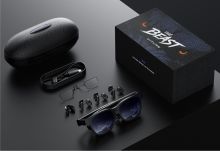 VITURE Beast glasses and packaging.

References
- ↑ 1.0 1.1 1.2 Ryan McNeal (2025-07-08). "VITURE launches new series of XR glasses for gamers, enthusiasts, and professionals". Android Authority. https://www.androidauthority.com/viture-luma-xr-glasses-3575051/. Retrieved 2026-09-29.
- ↑ 2.00 2.01 2.02 2.03 2.04 2.05 2.06 2.07 2.08 2.09 2.10 2.11 2.12 2.13 2.14 2.15 2.16 2.17 "VITURE Beast XR Glasses". VITURE. VITURE Inc.. https://www.viture.com/product/viture-beast-xr-glasses. Retrieved 2026-09-29.
- ↑ 3.0 3.1 3.2 3.3 3.4 3.5 3.6 3.7 Brady Snyder (2026-07-15). "VITURE Beast review: Finally, XR glasses that stand on their own". Android Authority. https://www.androidauthority.com/viture-beast-review-3686604/. Retrieved 2026-09-29.
- ↑ 4.00 4.01 4.02 4.03 4.04 4.05 4.06 4.07 4.08 4.09 Scott Hayden (2026-04-27). "VITURE's Widest Field-of-view XR Glasses are Now Available at Amazon & Best Buy". Road to VR. https://www.roadtovr.com/vitures-widest-field-of-view-ar-glasses-are-now-available-at-amazon-best-buy/. Retrieved 2026-09-29.
- ↑ 5.00 5.01 5.02 5.03 5.04 5.05 5.06 5.07 5.08 5.09 5.10 5.11 "VITURE Beast XR Glasses". VITURE. VITURE Inc.. https://www.viture.com/en-US/product/viture-beast-xr-glasses. Retrieved 2026-10-17.
- ↑ 6.0 6.1 "VITURE x Phantom Blade Zero "Phantom Beast" XR Glasses". VITURE. VITURE Inc.. https://www.viture.com/en-US/product/viture-x-phantom-blade-zero-phantom-beast-xr-glasses. Retrieved 2026-10-17.
- ↑ 7.0 7.1 7.2 David Heaney (2025-07-21). "Viture's 'The Beast' Display Glasses Have Industry-Leading FOV & Brightness". UploadVR. https://www.uploadvr.com/viture-luma-viture-the-beast-display-glasses-announce-preorders/. Retrieved 2026-09-29.
- ↑ 8.0 8.1 8.2 8.3 "VITURE Introduces The Beast, Its New Flagship XR Glasses Redefining Clarity and Ultra-Wide Immersion". PR Newswire (via Yahoo Finance). VITURE. 2026-01-06. https://finance.yahoo.com/news/viture-introduces-beast-flagship-xr-140000498.html. Retrieved 2026-09-29.
- ↑ 9.0 9.1 Jason England (2026-01-12). "I've been testing the Viture Beast AR glasses for weeks - here's why I can't review them yet". Tom's Guide. https://www.tomsguide.com/computing/smart-glasses/ive-been-testing-the-viture-beast-ar-glasses-for-weeks-heres-why-i-cant-review-them-yet. Retrieved 2026-09-29.
- ↑ 10.0 10.1 10.2 10.3 Nicholas Sutrich (2026-05-07). "Viture already has the best smart glasses ecosystem, and these two new products somehow make it even better". Android Central. https://www.androidcentral.com/wearables/viture-beast-abxylute-s9v-launch. Retrieved 2026-10-17.
- ↑ 11.0 11.1 11.2 "VITURE and S-GAME Unveil Phantom Beast -- the Official Phantom Blade Zero XR Glasses". PR Newswire. VITURE. 2026-08-27. https://www.prnewswire.com/news-releases/viture-and-s-game-unveil-phantom-beast--the-official-phantom-blade-zero-xr-glasses-302862007.html. Retrieved 2026-09-29.
- ↑ 12.0 12.1 12.2 12.3 12.4 12.5 12.6 Scott Stein (2026-04-28). "Viture Beast Review: I Think I Found My New Favorite Display Glasses". CNET. https://www.cnet.com/tech/computing/viture-beast-review-i-think-i-found-my-new-favorite-display-glasses/. Retrieved 2026-09-29.
- ↑ 13.0 13.1 Jason England (2026-04-27). "I lived in the Viture Beast for 10,000 miles, and it just ruined other AR glasses for me". Tom's Guide. https://www.tomsguide.com/computing/smart-glasses/viture-beast-review. Retrieved 2026-09-29.
- ↑ 14.0 14.1 14.2 14.3 14.4 14.5 Will Greenwald (2026-04-29). "Viture Beast Review: Bigger, Brighter, Better AR Smart Glasses". PCMag. https://www.pcmag.com/reviews/viture-beast. Retrieved 2026-10-17.
- ↑ 15.0 15.1 15.2 "The Beast XR Glasses". VITURE Academy. VITURE Inc.. https://www.viture.com/academy/xr-glasses/the-beast. Retrieved 2026-09-29.
- ↑ "XR Glasses Calibration Tool". VITURE. VITURE Inc.. https://www.viture.com/en-US/firmware/calibration. Retrieved 2026-10-17.
- ↑ 17.0 17.1 17.2 Boutayna Chokrane (2026-08-07). "The Best Smart Glasses That Aren't Just a Gimmick". WIRED. https://www.wired.com/gallery/best-smart-glasses/. Retrieved 2026-10-17.
- ↑ "How The Beast Stands Apart From Other XR/AR Glasses". VITURE Blog. VITURE Inc.. 2026-04-28. https://www.viture.com/blog/how-the-beast-stands-apart-from-other-xr-ar-glasses. Retrieved 2026-09-29.
- ↑ 19.0 19.1 19.2 19.3 19.4 19.5 19.6 19.7 19.8 "The Beast XR Glasses". VITURE Academy. VITURE Inc.. https://www.viture.com/en-US/academy/xr-glasses/the-beast. Retrieved 2026-10-17.