

Rokid Max 2
More actions
| Rokid Max 2 | |
|---|---|

| |
| Basic Info | |
| VR/AR | Augmented Reality |
| Type | AR Glasses |
| Subtype | Smart Glasses |
| Platform | Rokid |
| Developer | Rokid |
| Manufacturer | Rokid |
| Announcement Date | 23 April 2024 (as part of the Rokid AR Lite suite); sold on its own from IFA 2024, September 2024 |
| Release Date | Pre-orders from September 2024, with shipping scheduled for October 2024 |
| Price | US$449 (standalone pre-order price, September 2024); US$529 list price (2025); US$429 regular and US$249 sale price on Rokid's global store (17 October 2026) |
| Website | https://global.rokid.com/products/rokid-max-2-ar-glasses |
| Predecessor | Rokid Max |
| Display | |
| Display | Dual Sony 0.68-inch Micro-OLED |
| Peak Brightness | Up to 600 nits perceived brightness (manufacturer figure), six brightness levels |
| Resolution | 1920x1080 per eye (Full HD); 1920x1200 with Rokid Station 2 |
| Refresh Rate | Up to 120 Hz (adjustable from 60 Hz); 90 Hz system-wide with Rokid Station 2 |
| Image | |
| Field of View | 50° (16:10), manufacturer figure |
| Optics | |
| Optics | Birdbath |
| Ocularity | Binocular |
| IPD Range | No hardware adjustment; software IPD adjustment when used with Rokid Station 2 |
| Adjustable Diopter | Yes, 0.00D to -6.00D (myopia only) |
| Tracking | |
| Tracking | None on its own; 3DoF when paired with Rokid Station 2 |
| Eye Tracking | No |
| Hand Tracking | No |
| Audio | |
| Audio | Directional speakers |
| Microphone | Yes |
| Camera | None |
| Connectivity | |
| Connectivity | USB-C (DisplayPort Alt Mode) |
| Power | Powered by the connected device over USB-C; no internal battery |
| Device | |
| Weight | 75g |
| Color | Black, Silver |
The Rokid Max 2 is a pair of tethered AR glasses made by the Chinese company Rokid. It has no processor or battery of its own: it plugs into a phone, computer, handheld or game console over USB-C and shows that device's picture as a large virtual screen in front of the wearer. Rokid first showed the glasses on 23 April 2024 as part of its Rokid AR Lite suite, then put them on sale by themselves at IFA 2024 in September 2024, when pre-orders opened with shipping scheduled for October 2024.[1][2] As of 17 October 2026, the glasses are still sold new: Rokid's global store lists both the black and the silver version as available, at a regular price of US$429 and a sale price of US$249.[3]
The successor to the Rokid Max, the Max 2 uses Sony Micro-OLED panels with a resolution of 1920x1080 per eye, a refresh rate of up to 120 Hz, a 50° field of view and up to 600 nits of perceived brightness, according to Rokid. Built-in dials correct nearsightedness from 0.00D to -6.00D, and the glasses weigh 75 grams.[4] Rokid says the display capability is identical to the original Max; the changes are in design and comfort.[5] Reviewers have described it as a portable private screen for films and games and as a modest update of the first Max.[6][7]
History and development
AR Lite announcement and Kickstarter
Rokid announced the Max 2 on 23 April 2024 in Hangzhou as the glasses half of the Rokid AR Lite, a "spatial computing suite" that pairs the Max 2 with the Rokid Station 2 host unit running Rokid's YodaOS-Master operating system. The press release gave the glasses' weight as 75 grams and listed adjustable interpupillary distance, diopter adjustment for nearsighted users, air nose pads that Rokid said reduce pressure on the nose bridge by 30%, and bendable soft temples.[1] MIXED reported the same day that the glasses would come in Midnight Black and Dawn Silver, and that pricing and availability had not yet been announced.[8] The AR Lite was funded through a Kickstarter campaign; a Rokid press release dated 28 May 2024 said the campaign had launched one day earlier and had passed its goal by 1692%.[9] The campaign, registered in Hong Kong and run in Hong Kong dollars, launched on 27 May 2024 and closed successfully on 11 July 2024 after 45 days. Its goal was HK$156,230, and it ended with HK$9,586,083 pledged by 2,222 backers, which Kickstarter converted to about US$1.23 million.[10] When AppleInsider reviewed the glasses with the Station 2 in late November 2024, it described them as upcoming and said the set was available through Kickstarter late pledges.[11]
Standalone launch at IFA 2024
At IFA 2024 in Berlin, Rokid introduced the Rokid AR Joy 2, a bundle of the Max 2 with the existing first-generation Rokid Station Android TV device. Japan's Gadget Gate reported a bundle price of US$498 and a price of US$449 for the Max 2 alone, with pre-orders open on Rokid's website and shipping for both scheduled for October 2024.[2] The Canadian Techie reported a regular AR Joy 2 pre-order price of US$548, reduced to US$498 from 6 September to 20 October 2024, and described the Max 2 as projecting a 215-inch virtual screen.[12]
In January 2025, XR Today noted that Rokid sold the Max 2 through its "Rokid AR Joy 2" product page, either on their own or bundled with the Rokid Station, rather than on a separate product page.[6] Android Central's June 2025 review said the glasses "made their debut in Q1 2025" and were available in select global markets at a regular retail price of US$529.[13] TechRadar listed availability in the United States and the United Kingdom at US$529 and £399.[14]
Design and hardware
Display
Each eye has a Sony Micro-OLED panel; Gadget Gate gave the panel size as 0.68 inches.[2] Rokid's specification sheet lists a resolution of "FHD 1920x1080 pixel RGB per eye", a 100,000:1 contrast ratio, a colour gamut of 106% of sRGB (area ratio), a refresh rate of 120 Hz, perceived brightness of up to 600 nits with six brightness levels, 2D and 3D modes, and HDCP support for protected video.[4] Rokid's FAQ adds that the refresh rate can be set between 60 Hz and 120 Hz, and that the whole system runs at 90 Hz when the glasses are used with the Rokid Station 2.[15] The default resolution is 1920x1080; with the Station 2 the glasses can run at 1920x1200.[16] The same FAQ entry also says that both the Max and the Max 2 support 1080p and 1200p, with 1080p as the default, and that the 1200p mode is chosen in the screen-resolution settings of the connected device; Rokid adds that the taller 1200p picture shows slightly more content at the top and bottom of the view.[16]
Virtual screen size and field of view
Rokid gives the optical field of view as 50° in a 16:10 format.[4] The size of the virtual screen is quoted in two ways, even on Rokid's own product page: its specification table states a "360" at a distance of 10 meters" screen, while its feature copy, launch coverage and several reviews describe a 215-inch screen, the figure Rokid gave for the original Max at a distance of 6 meters.[4][12][17] XR Today treated the 360-inch figure as one of the few differences from the first Max.[6]
Optics
Like many display glasses of its type, the Max 2 uses birdbath optics: a lens reflects the image of the OLED panel into the eye. TechRadar, Serious Insights and GearBrain all reported that this design can let reflections of the wearer's chest or face appear in view, especially in brighter surroundings.[14][7][18]
The glasses do not have electrochromic dimming. Rokid's FAQ says the package includes a blackout cover instead, and TechRadar describes the outer lenses as polarized, so some light from the surroundings still reaches the eye unless the cover is fitted.[19][14]
Myopia adjustment
Built-in vision correction:
- A diopter adjustment dial above each lens[14]
- 0.00D to -6.00D range, adjusted in real time[4]
- Corrects nearsightedness only. For prescriptions outside that range, or for farsightedness or astigmatism, Rokid says the glasses accept separate prescription lens inserts, and inserts made for the first Max also fit the Max 2.[20]
The glasses themselves have no manual interpupillary distance adjustment. IPD can be adjusted in software when they are used with the Rokid Station 2.[21]
Build and comfort
Rokid lists a weight of 75 g.[4] Android Central gave the weight of its review unit as 76 g.[13] Compared with the first Max, Rokid lists these design changes:[5]
- New black and silver colour options (Rokid's FAQ calls them Night Black and Dawn Silver)
- A titanium alloy hinge
- Temple arms that combine hard and soft materials, with flexible rubber at the rear
- An air nose pad that reduces pressure on the bridge of the nose[22]
The USB-C connector is at the end of the left arm, and the volume and brightness controls are on the right arm.[14][13]
Audio
- Built-in directional speakers; Rokid's specification sheet lists Hi-Res certification[4]
- A built-in microphone on the side of the glasses[23]
- XR Today found the sound clear but short on bass, with some leakage to people nearby at higher volumes[6]
The glasses cannot be paired with Bluetooth headphones themselves. Rokid's FAQ says wireless earbuds are paired with the Station 2 instead when the glasses are used with that host.[24] In June 2024 Rokid's FAQ also said that the Max 2 did not yet have its own voice commands, and suggested installing voice AI apps such as ChatGPT instead.[25]
Power and connectivity
No internal battery
The Max 2 has no battery and draws power from the device it is plugged into. In its FAQ, Rokid gives the average draw from an iPhone as 2 to 5 watts and suggests the Rokid Hub accessory for charging the phone while the glasses are in use.[26] Techlicious noted that the glasses therefore never need charging and work with any device that supports DisplayPort over USB-C.[27]
Device compatibility
Direct connection needs a USB-C port with video output (DisplayPort Alt Mode); in its FAQ, Rokid says a source device can in principle connect directly if it has a USB-C 3.1 port that supports display output.[28] Rokid's FAQ says that, used without its app, the glasses can work with other host devices as a "screen amplifier".[29] Rokid names the following examples:[30]
- MacBook and Windows PCs (on Windows the glasses can act as an extended display)
- iPhone 15
- Steam Deck
- PlayStation 5
- Phones that support DisplayPort over USB-C; Rokid keeps a direct-connection compatibility list[4]
Rokid's product page says most other game consoles connect through its HDMI adapter, and that devices with screen casting but no video output can use a wireless adapter.[4] The Nintendo Switch in dock mode connects through the Rokid Hub, which has two female USB-C ports and one male USB-C port.[31] TechRadar connected the glasses to a PlayStation 5 with an HDMI-to-USB-C cable.[14] Android Central reported no connection problems with several Android phones and an iPad Pro.[13]
HDCP support
- HDCP enabled for protected streaming video[4]
Software and Rokid Station pairing
On their own, the Max 2 glasses work only as a display for the connected device. Rokid says the Max and Max 2 can provide 3DoF head tracking only together with the Rokid Station 2, and that the older Rokid Air cannot support 3DoF at all because of the limits of its IMU.[32]
Rokid has sold the glasses with two companion devices:
| Bundle | Companion device | What it adds |
|---|---|---|
| Rokid AR Joy 2 | Rokid Station (first generation) | Android TV with Google Play apps, a 5,000 mAh battery rated by Rokid for about five hours of use, and a remote control[2][4] |
| Rokid AR Lite; Rokid AR Spatial | Rokid Station 2 | YodaOS-Master spatial operating system, 3DoF, multi-screen mode with an equivalent screen of up to 300 inches, 32:9 spatial screen casting, software IPD adjustment[1][32][21][13] |
Android Central listed a Rokid AR Spatial bundle with the Station 2 at US$648 in June 2025.[13] TechRadar priced the first Rokid Station as a US$199 / £159 add-on.[14]
Rokid Station (AR Joy 2)
Rokid's specification sheet for the AR Joy 2 lists the first-generation Station with a 64-bit quad-core ARM processor, 2 GB of memory, 32 GB of flash storage, a 5,000 mAh battery rated for five hours of use and seven days of standby, Wi-Fi 5 and Bluetooth 5.0. It supports wireless screen mirroring through Miracast, DLNA and AirPlay. The AR Joy 2 box contains the Max 2, the Station, a blackout cover, a USB-C cable, a nose pad, a carrying case, a cleaning cloth and a user manual.[4]
Rokid Station 2 (AR Lite and AR Spatial)
In a section on the Rokid AR Spatial, Rokid's Max 2 product page lists the Station 2 with 8 GB of RAM, 128 GB of storage, Wi-Fi 6, Bluetooth 5.2 and a 5,000 mAh battery with 18 W charging, and describes its YodaOS-Master software as a spatial browser with spatial screen casting, a "dynamic sport mode" and support for Bluetooth keyboards and mice.[3] AppleInsider's review gave the same memory, storage, Bluetooth and battery figures.[11] According to Rokid's FAQ, the Max 2 and Station 2 together provide a spatial giant-screen mode, a spatial multi-application mode, a built-in spatial browser and the spatial video app "Dejavu", playback of 3D video at 4K and 30 frames per second, file and app transfer between devices, 32:9 screen casting from a Mac, and system-level IPD adjustment.[33] Rokid says the Station 2 handles the processing for these spatial computing functions,[34] and that the screen stabilization of its sports mode comes from an anti-shake algorithm rather than a dedicated chip in the glasses.[35]
In AppleInsider's test, the Station 2 ran its own, limited app store and could show up to three windows at once, navigated by head movement together with the Station 2, which AppleInsider described as a remote with home, settings, volume and power buttons. Theater Mode enlarged video up to 300 inches, and a Reading Mode made web text easier to read. Downloading apps and using three windows at once made the Station 2 "rev up its fans considerably", which led the reviewer to treat the set as more of a media device than a productivity tool.[11]
Comparison with Rokid Max
Rokid says the two models have identical display capability.[5] Figures below come from Rokid's launch announcement for the Max and its product page for the Max 2.
| Feature | Rokid Max 2 | Rokid Max |
|---|---|---|
| Virtual Screen | 360" at 10 m (Rokid product page); 215" in launch coverage[4][12] | 215" at 6 m[17] |
| Display | Sony Micro-OLED | Sony Micro-OLED[17] |
| Resolution | 1080p per eye | 1920x1080 default[16] |
| Refresh Rate | 120 Hz | 120 Hz[17] |
| Field of view | 50° | About 50°[17] |
| Brightness | 600 nits | 600 nits peak[17] |
| Myopia Range | 0.00D to -6.00D | 0.00D to -6.00D[17] |
| Weight | 75g | 75g[17] |
| Launch price | US$449 standalone pre-order (September 2024)[2] | US$439 pre-order (March 2023)[17] |
Technical specifications
All values are manufacturer figures from Rokid's product page unless noted.[4]
| Specification | Details |
|---|---|
| Display | Sony Micro-OLED, one per eye (0.68-inch, per Gadget Gate)[2] |
| Resolution | 1920x1080 per eye; 1920x1200 with Rokid Station 2[16] |
| Refresh Rate | 120 Hz (adjustable 60-120 Hz)[15] |
| Contrast ratio | 100,000:1 |
| Colour gamut | 106% sRGB (area ratio) |
| Virtual Screen | 360" at 10 m |
| Field of View | 50° (16:10) |
| Brightness | Up to 600 nits perceived; 6 levels |
| Myopia Range | 0.00D to -6.00D, real-time adjustment |
| 2D/3D | Yes |
| HDCP | Yes |
| Audio | Directional speakers; Hi-Res certification |
| Microphone | Yes[23] |
| Connection | USB-C with DisplayPort output[30] |
| Weight | 75g |
| Colours | Black, Silver[3] |
Pricing
| Date | Offer | Price | Source |
|---|---|---|---|
| September 2024 | Max 2 alone, pre-order on Rokid's site | US$449 | Gadget Gate[2] |
| September 2024 | AR Joy 2 bundle (Max 2 and Rokid Station), pre-order | US$548 regular, US$498 from 6 September to 20 October 2024 | The Canadian Techie[12] |
| April 2025 | Max 2, Amazon | US$399, down from a US$529 MSRP | Techlicious[27] |
| June 2025 | Max 2, United States and United Kingdom | US$529 / £399 full price; often US$429 / £319 on sale | TechRadar[14] |
| July 2025 | Max 2, Rokid global store | US$429 sale, US$529 regular | Rokid[4] |
| June 2026 | Max 2, Amazon and Rokid.com | US$299 (Amazon), US$309 (Rokid.com) | GearBrain[18] |
| October 2026 | Max 2, Rokid global store | US$429 regular, US$249 sale (product page); US$279 event price with a gift bag (Fall Sale page) | Rokid[3][36] |
| October 2026 | AR Joy 2 bundle (Max 2 and Rokid Station), Rokid global store | US$499 | Rokid[37] |
| October 2026 | Rokid AR Spatial (Max 2 and Station 2), Rokid global store | US$598 regular, US$399 sale | Rokid[38] |
| October 2026 | Rokid Station 2 alone, Rokid global store | US$299 | Rokid[39] |
Reception
In the earliest of these reviews, published on 28 November 2024, AppleInsider's Thomas Sibilly rated the Max 2 with the Station 2 at 2.5 out of 5. He found the hardware of both the glasses and the Station 2 solid, and listed the light design, the set's use as a media device and its Bluetooth support as strengths. His criticism was mainly about software: a limited app store, weak integration with existing device ecosystems such as Apple's, and a Station 2 that he judged unfit for heavy work. Connected directly to an iPhone 16, iPad or MacBook, the glasses mirrored or extended the screen, which he said made gaming on the iPhone more immersive and slightly helped productivity on the iPad and MacBook.[11]
In January 2025, Rebekah Carter of XR Today wrote that she did not think the glasses "add much from a 'technical specifications' perspective" over the first Max, but found the design sleeker and more comfortable and the 50° field of view wider than the 46° of the Xreal Air 2 and Viture Pro XR. She noted that brightness tops out at about 600 nits, lower than some rivals, and that the speakers leak sound at higher volumes.[6]
TechRadar's Hamish Hector singled out the built-in myopia adjustment as the main reason to choose the glasses and rated their image as "solid" but their audio as "fine". He wrote that the birdbath optics let reflections into the picture, and that at the full US$529 price the glasses were "a little disappointing", while the regularly discounted price made them "much more compelling". He suggested the RayNeo Air 3s for buyers who do not need the myopia adjustment.[14]
Harish Jonnalagadda of Android Central praised the comfort, the "granular" lens adjustment and gaming on a Steam Deck, calling the Max 2 "one of the best options available today" for watching entertainment on the go and for Steam Deck gaming. He found the glasses less bright than the RayNeo Air 3S, judged Rokid's own app ecosystem "fledgling", and said buyers who want productivity features should look elsewhere; he named the Xreal One as "the product to beat in this category".[13]
Daniel W. Rasmus of Serious Insights called the Max 2 a "measured iteration" with good image quality and weak audio, and listed manual dimming, the 600-nit brightness ceiling and occasional birdbath reflections as drawbacks. He also criticised the packaging, which includes a foam insert glued to the cardboard.[7] Reviewing the glasses in June 2026, GearBrain's Mark Westlake praised the display and the myopia dials, found the speakers adequate only for casual viewing, and wrote that the lower sale prices made the glasses better value than at their US$529 launch MSRP.[18]
Praise across these reviews:
- Built-in 0.00D to -6.00D myopia adjustment[14][18]
- Light 75 g weight and comfortable fit for long sessions[7]
- Sharp Micro-OLED picture and 120 Hz refresh rate[14][18]
Criticism:
- List price high compared with rivals; better value when discounted[14][7]
- 50° field of view and most other specifications unchanged from the first Max[6][7]
- No 3DoF on its own; the glasses need a Rokid Station 2 for head tracking[32]
- Tethered connection; the source device must support DisplayPort over USB-C or use an adapter[30]
- No electrochromic dimming; brightness limited to about 600 nits[7]
- Thin built-in audio[14][7]
- Limited Station 2 app store and weak integration with existing device ecosystems[11]
See also
- Rokid Max
- Rokid Air
- Rokid AR Lite
- Rokid Station
- Xreal Air 2
- Xreal One
- Viture Pro XR
- RayNeo Air 2s
- RayNeo Air 3s
- Birdbath optics
Gallery
-
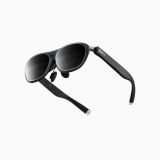 Three-quarter view of Rokid Max 2.
-
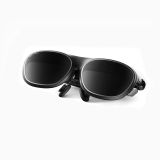 Rokid Max 2 with folded temples.


References
- ↑ 1.0 1.1 1.2 "Rokid Unveils Rokid AR Lite". TechNode Global (PR Newswire). Rokid. 2024-04-23. https://technode.global/prnasia/rokid-unveils-rokid-ar-lite/. Retrieved 2026-10-14.
- ↑ 2.0 2.1 2.2 2.3 2.4 2.5 2.6 "<IFA>Rokid、ARグラス新モデル「Rokid AR Joy 2」発表". Gadget Gate (Phile-web). 2024-09-09. https://gadget.phileweb.com/?p=84031. Retrieved 2026-10-14.
- ↑ 3.0 3.1 3.2 3.3 "Rokid Max 2 AR Glasses". Rokid Global Store. Rokid. https://global.rokid.com/products/rokid-max-2-ar-glasses. Retrieved 2026-10-17.
- ↑ 4.00 4.01 4.02 4.03 4.04 4.05 4.06 4.07 4.08 4.09 4.10 4.11 4.12 4.13 4.14 "Rokid Max 2 AR Glasses (product page with specifications, archived 19 July 2025)". Rokid Global Store. Rokid. 2025-07-19. https://web.archive.org/web/20250719022845/https://global.rokid.com/products/rokid-max-2-ar-glasses. Retrieved 2026-10-14.
- ↑ 5.0 5.1 5.2 "What the improvements are in the Rokid Max 2 glasses?". Rokid Max 2 FAQ. Rokid. 2024-06-19. https://global.rokid.com/blogs/max-2/what-the-improvements-are-in-the-rokid-max-2-glasses. Retrieved 2026-10-14.
- ↑ 6.0 6.1 6.2 6.3 6.4 6.5 Rebekah Carter (2025-01-09). "Rokid Max 2 Review: Sharp New AR Specs from Rokid". XR Today. https://www.xrtoday.com/augmented-reality/rokid-max-2-review-sharp-new-ar-specs-from-rokid/. Retrieved 2026-10-14.
- ↑ 7.0 7.1 7.2 7.3 7.4 7.5 7.6 7.7 Daniel W. Rasmus (2025-09-12). "Rokid Max 2 AR Glasses Review: Wired AR Glasses Prove Better As Media Consumption Companion Than a Work Display". Serious Insights. https://www.seriousinsights.net/rokid-max-2-ar-glasses-review-wired-ar-glasses-prove-better-as-media-consumption-companion-than-a-work-display/. Retrieved 2026-10-14.
- ↑ Josef Erl (2024-04-23). "New Rokid Max 2 AR glasses with seamless diopter adjustment introduced". MIXED. https://mixed-news.com/en/new-rokid-max-2-ar-glasses-with-seamless-diopter-adjustment-introduced/. Retrieved 2026-10-14.
- ↑ "Rokid AR Lite Smashes Crowdfunding Goal on Kickstarter". TechNode Global (PR Newswire). Rokid. 2024-05-28. https://technode.global/prnasia/rokid-ar-lite-smashes-crowdfunding-goal-on-kickstarter/. Retrieved 2026-10-14.
- ↑ "Rokid AR Lite, Your First AR Glasses for Spatial Computing (campaign page, archived 31 October 2025)". Kickstarter. Rokid. https://web.archive.org/web/20251031005239/https://www.kickstarter.com/projects/rokid/rokid-ar-lite. Retrieved 2026-10-17.
- ↑ 11.0 11.1 11.2 11.3 11.4 Thomas Sibilly (2024-11-28). "Rokid Max 2 AR Glasses review: Hardwire shines, software needs polish". AppleInsider. https://web.archive.org/web/20241128204543/https://appleinsider.com/articles/24/11/28/rokid-max-2-ar-glasses-review-hardwire-shines-software-needs-polish. Retrieved 2026-10-17.
- ↑ 12.0 12.1 12.2 12.3 Sachin Bahal (2024-09-06). "Rokid Max 2 AR glasses officially unveiled". The Canadian Techie. https://thecanadiantechie.com/2024/09/06/rokid-max-2-ar-glasses-officially-unveiled/. Retrieved 2026-10-14.
- ↑ 13.0 13.1 13.2 13.3 13.4 13.5 13.6 Harish Jonnalagadda (2025-06-23). "Rokid Max 2 review: These AR glasses are nothing short of amazing". Android Central. https://www.androidcentral.com/gaming/virtual-reality/rokid-max-2-review. Retrieved 2026-10-14.
- ↑ 14.00 14.01 14.02 14.03 14.04 14.05 14.06 14.07 14.08 14.09 14.10 14.11 14.12 Hamish Hector (2025-06-22). "Rokid Max 2 review: good AR smart glasses that aren't quite great". TechRadar. https://www.techradar.com/computing/virtual-reality-augmented-reality/rokid-max-2-review. Retrieved 2026-10-14.
- ↑ 15.0 15.1 "What is the refresh rate of the Rokid Max 2?". Rokid Max 2 FAQ. Rokid. 2024-06-19. https://global.rokid.com/blogs/max-2/what-is-the-refresh-rate-of-the-rokid-max-2. Retrieved 2026-10-14.
- ↑ 16.0 16.1 16.2 16.3 "What is the display resolution of the Rokid Max 2?". Rokid Max 2 FAQ. Rokid. 2024-06-19. https://global.rokid.com/blogs/max-2/what-is-the-display-resolution-of-the-rokid-max-2. Retrieved 2026-10-14.
- ↑ 17.0 17.1 17.2 17.3 17.4 17.5 17.6 17.7 17.8 "Rokid Unveils Rokid Max AR Glasses with Premium MAX Theater Experience". Business Wire (via Observer-Reporter). Rokid. 2023-03-21. https://stocks.observer-reporter.com/observerreporter/article/bizwire-2023-3-22-rokid-unveils-rokid-max-ar-glasses-with-premium-max-theater-experience. Retrieved 2026-10-14.
- ↑ 18.0 18.1 18.2 18.3 18.4 Mark Westlake (2026-06-26). "Rokid Max 2 Review: These AR Glasses Bring a 215-Inch Theater Anywhere You Go". GearBrain. https://www.gearbrain.com/rokid-max-2-ar-glasses-review-2677109307.html. Retrieved 2026-10-14.
- ↑ "The Rokid Max 2 had electrocromatoc dimming or just the cap like the Rokid Max". Rokid Max 2 FAQ. Rokid. 2024-06-20. https://global.rokid.com/blogs/max-2/the-rokid-max-2-had-electrocromatoc-dimming-or-just-the-cap-like-the-rokid-max. Retrieved 2026-10-14.
- ↑ "Can I use prescription lenses with the Rokid Max 2?". Rokid Max 2 FAQ. Rokid. 2024-06-20. https://global.rokid.com/blogs/max-2/can-i-use-prescription-lenses-with-the-rokid-max-2. Retrieved 2026-10-14.
- ↑ 21.0 21.1 "Does the Rokid Max 2 allow for manual IPD (interpupillary distance) adjustment?". Rokid Max 2 FAQ. Rokid. 2024-06-20. https://global.rokid.com/blogs/max-2/does-the-rokid-max-2-allow-for-manual-ipd-interpupillary-distance-adjustment. Retrieved 2026-10-14.
- ↑ "Are the new Max 2 nose pieces compatible with the Max 1?". Rokid Max 2 FAQ. Rokid. 2024-06-20. https://global.rokid.com/blogs/max-2/are-the-new-max-2-nose-pieces-compatible-with-the-max-1. Retrieved 2026-10-14.
- ↑ 23.0 23.1 "Does max2 have a built-in microphone?". Rokid Max 2 FAQ. Rokid. 2024-06-27. https://global.rokid.com/blogs/max-2/does-max2-have-a-built-in-microphone. Retrieved 2026-10-14.
- ↑ "Is it possible to hear the sound by earbuds instead of by the glasses? If yes, the pairing is with the glasses or with the source?". Rokid Max 2 FAQ. Rokid. 2024-06-20. https://global.rokid.com/blogs/max-2/is-it-possible-to-hear-the-sound-by-earbuds-instead-of-by-the-glasses-if-yes-the-pairing-is-with-the-glasses-or-with-the-source. Retrieved 2026-10-17.
- ↑ "Does the Max2 have some simple voice commands?". Rokid Max 2 FAQ. Rokid. 2024-06-20. https://global.rokid.com/blogs/max-2/does-the-max2-have-some-simple-voice-commands. Retrieved 2026-10-17.
- ↑ "How much power does it such from iPhone when it's connected via cable?". Rokid Max 2 FAQ. Rokid. 2024-06-20. https://global.rokid.com/blogs/max-2/how-much-power-does-it-such-from-iphone-when-its-connected-via-cable. Retrieved 2026-10-14.
- ↑ 27.0 27.1 Suzanne Kantra (2025-04-18). "Rokid's Premium Max 2 AR Glasses Drop to All-Time Low of $399". Techlicious. https://www.techlicious.com/blog/rokid-max-2-ar-glasses-now-399/. Retrieved 2026-10-14.
- ↑ "Is this support Redmi K20 Pro mobile?". Rokid Max 2 FAQ. Rokid. 2024-06-27. https://global.rokid.com/blogs/max-2/is-this-support-redmi-k20-pro-mobile. Retrieved 2026-10-17.
- ↑ "What are the functions of the glasses without the app?". Rokid Max 2 FAQ. Rokid. 2024-06-20. https://global.rokid.com/blogs/max-2/what-are-the-functions-of-the-glasses-without-the-app. Retrieved 2026-10-17.
- ↑ 30.0 30.1 30.2 "How can I connect Rokid Max 2 to different devices?". Rokid Max 2 FAQ. Rokid. 2024-06-19. https://global.rokid.com/blogs/max-2/how-can-i-connect-rokid-max-2-to-different-devices. Retrieved 2026-10-14.
- ↑ "How to use Rokid Hub?". Rokid Max 2 FAQ. Rokid. 2024-06-21. https://global.rokid.com/blogs/max-2/how-to-use-rokid-hub. Retrieved 2026-10-14.
- ↑ 32.0 32.1 32.2 "Does Air/Max/Max2 support 3DoF independently?". Rokid Max 2 FAQ. Rokid. 2024-06-19. https://global.rokid.com/blogs/max-2/does-air-max-max2-support-3dof-independently. Retrieved 2026-10-14.
- ↑ "Are the AR Lite glasses also called Max 2 glasses, or are these different?". Rokid Max 2 FAQ. Rokid. 2024-06-27. https://global.rokid.com/blogs/max-2/are-the-ar-lite-glasses-also-called-max-2-glasses-or-are-these-different. Retrieved 2026-10-17.
- ↑ "Does the Rokid Max 2 support spatial computing?". Rokid Max 2 FAQ. Rokid. 2024-06-20. https://global.rokid.com/blogs/max-2/does-the-rokid-max-2-support-spatial-computing. Retrieved 2026-10-17.
- ↑ "Is there a chip inside the glasses to automatically reduce screen movement?". Rokid Max 2 FAQ. Rokid. 2024-06-20. https://global.rokid.com/blogs/max-2/is-there-a-chip-inside-the-glasses-to-automatically-reduce-screen-movement. Retrieved 2026-10-17.
- ↑ "Rokid Fall Sale 2026". Rokid Global Store. Rokid. https://global.rokid.com/pages/fall-sale-2026. Retrieved 2026-10-17.
- ↑ "Rokid AR Joy 2". Rokid Global Store. Rokid. https://global.rokid.com/products/rokid-ar-joy-2. Retrieved 2026-10-17.
- ↑ "Rokid AR Spatial". Rokid Global Store. Rokid. https://global.rokid.com/products/rokid-ar-spatial. Retrieved 2026-10-17.
- ↑ "Rokid Station 2". Rokid Global Store. Rokid. https://global.rokid.com/products/rokid-station-2. Retrieved 2026-10-17.