

Meta Quest 3
More actions
| Meta Quest 3 | |
|---|---|

| |
| Basic Info | |
| VR/AR | Virtual Reality, Mixed Reality |
| Type | Head-mounted display |
| Subtype | Standalone VR |
| Platform | Meta Quest |
| Creator | Reality Labs |
| Developer | Reality Labs |
| Manufacturer | Meta Platforms |
| Announcement Date | June 1, 2023 |
| Release Date | October 10, 2023 |
| Price | US$599.99 (512 GB; checked September 17, 2026) |
| Website | meta.com/quest/quest-3 |
| Versions | 128 GB (launch), 512 GB |
| Requires | Meta account |
| Predecessor | Meta Quest 2 |
| System | |
| Operating System | Meta Horizon OS |
| Chipset | Qualcomm Snapdragon XR2 Gen 2 |
| CPU | Qualcomm Kryo, six cores |
| GPU | Qualcomm Adreno |
| Storage | |
| Storage | 512 GB; originally also 128 GB |
| Memory | 8 GB |
| Display | |
| Display | LCD |
| Resolution | 2064 × 2208 per eye |
| Pixel Density | 1218 PPI |
| Refresh Rate | 72/90/120 Hz advertised; extended modes described below |
| Image | |
| Field of View | 110° horizontal, 96° vertical (specified) |
| Horizontal FoV | 110° |
| Vertical FoV | 96° |
| Average Pixel Density | 25 PPD |
| Optics | |
| Optics | Pancake lenses |
| Ocularity | Binocular |
| IPD Range | 58-70 mm lens spacing; accommodates 53-75 mm IPD |
| Passthrough | Stereoscopic color, 4 MP cameras, 18 PPD |
| Tracking | |
| Tracking | 6DoF, Inside-out tracking |
| Base Stations | No |
| Eye Tracking | No |
| Face Tracking | No |
| Hand Tracking | Yes |
| Body Tracking | Camera-based upper-body tracking in supported applications |
| Play Space | Stationary or room-scale; 2 m × 2 m minimum for room-scale |
| Audio | |
| Audio | Integrated stereo speakers |
| Microphone | Integrated |
| 3.5mm Audio Jack | Yes |
| Camera | Two RGB cameras, four IR tracking cameras, depth sensor |
| Connectivity | |
| Connectivity | Wi-Fi 6E, Bluetooth 5.2 |
| Ports | USB-C, 3.5 mm audio jack |
| Wired Video | Meta Quest Link |
| Wireless Video | Air Link |
| WiFi | Wi-Fi 6E |
| Bluetooth | Bluetooth 5.2 |
| Battery Life | 2.2 hours average (manufacturer estimate) |
| Charge Time | Approximately 2.3 hours with 18 W adapter |
| Device | |
| Weight | 515 g (manufacturer specification) |
| Headstrap | Fabric strap |
| Haptics | Touch Plus controllers with TruTouch haptics |
| Color | White |
| Input | Two Touch Plus controllers; hand tracking |
Meta Quest 3 is a standalone virtual reality headset with mixed reality capabilities, developed by Reality Labs at Meta Platforms. It was announced on June 1, 2023, and released on October 10, 2023, as the successor to Meta Quest 2.[1][2] Its principal hardware changes include the Qualcomm Snapdragon XR2 Gen 2 processor, higher-resolution displays, pancake optics, stereoscopic color passthrough and a depth sensor.[2]
The headset runs applications locally and can stream PC VR through wired or wireless connections. As checked on September 17, 2026, Meta's US store lists the 512 GB model at US$599.99.[3][4]
Overview
Quest 3 contains its own processor, battery and tracking cameras, so standalone applications do not require a separate computer or external tracking base stations. It supports controllers and controller-free hand tracking. Meta specifies stationary use or a room-scale area of at least 2 m × 2 m.[5]
The device runs Meta Horizon OS, which is built on the Android Open Source Project. Meta introduced the Horizon OS name in April 2024; its September 2026 device comparison identifies Android 14 as the underlying Android version.[6][5] Standalone Quest applications and PC VR applications use different software platforms, even when a game is available on both.
Development and Release
Announcement and Launch
Mark Zuckerberg announced Quest 3 on June 1, 2023. Meta initially disclosed a US$499.99 starting price for 128 GB and said that a larger storage option would follow. The announcement also described compatibility with the existing Quest 2 library, which then contained more than 500 titles.[1]
At its September 27, 2023 launch presentation, Meta announced the 512 GB model, opened preorders and set October 10 as the release date. The US launch prices were US$499.99 for 128 GB and US$649.99 for 512 GB.[2] The later Meta Quest 3S uses the same processor generation but a different display and optical design; it is a separate headset model.[7]
US Pricing History
| Date | Storage configuration | US price | Context |
|---|---|---|---|
| October 10, 2023 | 128 GB | US$499.99 | Launch configuration.[2] |
| October 10, 2023 | 512 GB | US$649.99 | Larger launch configuration.[2] |
| September 25, 2024 | 512 GB | US$499.99 | Reduction announced alongside Quest 3S.[7] |
| April 19, 2026 | 512 GB | US$599.99 | Price increase announced on April 16; the same price was listed by Meta when checked on September 17, 2026.[8][4] |
These are dated US prices. Regional prices, taxes, retailer discounts and bundle offers can differ. The current Quest 3 listing offers 512 GB; the 128 GB entry above records the original configuration.[4]
Hardware
Display and Optics
Quest 3 uses LCD displays with 2064 × 2208 pixels per eye. Meta specifies 25 pixels per degree and 1218 pixels per inch, and described the resolution increase over Quest 2 as nearly 30%.[2] Its advertised field of view is 110° horizontally and 96° vertically.[3] These figures describe different axes and should not be read as a diagonal field of view.
Pancake optics allow a shallower optical assembly than Quest 2's Fresnel lenses. Meta's 40% slimmer figure compares the optical profile without the foam facial interface; it does not mean a 40% reduction in total headset weight.[1] In his October 2023 review, Ben Lang found that the lenses improved clarity away from the center of the image and reduced glare compared with Quest 2.[9]
The lens-spacing adjustment is continuous, from 58 to 70 mm. Meta separately states that the optics accommodate users with an interpupillary distance of 53 to 75 mm. The accommodated range is wider than the mechanical adjustment range.[3] The facial interface has an adjustable eye-relief mechanism, which changes the distance between the eyes and lenses and provides room for glasses. Fit and eye relief affect the visible field of view.[9]
Refresh Rates
The consumer specification lists 72, 90 and 120 Hz. Meta's developer documentation provides additional modes, including 80, 96 and 100 Hz.[3][10]
The developer documentation updated on August 27, 2026 describes extended rates for Quest 3 on Horizon OS v2.7 or later. Applications can request integer rates from 72 to 207 Hz at full display resolution. Rates above 207 Hz, up to 240 Hz, require developer mode and display scaling, which trades resolution for refresh rate. These extended modes do not apply to Quest 3S.[10]
A supported display mode does not establish the frame rate of every game. The application must request the mode and complete its rendering work fast enough; power and thermal limits also affect sustained performance.[10]
Processing and Performance
The Snapdragon XR2 Gen 2 platform contains a six-core Qualcomm Kryo CPU, an Adreno GPU and a Hexagon processor for AI workloads. Qualcomm describes the CPU arrangement as four plus two performance cores.[11] Quest 3 has 8 GB of RAM.[3] iFixit's examination of a 128 GB unit identified the XR2 Gen 2 package and a likely 8 GB LPDDR5 memory package.[12]
| Component or behavior | Description |
|---|---|
| System-on-chip | Qualcomm Snapdragon XR2 Gen 2.[3] |
| CPU | Six-core Kryo; operating frequency is managed by the headset software.[11][13] |
| GPU | Adreno graphics, with workload-dependent performance levels.[11][13] |
| Performance controls | Applications provide CPU and GPU performance hints. The operating system chooses the actual clocks according to workload and thermal constraints.[13] |
| Conditional boosts | Higher operating levels have eligibility and thermal restrictions. A listed peak or boost clock is not the headset's constant operating frequency.[14] |
At launch, Meta advertised twice the graphics processing power of Quest 2. That is a manufacturer's comparison, rather than a promise that each game will render at twice the resolution or frame rate.[2] The XR2 Gen 2 platform supports AV1 video decoding, which is also identified as a Quest 3 capability in Meta's developer guidance.[15]
Battery and Charging
Meta publishes the following usage estimates. They describe different workloads, rather than guaranteed minimum runtimes.[3]
| Usage or charging condition | Manufacturer estimate |
|---|---|
| Average use | 2.2 hours |
| Gaming | 2.4 hours |
| Social use | 2.2 hours |
| Productivity | 1.5 hours |
| Media | 2.9 hours |
| Full charge with the 18 W adapter | Approximately 2.3 hours |
Battery life depends on the application and operating conditions. High performance levels increase power use and can create more heat, which is why the operating system manages performance dynamically.[13]
Physical Design, Audio and Connectivity
The specified headset weight is 515 g. It has a fabric head strap, integrated stereo speakers, microphones, USB-C and a 3.5 mm headphone connection.[3] The slimmer optical assembly changes its shape and fit, but the standard strap remains an important part of comfort. TechRadar criticized the supplied strap in its review.[16]
Wireless connectivity consists of Wi-Fi 6E and Bluetooth 5.2.[5] PC streaming performance also depends on the computer, router and connection between them; the headset's Wi-Fi specification alone does not guarantee a particular stream quality.[17]
Tracking and Input Systems
Inside-Out Tracking
Quest 3 has two color cameras, four infrared tracking cameras and a depth sensor.[3] Its inside-out tracking system determines headset and controller movement without external base stations. Controllers combine inertial sensing with infrared LEDs observed by the headset cameras; Meta describes the tracking system as using computer vision and machine learning.[18]
Camera visibility and lighting matter for optical tracking. A controller or body part obscured from the cameras is a different tracking condition from one in clear view; predicted movement should not be confused with a direct camera observation.[18][19]
Touch Plus Controllers
The included Touch Plus controllers remove the large tracking rings used on Quest 2's controllers. Each retains a thumbstick, face buttons, a trigger and a grip control. They use replaceable AA batteries and TruTouch haptics.[1][5]
| Feature | Implementation |
|---|---|
| Positional input | Headset-based optical tracking combined with inertial sensing.[18] |
| Controls | Thumbsticks, face buttons, trigger and grip inputs, with capacitive sensing on supported controls.[20] |
| Trigger | Two-stage trigger sensing, including an additional pressure stage.[20] |
| Haptics | One voice-coil actuator per controller; Touch Plus does not provide all of Touch Pro's localized haptic outputs.[20] |
| Alternative controller | Meta announced support for separately sold Touch Pro controllers, which use their own tracking cameras.[1] |
Hand and Body Tracking
Hand tracking lets supported applications use the user's hands as input without the Touch Plus controllers. Quest 3 included hand-tracking support at launch; applications must implement the relevant interactions.[1] Meta has revised the tracking software over time. For example, Hand Tracking 2.2, introduced with the v56 system update, reduced tracking latency relative to the preceding implementation; its results should not be treated as one fixed latency value for every application.[21]
Inside-Out Body Tracking was introduced for Quest 3 with SDK v60 in December 2023. It uses the headset cameras to estimate upper-body movement. The accompanying Generative Legs system predicts lower-body poses from the available movement data; it does not directly track the legs with leg-mounted sensors.[22]
These features require application support. Obstruction by furniture, hands behind the body and difficult lighting can limit upper-body observations. Meta's Movement SDK documentation describes these conditions and the calibration used for body-pose estimation.[19] Quest 3 does not have eye- or face-tracking sensors.[9]
Mixed Reality Features
Color Passthrough
Quest 3 displays the camera view of its surroundings inside the headset and can combine it with rendered objects. Meta specifies stereoscopic 4 MP color cameras and a passthrough angular resolution of 18 pixels per degree.[5] This differs from Quest 2's monochrome passthrough. The Quest 3 display resolution and camera resolution describe separate parts of the imaging system.
Users can switch between an immersive view and passthrough by double-tapping the side of the headset.[2] At launch, Road to VR found the passthrough much more useful than on earlier consumer Quests, while still observing visible grain and distortion. Those observations concern the launch software tested in October 2023.[23]
Depth and Environmental Understanding
The depth sensor contributes to the headset's understanding of nearby surfaces. Meta's Presence Platform exposes several related capabilities to application developers.[24]
| Capability | Purpose |
|---|---|
| Scene information and Space Setup | Describe the room and surfaces used by a mixed reality application. |
| Mesh API | Represent the physical environment as a three-dimensional mesh. |
| Depth API | Provide per-eye depth estimates so real surfaces can occlude virtual objects. |
| Spatial Anchors | Associate virtual content with a position in the physical environment. |
| Shared Spatial Anchors | Support shared spatial placement across participating users. |
These APIs serve different functions. A room mesh is a representation of surfaces, while per-frame depth can be used to decide whether a real object should appear in front of rendered content. An application must implement the appropriate API rather than acquiring every effect simply by running on Quest 3.[24]
Play Area and Boundaries
Quest 3 supports stationary and room-scale use. Meta's minimum room-scale specification is 2 m × 2 m.[5] The suitability of a room also depends on the application's movement requirements. Passthrough and room understanding provide information about the surroundings, but the available space remains a physical constraint.
Software and Operating System
Meta Horizon OS
Horizon OS provides the system interface, application platform and device services. Its Android foundation does not make the headset an ordinary Android phone: Meta's developer quick-start documentation notes that Google Mobile Services are unavailable.[15]
The April 2024 ecosystem announcement introduced the Horizon OS and Horizon Store names. Meta said that ASUS Republic of Gamers and Lenovo were developing headsets using the platform, and separately announced work with Xbox on a limited-edition Quest. These were the projects described in that announcement, rather than release dates for future Quest models.[6]
The headset's browser uses Chromium and supports WebXR applications. Meta's browser documentation recommends feature detection because the APIs available to a web application depend on the browser version and operating environment.[25]
Application Compatibility and Updates
Quest 3 was introduced with compatibility for the existing Quest 2 catalog.[1] Older applications do not necessarily use all of the newer headset's features. Meta's compatibility mode can preserve behavior expected by an older application, while developers can update their software to use the newer device's capabilities.[26]
Display modes, body tracking and mixed reality APIs have their own operating-system, SDK and application requirements. For example, the December 2023 body-tracking release and the extended refresh modes documented in August 2026 are separate developments.[22][10]
Quest Games Optimizer
Quest Games Optimizer is a third-party application by Anagan79. It supplies per-game profiles and controls for parameters such as resolution and performance. It is separate from Meta's built-in operating-system performance management.[27] A profile can change the workload a game asks of the headset; it does not establish a universal resolution increase for the whole Quest catalog.
PC VR Compatibility
Quest 3 can function as a PC VR streaming headset. Meta supplies Quest Link for a USB connection and Air Link for wireless use.[3] Other applications provide separate routes to PC software:
| Method | Connection | Software and compatibility |
|---|---|---|
| Meta Quest Link | USB cable | Meta's PC VR connection.[3] |
| Air Link | Wi-Fi | Meta's wireless PC VR connection.[3] |
| Steam Link | Wi-Fi | Valve's application streams SteamVR from a compatible PC; Quest 3 is a supported headset.[28] |
| Virtual Desktop | Wi-Fi | Supports PC VR games on a VR-capable Windows computer; the developer maintains a game compatibility list.[17] |
| ALVR | Network streaming | Open-source SteamVR streaming software with Quest 3 support and Windows and Linux hosts.[29] |
Requirements differ between streaming applications. Valve specifies a VR-capable Windows PC, Steam and SteamVR, with at least a 5 GHz Wi-Fi 5 connection for its wireless setup. Virtual Desktop recommends connecting the PC to the router by Ethernet and using a 5 GHz AC or AX wireless network for the headset.[28][17] The PC must also meet the requirements of the game being streamed.
Games and Applications
Games Around the Headset's Release
The Quest 2 catalog gave Quest 3 an existing library at launch.[1] Several games promoted during the Quest 3 launch period arrived after the headset, so they should not all be described as October 10 launch titles.
| Title | Developer or studio | Description and release context |
|---|---|---|
| Asgard's Wrath 2 | Sanzaru Games | Action role-playing game released December 15, 2023, with an Egyptian setting, companions and physics-based combat.[30] |
| Assassin's Creed Nexus VR | Ubisoft studios | First-person adventure featuring Ezio, Connor and Kassandra. Ubisoft announced November 16, 2023 for Quest 2, Quest 3 and Quest Pro.[31] |
| Ghostbusters: Rise of the Ghost Lord | nDreams | Ghost-catching action with cooperative play for up to four players.[32] |
| I Expect You to Die 3 | Schell Games | Seated spy-puzzle game with six missions; the Quest release preceded Quest 3, on August 17, 2023.[33] |
| PowerWash Simulator VR | FuturLab and nDreams | VR adaptation with cooperative play, released November 2, 2023. nDreams published the VR edition.[34] |
| Vampire: The Masquerade - Justice | Fast Travel Games | A stealth and role-playing adventure set in Venice.[35] |
| Stranger Things VR | Tender Claws | Adaptation of the television series, released in February 2024.[36] |
| First Encounters | Meta | Mixed reality demonstration in which virtual creatures and objects appear within the scanned room.[23] |
Mixed Reality and Media
Mixed reality applications can place a game, a fitness activity or a screen in the user's surroundings. Meta's 2024 platform update described mixed reality support in Supernatural and high-definition Netflix viewing in the browser.[7] The presence of passthrough does not by itself establish that every media or social application offers a mixed reality mode.
On December 13, 2023, Xbox Cloud Gaming launched in beta on Quest. It streams conventional Xbox games to a virtual screen rather than converting them into VR games. At launch, Microsoft required an Xbox Game Pass Ultimate subscription, a supported controller and a suitable internet connection.[37]
Accessories
Meta offers replacement straps and facial interfaces for Quest 3. The Elite Strap is an alternative to the supplied fabric strap; separate facial-interface and strap options change the fit or appearance of the headset.[4] Accessory compatibility is model-specific: Quest 3's optical assembly and shell differ from those of Quest 2 and Quest 3S.
Third-party accessories include the BOBOVR M3 Pro battery strap, which uses a magnetically removable B2 battery, and Zenni's prescription lens inserts, which fit over Quest 3's lenses.[38][39] Zenni states that its Quest 3 and Quest 3S inserts are not interchangeable.[40]
Reception
Critical Reception
Road to VR's October 2023 review described a clearer image and improved passthrough, but found that the launch mixed reality library did not yet make full use of the hardware.[9][23] TechRadar praised the graphical performance, mixed reality and software library, while criticizing the strap and absence of eye tracking.[16]
In its October 2023 teardown, iFixit criticized the complicated process of replacing the headset battery. It contrasted that with the accessible, replaceable batteries in the controllers and gave Quest 3 a provisional repairability score of 4 out of 10.[41]
Market Measures
Valve's voluntary, anonymous Steam Hardware and Software Survey recorded Quest 3 at 26.01% of the VR headset category for August 2026. That measures the survey's PC-connected VR population, rather than worldwide Quest 3 sales or its standalone user base.[42]
Meta reported US$1.071 billion in Reality Labs revenue for the fourth quarter of 2023, the quarter in which Quest 3 launched. This is revenue for the division as a whole and does not disclose a Quest 3 unit-sales figure.[43]
Comparisons
Quest 3 and Quest 2
Quest 3 succeeded Quest 2 with a newer processor, 8 GB rather than 6 GB of RAM, higher display resolution and color rather than monochrome passthrough. Quest 2 uses Fresnel optics, while Quest 3 uses pancake optics.[5][1] Quest 3's greater computing capability does not remove the need for developers to optimize applications for a specific resolution and frame-rate target.[13]
Quest 3 and Quest 3S
Quest 3S shares the XR2 Gen 2 processor, 8 GB of RAM and Touch Plus controllers with Quest 3. Their main differences include optics, display resolution, field of view and environmental sensing.[5]
| Specification | Meta Quest 3 | Meta Quest 3S |
|---|---|---|
| Display resolution per eye | 2064 × 2208 | 1832 × 1920 |
| Optics | Pancake | Fresnel |
| Advertised field of view | 110° horizontal, 96° vertical | 96° horizontal, 90° vertical |
| IPD adjustment | Continuous | Three positions |
| Passthrough specification | Stereoscopic color, 4 MP cameras, 18 PPD | Stereoscopic color, 4 MP cameras, 18 PPD |
| Depth sensor | Present | Absent |
| Headphone connection | 3.5 mm jack | No 3.5 mm jack |
The table uses Meta's device comparison and current product specifications.[5][3] The matching passthrough camera figures should not be confused with the different display resolutions. The extended refresh modes described above are specific to Quest 3.[10]
Known Issues and Limitations
| Area | Limitation and context |
|---|---|
| Comfort | The stock strap's fit was criticized by TechRadar; comfort depends on the user and strap configuration.[16] |
| Passthrough | The launch-software observations are described in the color passthrough section above. |
| Input visibility | Occlusion and lighting can affect camera-based hand, controller and upper-body observations.[18][19] |
| Eye and face input | Quest 3 lacks eye- and face-tracking sensors.[9] |
| Performance | Supported refresh rates and peak operating levels do not guarantee sustained application frame rates.[10][14] |
| Repair | The headset battery requires substantial disassembly to replace, as documented by iFixit in 2023.[41] |
| PC streaming | Hardware, software and network requirements depend on the streaming application and game.[28][17] |
See Also
Images
-
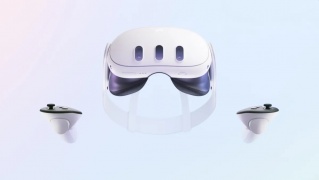 Meta Quest 3 and Touch Plus controllers
 -
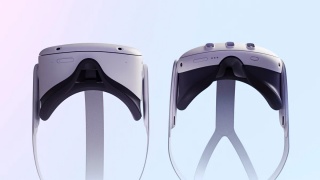 Underside views of two Quest headsets
 -
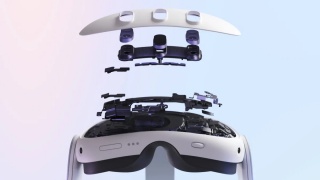 Exploded view of the headset
 -
 Quest 3 headset and controllers in use


External Links
References
- ↑ 1.0 1.1 1.2 1.3 1.4 1.5 1.6 1.7 1.8 "Meta Quest 3 Coming This Fall + Lower Prices for Quest 2". Meta Newsroom. June 1, 2023. https://about.fb.com/news/2023/06/meta-quest-3-coming-this-fall/. Retrieved September 17, 2026.
- ↑ 2.0 2.1 2.2 2.3 2.4 2.5 2.6 2.7 "Meet Meta Quest 3, Our Mixed Reality Headset Starting at $499.99". Meta Newsroom. September 27, 2023. https://about.fb.com/news/2023/09/meet-meta-quest-3-mixed-reality-headset/. Retrieved September 17, 2026.
- ↑ 3.00 3.01 3.02 3.03 3.04 3.05 3.06 3.07 3.08 3.09 3.10 3.11 3.12 "Meta Quest 3: Specifications". Meta Store. https://www.meta.com/quest/quest-3/. Retrieved September 17, 2026.
- ↑ 4.0 4.1 4.2 4.3 "Family & Kid-Friendly VR Games for Family Game Night". Meta Store. https://www.meta.com/quest/family/. Retrieved September 17, 2026.
- ↑ 5.0 5.1 5.2 5.3 5.4 5.5 5.6 5.7 5.8 "Compare Meta Quest Devices". Meta Horizon Developer Documentation. https://developers.meta.com/horizon/resources/compare-devices/. Retrieved September 17, 2026.
- ↑ 6.0 6.1 "A New Era for Mixed Reality". Meta Newsroom. April 22, 2024. https://about.fb.com/news/2024/04/introducing-our-open-mixed-reality-ecosystem/. Retrieved September 17, 2026.
- ↑ 7.0 7.1 7.2 "Meet Meta Quest 3S, Our Most Affordable Mixed Reality Headset". Meta Newsroom. September 25, 2024. https://about.fb.com/news/2024/09/meta-quest-3s-our-most-affordable-mixed-reality-headset/. Retrieved September 17, 2026.
- ↑ Marcus Stewart (April 16, 2026). "Meta Announces Price Increases For Quest 3 Headsets". Game Informer. https://gameinformer.com/2026/04/16/meta-announces-price-increases-for-quest-3-headsets. Retrieved September 17, 2026.
- ↑ 9.0 9.1 9.2 9.3 9.4 Ben Lang (October 9, 2023). "Meta Quest 3 Review". Road to VR. https://www.roadtovr.com/meta-quest-3-review-mixed-reality/. Retrieved September 17, 2026.
- ↑ 10.0 10.1 10.2 10.3 10.4 10.5 "Change Display Refresh Rate". Meta Horizon Developer Documentation. https://developers.meta.com/horizon/documentation/unreal/unreal-change-display-refresh-rate/. Retrieved September 17, 2026.
- ↑ 11.0 11.1 11.2 "Snapdragon XR2 Gen 2 Platform Product Brief". Qualcomm. https://docs.qualcomm.com/bundle/publicresource/87-73689-1_REV_A_Snapdragon_XR2_Gen_2_Platform_Product_Brief.pdf. Retrieved September 17, 2026.
- ↑ Shahram Mokhtari (October 13, 2023). "Meta Quest 3 Chip ID". iFixit. https://www.ifixit.com/Guide/Meta+Quest+3+Chip+ID/165932. Retrieved September 17, 2026.
- ↑ 13.0 13.1 13.2 13.3 13.4 "CPU and GPU Levels". Meta Horizon Developer Documentation. https://developers.meta.com/horizon/essentials/cpu-gpu-levels/. Retrieved September 17, 2026.
- ↑ 14.0 14.1 "Boost CPU and GPU Levels". Meta Horizon Developer Documentation. https://developers.meta.com/horizon/essentials/boost-cpu-gpu-levels/. Retrieved September 17, 2026.
- ↑ 15.0 15.1 "Quick Start". Meta Horizon Developer Documentation. https://developers.meta.com/horizon/essentials/quick-start/. Retrieved September 17, 2026.
- ↑ 16.0 16.1 16.2 Hamish Hector (October 3, 2024). "Meta Quest 3 review - the new best VR headset for most people". TechRadar. https://www.techradar.com/computing/virtual-reality-augmented-reality/hands-on-meta-quest-3-review. Retrieved September 17, 2026.
- ↑ 17.0 17.1 17.2 17.3 "Virtual Desktop". Virtual Desktop. https://www.vrdesktop.net/. Retrieved September 17, 2026.
- ↑ 18.0 18.1 18.2 18.3 "Controllers Technology". Meta Horizon Developer Documentation. https://developers.meta.com/horizon/design/controllers-technology/. Retrieved September 17, 2026.
- ↑ 19.0 19.1 19.2 "Movement SDK Overview". Meta Horizon Developer Documentation. https://developers.meta.com/horizon/documentation/unreal/unreal-movement-overview/. Retrieved September 17, 2026.
- ↑ 20.0 20.1 20.2 "Touch Plus Controllers". Meta Horizon Developer Documentation. https://developers.meta.com/horizon/documentation/native/pc/native-touch-plus-controllers/. Retrieved September 17, 2026.
- ↑ "All Hands on Deck: Crank up Hand Responsiveness and Unlock New Gameplay with Hands 2.2". Meta Horizon Developers Blog. August 21, 2023. https://developers.meta.com/horizon/blog/hand-tracking-22-response-time-meta-quest-developers/. Retrieved September 17, 2026.
- ↑ 22.0 22.1 "Inside-Out Body Tracking and Generative Legs". Meta Horizon Developers Blog. December 20, 2023. https://developers.meta.com/horizon/blog/inside-out-body-tracking-and-generative-legs/. Retrieved September 17, 2026.
- ↑ 23.0 23.1 23.2 Ben Lang (October 9, 2023). "Meta Quest 3 Review, page 2". Road to VR. https://www.roadtovr.com/meta-quest-3-review-mixed-reality/2/. Retrieved September 17, 2026.
- ↑ 24.0 24.1 "Building Mixed Reality on Meta Quest 3 with Presence Platform". Meta Horizon Developers Blog. September 28, 2023. https://developers.meta.com/horizon/blog/building-mixed-reality-MR-meta-quest-3-connect-developers-presence-platform/. Retrieved September 17, 2026.
- ↑ "Browser Specifications". Meta Horizon Developer Documentation. https://developers.meta.com/horizon/documentation/web/browser-specs/. Retrieved September 17, 2026.
- ↑ "Compatibility Mode". Meta Horizon Developer Documentation. https://developers.meta.com/horizon/essentials/compatibility-mode/. Retrieved September 17, 2026.
- ↑ "Quest Games Optimizer". Anagan79 on itch.io. https://anagan79.itch.io/quest-games-optimizer. Retrieved September 17, 2026.
- ↑ 28.0 28.1 28.2 "Steam Link For Meta, HTC and PICO Headsets". Steam Support. https://help.steampowered.com/en/faqs/view/0E2C-406B-9135-38A4. Retrieved September 17, 2026.
- ↑ "ALVR: Stream VR Games from Your PC to Your Headset". ALVR project on GitHub. https://github.com/alvr-org/ALVR. Retrieved September 17, 2026.
- ↑ "Asgard's Wrath 2". Meta Horizon Store. https://www.meta.com/experiences/2603836099654226/. Retrieved September 17, 2026.
- ↑ Mikel Reparaz (September 22, 2023). "Assassin's Creed Nexus VR Launches on November 16". Ubisoft News. https://news.ubisoft.com/en-us/article/47Q0bl959eSRomZ6MqWtLE/assassins-creed-nexus-vr-launches-on-november-16. Retrieved September 17, 2026.
- ↑ "Ghostbusters: Rise of the Ghost Lord". nDreams. https://ndreams.com/games/ghostbustersvr/. Retrieved September 17, 2026.
- ↑ "I Expect You To Die 3: Cog In The Machine Is Now Available on Meta Quest 2 and Meta Quest Pro". Schell Games. August 17, 2023. https://schellgames.com/blog/i-expect-you-to-die-3-cog-in-the-machine-is-now-available-on-meta-quest-2-and-meta-quest-pro. Retrieved September 17, 2026.
- ↑ "PowerWash Simulator VR Out Now on Meta Quest". nDreams. November 2, 2023. https://press.ndreams.com/powerwash-simulator-vr-out-now-on-meta-quest. Retrieved September 17, 2026.
- ↑ "Vampire: The Masquerade - Justice". Fast Travel Games. https://www.fasttravelgames.com/games/vtmjustice. Retrieved September 17, 2026.
- ↑ "Stranger Things VR game directed by UCSC's Samantha Gorman launches in partnership with Netflix, Meta". University of California. February 22, 2024. https://www.universityofcalifornia.edu/news/stranger-things-vr-game-directed-ucscs-samantha-gorman-launches-partnership-netflix-meta. Retrieved September 17, 2026.
- ↑ Joe Skrebels (December 13, 2023). "Play Xbox Game Pass on Even More Devices with Meta Quest 3 Today". Xbox Wire. https://news.xbox.com/en-us/2023/12/13/play-xbox-game-pass-with-meta-quest-3-today/. Retrieved September 17, 2026.
- ↑ "BOBOVR M3 Pro Battery Pack Head Strap". BOBOVR. https://www.bobovr.com/products/bobovr-m3-pro. Retrieved September 17, 2026.
- ↑ "VR Prescription Lenses for Meta Quest 3". Zenni Optical. https://www.zennioptical.com/p/vr-inserts-meta-quest-3/VR70003/VR7000301. Retrieved September 17, 2026.
- ↑ "Meta Quest VR Lenses". Zenni Optical Help Center. https://www.zennioptical.com/help/accessories-care/meta-quest-vr-lenses. Retrieved September 17, 2026.
- ↑ 41.0 41.1 Shahram Mokhtari (October 13, 2023). "Meta Quest 3 Teardown and the Future of VR Repairability". iFixit. https://www.ifixit.com/News/84572/meta-quest-3-teardown-and-the-future-of-vr-repairability-en. Retrieved September 17, 2026.
- ↑ "Steam Hardware & Software Survey: August 2026". Valve. https://store.steampowered.com/hwsurvey/Steam-Hardware-Software-Survey-Welcome-to-Steam. Retrieved September 17, 2026.
- ↑ "Meta Reports Fourth Quarter and Full Year 2023 Results; Initiates Quarterly Dividend". Meta Investor Relations. February 1, 2024. https://investor.atmeta.com/investor-news/press-release-details/2024/Meta-Reports-Fourth-Quarter-and-Full-Year-2023-Results-Initiates-Quarterly-Dividend/default.aspx. Retrieved September 17, 2026.