

OSVR HDK2
More actions
| OSVR HDK2 | |
|---|---|
 
| |
| Basic Info | |
| VR/AR | Virtual Reality |
| Type | Head-mounted display |
| Subtype | PC-Powered VR |
| Platform | OSVR, SteamVR |
| Developer | Razer, Sensics |
| Announcement Date | 13 June 2016 (E3 2016) |
| Release Date | 29 July 2016 (shipping start, United States and European Union); 3 October 2016 (Asia Pacific) |
| Price | US$399 at launch |
| Website | osvr.org/hdk2.html (archived; site defunct) |
| Requires | Windows PC with an HDMI 1.3 output and two USB 2.0 ports |
| Predecessor | OSVR HDK1 |
| Display | |
| Display | Dual low-persistence OLED displays, 441 PPI |
| Resolution | 2160 x 1200 (1080 x 1200 per eye) |
| Refresh Rate | 90 Hz |
| Image | |
| Field of View | 110 degrees (as reported at launch) |
| Optics | |
| Optics | Custom dual-lens system (not Fresnel) with IQE diffusion film |
| Adjustable Diopter | Per eye, +4.5 to -2 |
| Tracking | |
| Tracking | 6DoF: on-board IMU plus IR LED faceplate and rear IR LEDs read by an external 100 Hz IR camera |
| Audio | |
| Audio | No built-in headphones; surround sound audio codec and headphone jack in the belt box |
| Connectivity | |
| Connectivity | Wired, through a belt-worn breakout box and a 4-meter HDMI and power combo cable |
| Ports | Headset: 1 external USB 3.0, 2 internal USB 3.0; belt box: HDMI, power, USB 3.0, headphone jack |
| Device | |
| Weight | 1.43 lb (648.6 g) with cable (as reported by PC Gamer) |
| Material | Injection-molded plastic |
| Sensors | Accelerometer, gyroscope, compass |
| Input | None included; third-party controllers through OSVR |
The OSVR HDK2 (Hacker Development Kit 2, also written HDK 2 or HDK 2.0, and also called the Razer OSVR HDK 2) is a PC-tethered virtual reality head-mounted display from the OSVR (Open Source Virtual Reality) initiative, whose co-founders and organizers were Razer and Sensics. It was unveiled at E3 2016 on 13 June 2016 as the successor to the HDK 1.4 (see OSVR HDK1), and its main change was a dual OLED display with a combined resolution of 2160 x 1200 at 90 Hz, the same on-paper display specification as the Oculus Rift and HTC Vive.[1][2]
The headset cost US$399 at launch, against US$599 for the Rift and US$799 for the Vive at the time.[3] Pre-orders opened on 20 July 2016 and shipping was scheduled to begin on 29 July 2016.[4] The HDK2 shipped without motion controllers and used a single external infrared camera for positional tracking. Reviewers praised its price and display resolution but criticized its tracking, fit and cabling.[5][6] Razer stopped work on OSVR in 2017 to join the Khronos Group's OpenXR effort, but said in April 2018 that it would keep offering HDK2 kits for customers such as the location-based VR operator Zero Latency.[7]
Announcement and release
E3 2016 announcement
Razer and Sensics introduced the HDK 2 at E3 2016 in Los Angeles on 13 June 2016. Their press release described a 90 Hz low-persistence OLED dual display with a total resolution of 2160 x 1200, custom designed lenses and "IQE (Image Quality Enhancer) technology for a reduced screen door effect". It gave the price as US$399 with shipping in July, and said the HDK 1.4 would remain on sale at US$299.[1] Road to VR reported that the HDK 2 was nearly identical to the HDK 1.4 apart from the new display, and that the two models would be sold side by side.[2] AnandTech noted that the previous model used a single 1920 x 1080 display.[3]
Razer showed the headset at its E3 booth, where the Gloveone motion-tracking gloves from NeuroDigital Technologies were also available for demos; the release said the gloves would become a controller option for the HDK and other OSVR headsets on their public release. The demo content listed in the release was RedOut (34BigThings), Theme Park Studio (Pantera Entertainment), The Hum: Abductions (Totwise Studios), Infinite (Project Gateway VR Studios) and A-10 VR (Futuretown).[1] At the same show Razer announced a US$5 million OSVR developer fund. Under the fund, Razer or later contributors would buy game codes in bulk from developers who added OSVR support, and would also give them marketing and promotional support.[3][8]
OSVR's product page described the HDK 2 as "For developers and enthusiasts", and Razer's support FAQ says the Hacker Development Kit is "primarily for developers and enthusiasts".[9][10] Razer's FAQ also said that OSVR had over 320 official supporters as of May 2016, including Intel, NVIDIA, Acer, Ubisoft, Gearbox Software and Legendary Studios.[10] Razer told TechRadar in June 2016 that it also wanted to push this version toward PC gamers.[11]
Pre-orders and launch
Pre-orders opened on 20 July 2016 at US$399 for the basic configuration, with shipping set to begin on 29 July. Orders placed through 28 July came with the games Descent: Underground and Radial-G: Racing Revolved while supplies lasted. Razer said initial sales would be limited to the United States and the European Union.[12][4] According to Road to VR, the basic kit contained the enclosure with orange and black head straps, the HMD module with its inertial sensors and USB 3.0 connectivity, the IR faceplate and IR camera, the display and optics modules, the belt box and the facemask.[12] Razer's support FAQ also mentions a microfiber cleaning cloth and an air puffer for removing dust between the lenses and the displays.[10]
Asia-Pacific launch
On 3 October 2016, in a release datelined Unite Singapore, the organizers of OSVR made the HDK 2 available in the Asia-Pacific region, selling it through RazerStore, again with Descent: Underground and Radial-G: Racing Revolved included while stock lasted. The release said the headset could be tried at Unite Singapore on 3 and 4 October and at PAX Australia in Melbourne on 4 to 6 November 2016.[13] The release lists these local prices:[13]
| Country or territory | HDK 2 MSRP (local currency, October 2016) |
|---|---|
| Australia | 649.95 |
| New Zealand | 699.95 |
| Philippines | 21,990 |
| Japan | 49,800 |
| Thailand | 15,990 |
| Taiwan | 14,490 |
| Malaysia | 1,899.90 |
| Singapore | 604.90 |
| South Korea | 579,000 |
| Hong Kong | 3,339 |
Screen upgrade kit for older HDKs
In early August 2016 Sensics began selling, through the new OSVR Store, a US$220 screen upgrade kit that gave HDK 1.3 and HDK 1.4 owners the HDK 2 display. The kit contained two 1080 x 1200, 90 Hz low-persistence OLED screens pre-assembled with matching drive electronics and a mounting plate, plus a mechanical adapter.[14] Installing it disables the auxiliary USB connector on the side of the headset. Road to VR reported that, according to OSVR, installation could take as little as 15 minutes and needed no special tools.[15] Sensics CEO Yuval Boger said the kit gave developers the new features "at half the cost" of a new headset.[14]
Design and hardware
The HDK2 uses the modular design of the earlier Hacker Development Kits. OSVR's product page splits it into faceplate, mainboard, display, optics, mechanical and belt box modules, and the HDK2 uses the same housing as the HDK 1.4.[9][6]
Display
The display module is described as a "Dual Display 2160x1200 low persistence OLED silver screen with 441 PPI running at 90 fps". The headset uses one panel per eye, each 1080 x 1200 pixels.[9][2] Road to VR noted that the move to low persistence greatly reduces the blur seen during head movement.[2] The October 2016 release calls the panels "OLED, RGB" displays.[13] AnandTech, writing at the announcement, said the panels were PenTile.[3]
To reduce the screen door effect, the headset uses what OSVR calls IQE (Image Quality Enhancement, or Image Quality Enhancer). An OSVR spokesperson described it to AnandTech as an optical coating. Road to VR and PC Gamer described it as a diffusion film on the lenses.[3][2][8] Launch coverage gave the field of view as 110 degrees.[8][5]
Optics
OSVR describes the optics as a "high performance dual lens system" with an enlarged eye box, low geometric distortion and a colour-corrected image. Each eye has its own focus adjustment, so users can go without glasses. The diopter range is +4.5 to -2.[9] Razer's FAQ gives the same range as +450 to -200 degrees, adjusted with dials, and advises users outside that range to wear glasses or contact lenses.[10][6] The October 2016 release calls them "custom designed SLR grade lenses".[13]
The lenses are round convex lenses carried over from the HDK 1.4, not the Fresnel lens designs of the Rift and Vive. Tom's Hardware found that they give a clear image straight ahead but lose clarity toward the edges, which leaves a narrow sweet spot. Its reviewer found that the lenses touched his orbital bone and nose at a setting of 2, and that closer settings were uncomfortable.[6] Sources disagree on interpupillary distance adjustment. Road to VR's announcement report said the lenses had both diopter and IPD adjustment, but Tom's Hardware found that the headset has no mechanical IPD adjustment.[2][6]
Tracking
The mainboard has a sensor hub with an accelerometer, a gyroscope and a compass for rotational head tracking.[9] Positional tracking uses the v1.4 IR faceplate, an array of infrared LEDs on the front of the headset, which is watched by an external IR camera running at 100 Hz. A block with more IR LEDs sits at the back of the head strap for rear tracking.[9][6] OSVR also offered a faceplate variant with built-in Leap Motion hand tracking.[9] Digital Trends reported the Leap Motion faceplate as a US$75 add-on.[16]
Razer's support FAQ tells users to keep the headset in line of sight of the camera and no more than 3 meters away.[10] In its review, Tom's Hardware wrote that the HDK2 uses the same camera as the HDK 1.4, that the headset has no side-facing IR LEDs, and that the switch from camera tracking to IMU-only tracking when the user turns away was "jarring".[17] In June 2016 Razer told TechRadar that it was working on a multi-camera setup.[11]
Mainboard, belt box and connections
Besides the sensor hub, the mainboard has one external USB 3.0 connection for accessories and two internal USB 3.0 connectors for expansion, and it can be reprogrammed.[9] A single cable with a proprietary connector runs from the headset to a breakout box worn on the belt. The box has HDMI, power, headphone and USB ports, and a 4-meter HDMI and power combo cable connects it to the PC.[6] OSVR lists extra USB 3.0 connectivity, an integrated surround sound audio codec, signal boosters and easier cable management for the belt box.[9] There are no built-in headphones.[3]
Mechanical design
The body is injection-molded flat-black plastic with a removable IR faceplate. A three-point strap system (an elastic band around the head and an adjustable Velcro strap over the top) holds the headset in place.[6] The removable facemask has a bamboo charcoal microfibre foam layer, with extra padding for the cheekbones and a nose bridge with rubber inserts.[9] It is attached with Velcro, can be replaced, and should be rinsed only in cold water because heat can split the glue in the foam layer.[10] PC Gamer reported a weight of 1.43 pounds (648.6 g) with the cable.[8]
Open hardware files
The OSVR GitHub organization publishes production files for each HDK version, including an "HDK Ver. 2.0" folder with electronics and mechanical files. They are released under Razer's Module Developer Kit License.[18] According to OSVR's license FAQ, the software SDK uses the Apache 2.0 license. Because there was no clear standard open-source license for hardware, the hardware license was modelled on Google's Project Ara Module Development Kit, and modifications to the HDK design are licensed back to Razer so it can re-license them to the community.[19]
Specifications
| Component | Specification |
|---|---|
| Display | Dual low-persistence OLED, 441 PPI, IQE screen-door reduction[9] |
| Resolution | 2160 x 1200 combined (1080 x 1200 per eye)[9] |
| Refresh rate | 90 Hz[1] |
| Field of view | 110 degrees (launch coverage)[8] |
| Optics | Dual-lens system, enlarged eye box, individual eye focus[9] |
| Diopter range | +4.5 to -2[9] |
| Rotational tracking | Accelerometer, gyroscope, compass[9] |
| Positional tracking | v1.4 IR LED faceplate with 100 Hz external IR camera[9] |
| Headset ports | 1 external USB 3.0, 2 internal USB 3.0[9] |
| Belt box | USB 3.0, surround sound audio codec, signal boosters, HDMI, power, headphone jack[9][6] |
| Facemask | Removable, bamboo charcoal microfibre foam layer[9] |
| Weight | 1.43 lb (648.6 g) with cable[8] |
| Launch price | US$399[1] |
Software and content
The HDK2 runs on the open-source OSVR software platform. The OSVR Server is responsible for the headset's runtime.[20] At launch, Razer said both HDK models supported SteamVR and native OSVR experiences.[1] The October 2016 release added WebVR and 360-degree video players, and a beta HDK Windows Installer was offered to simplify setup.[13] By August 2016 OSVR said it supported WebVR and Unreal Engine 4.12, offered SteamVR support with distortion correction and direct mode, and had added an OSVR editor to the Unity menu bar.[14] Razer's FAQ explains that direct mode lets the headset show content without going through the normal Windows display setup. Because some games do not support it, the FAQ also describes how to switch direct mode off and on.[10]
The Windows installer sets up the OSVR Server console, a firmware update utility, test applications and a tray icon. Its 0.8 beta was meant to improve IR tracking accuracy, and because it bundles drivers for both platforms, users no longer had to reinstall software to switch between native OSVR and SteamVR content.[20][17] In late November 2016 Valve added OSVR to Steam's list of supported VR platforms. It was the first headset platform added since the HTC Vive, and Valve's Chet Faliszek estimated that about 200 games on Steam supported OSVR in some form.[21] After this change, SteamVR detected the headset whenever OSVR Server was running, so users no longer needed a private SteamVR beta branch.[20] Oculus content was not supported. Razer said HTC Vive content worked through SteamVR, but the room-scale tracking and motion controllers that many Vive games need were not available in the OSVR ecosystem.[10]
Controllers
No controller was included. OSVR said owners could choose from many controllers made by different companies, and TechCrunch named Nod and Leap Motion among the supported input makers.[4][22] TechRadar's hands-on mentioned partnerships with Leap Motion and Manus for hand input.[5] In 2017 Tom's Hardware noted that the Razer Hydra could still be used if a buyer already owned one, although Razer had stopped selling it. It added that OSVR suggested the NOLO VR system for room-scale and hand tracking with the HDK2.[23]
System requirements
Digital Trends listed the following PC requirements for the HDK 2.0.[14]
| Component | Requirement |
|---|---|
| Graphics | NVIDIA GeForce GTX 970 or AMD Radeon R9 280, or equivalent |
| Processor | Intel Core i5-4590 or equivalent |
| Memory | 8 GB or more |
| Ports | Two USB 2.0 ports and an HDMI 1.3 video output |
Razer's general FAQ guidance from May 2016 said tethered headsets needed at least a GTX 970 or equivalent, an i5-4590 or equivalent and 8 GB of RAM.[10] In TechRadar's hands-on, OSVR product manager Jeevan Aurol pointed to the specifications published by Oculus and HTC.[5] Tom's Hardware wrote in 2017 that the OSVR group had no explicit list of recommendations. It noted that the HDK 2.0 supported AMD graphics cards, unlike the HDK 1.4 at the time of its review, but did not support Asynchronous Spacewarp, asynchronous timewarp or reprojection, so it advised buyers to aim above GTX 970 or R9 290 class hardware.[20]
Comparison with HDK 1.4
| Feature | HDK 1.4 | HDK 2 |
|---|---|---|
| Resolution | 1920 x 1080[3] | 2160 x 1200[3] |
| Refresh rate | 60 Hz[15] | 90 Hz[15] |
| Display layout | Single display[20] | Two displays, one per eye[2] |
| Launch price (2016) | US$299[1] | US$399[1] |
Commercial use
The location-based VR company Zero Latency used modified HDK2 headsets in its multiplayer free-roam arenas, including the one that opened at the MGM Grand in Las Vegas in September 2017. Co-founder and CTO Scott Vandonkelaar told Tom's Hardware that the company chose OSVR because of licensing and product availability. He also said that its agreement with Sensics and Razer let it make design changes to the kits before they left the factory. Zero Latency used slightly different foams on the headsets at its sites and was rolling out a new faceplate and a new tracking bracket.[24] Tom's Hardware also gave the example of MindMaze, which used an OSVR headset to prototype its Mask facial expression sensor before building a refined unit for the HTC Vive.[23]
Reception
TechRadar's hands-on at E3 2016 said the second kit addressed many of the problems of the original. It found the headset less comfortable than the Rift or Vive and noted that it had no touch controllers. It also warned that a single camera meant tracking would suffer unless the user faced it, and that content drawn from many sources had little quality control.[5] TechCrunch described OSVR as "primarily for developers and hackers right now" and said the modular design made the headset harder to set up.[4]
Tom's Hardware reviewed the HDK2 in July 2017. It called the headset "a marked improvement over the HDK 1.4" but concluded that it "still falls short of the mark". The review listed the resolution, open platform and suitability for tinkerers as positives, and poor tracking, uncomfortable fit, poor weight distribution and too many cables as negatives.[6] It could not measure motion-to-photon latency because Basemark's VRScore tool was incompatible with the OSVR Windows Installer.[25] The review also found that some Steam games listed as OSVR-compatible did not work without Vive controllers. It argued that the December 2016 release of Oculus Touch and the March 2017 Rift price cut to US$500 weakened the HDK2's case as a development kit.[23][26]
Discontinuation of OSVR work
In April 2018 Tom's Hardware reported that Razer had quietly stopped pursuing OSVR after joining the Khronos OpenXR project in 2017, and that news about OSVR during 2017 had come from Sensics rather than Razer. Razer product manager Jeevan Aural (spelled "Aurol" in TechRadar's 2016 coverage) said Razer's OSVR efforts "have indeed been deprecated", but that the company would continue to offer HDK2 kits "to support initiatives such as Zero Latency".[7]
See also
Gallery
-
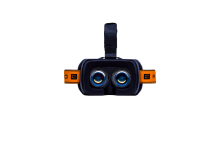 OSVR HDK 2 lenses view.
-
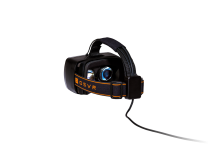 OSVR HDK 2 rear view.


References
- ↑ 1.0 1.1 1.2 1.3 1.4 1.5 1.6 1.7 Chee Kit Liang (2016-06-13). "OSVR Unveils Open Source 2160 x 1200 Dual Display Headset". Razer Newsroom. Razer. https://www.razer.com/newsroom/product-news/osvr-unveils-open-source-2160x1200-dual-display-headset. Retrieved 2026-10-12.
- ↑ 2.0 2.1 2.2 2.3 2.4 2.5 2.6 Ben Lang (2016-06-13). "OSVR Announces $399 HDK 2 Headset with 2160x1200 Resolution". Road to VR. https://www.roadtovr.com/osvr-hdk-2-vr-headset-2160x1200-price-release-date/. Retrieved 2026-10-12.
- ↑ 3.0 3.1 3.2 3.3 3.4 3.5 3.6 3.7 Brett Howse (2016-06-13). "Razer Exhibits OSVR HDK2 VR Headset, And $5 Million Developer Fund At E3 2016". AnandTech. https://web.archive.org/web/20161109061435/http://www.anandtech.com/show/10412/razer-exhibits-osvr-hdk2-vr-headset-and-5-million-developer-fund-at-e3-2016. Retrieved 2026-10-12.
- ↑ 4.0 4.1 4.2 4.3 Lucas Matney (2016-07-20). "Razer opens pre-orders for OSVR HDK 2 virtual reality headset". TechCrunch. https://techcrunch.com/2016/07/20/razer-opens-pre-orders-for-osvr-hdk-2-virtual-reality-headset/. Retrieved 2026-10-12.
- ↑ 5.0 5.1 5.2 5.3 5.4 Nick Pino (2016-06-16). "Hands on: Razer OSVR HDK 2 review". TechRadar. https://www.techradar.com/reviews/gaming/gaming-accessories/razer-osvr-hdk-2-1277810/review. Retrieved 2026-10-12.
- ↑ 6.00 6.01 6.02 6.03 6.04 6.05 6.06 6.07 6.08 6.09 Kevin Carbotte (2017-07-03). "OSVR Hacker Developer Kit 2 Review". Tom's Hardware. https://www.tomshardware.com/reviews/osvr-hdk2-vr-headset,5084.html. Retrieved 2026-10-12.
- ↑ 7.0 7.1 Kevin Carbotte (2018-04-26). "Razer Abandoned OSVR To Help With Khronos OpenXR Standard". Tom's Hardware. https://www.tomshardware.com/news/razer-abandoned-osvr-joined-openxr,36965.html. Retrieved 2026-10-12.
- ↑ 8.0 8.1 8.2 8.3 8.4 8.5 Paul Lilly (2016-06-13). "Razer's $400 HDK 2 VR headset undercuts Oculus Rift and HTC Vive". PC Gamer. https://www.pcgamer.com/razers-400-hdk-2-vr-headset-undercuts-oculus-rift-and-htc-vive/. Retrieved 2026-10-12.
- ↑ 9.00 9.01 9.02 9.03 9.04 9.05 9.06 9.07 9.08 9.09 9.10 9.11 9.12 9.13 9.14 9.15 9.16 9.17 9.18 "Open Source Head-mounted Display for OSVR - HDK 2". OSVR. 2017-01-12. https://web.archive.org/web/20170112073043/http://www.osvr.org/hdk2.html. Retrieved 2026-10-12.
- ↑ 10.0 10.1 10.2 10.3 10.4 10.5 10.6 10.7 10.8 "OSVR HDK 2.0 Support & FAQs". Razer Support. Razer. 2023-12-21. https://web.archive.org/web/20240223011932/https://mysupport.razer.com/app/answers/detail/a_id/3764/~/osvr-hdk-2.0-support. Retrieved 2026-10-12.
- ↑ 11.0 11.1 Joe Osborne (2016-06-13). "Razer upgrades its OSVR headset to tackle Rift and Vive a different way". TechRadar. https://www.techradar.com/news/gaming/razer-upgrades-its-osvr-headset-to-tackle-rift-and-vive-a-different-way-1323288. Retrieved 2026-10-12.
- ↑ 12.0 12.1 Scott Hayden (2016-07-20). "OSVR Launches Pre-orders for HDK 2 VR Headset, Begins Shipping July 29". Road to VR. https://www.roadtovr.com/osvr-hdk2-pre-order-live-price-release-date/. Retrieved 2026-10-12.
- ↑ 13.0 13.1 13.2 13.3 13.4 Chee Kit Liang (2016-10-03). "OSVR Launches the HDK 2 - An Open Source 2160 x 1200 Dual Display VR Headset - In The Asia Pacific Region". Razer Newsroom. Razer. https://www.razer.com/newsroom/product-news/osvr-launches-the-hdk-2-an-open-source-2160-x-1200-dual-display-vr-headset-in-the-asia-pacific-region. Retrieved 2026-10-12.
- ↑ 14.0 14.1 14.2 14.3 Kevin Parrish (2016-08-04). "Owners of older OSVR HDK headsets can now upgrade the screen with a special kit". Digital Trends. https://www.digitaltrends.com/computing/sensics-upgrade-kit-osvr-hdk/. Retrieved 2026-10-12.
- ↑ 15.0 15.1 15.2 Ben Lang (2016-08-05). "OSVR HDK 2160x1200 Screen Upgrade Kit Now Available". Road to VR. https://www.roadtovr.com/osvr-hdk-display-screen-upgrade-kit-2160x1200-90hz/. Retrieved 2026-10-12.
- ↑ Jon Martindale (2016-06-14). "OSVR's new headset ups the hardware, goes toe-to-toe with Rift and Vive". Digital Trends. https://www.digitaltrends.com/computing/osvr-hdk2-headset-improved-resolution/. Retrieved 2026-10-12.
- ↑ 17.0 17.1 Kevin Carbotte (2017-07-03). "OSVR Hacker Developer Kit 2 Review: Subjective Evaluation". Tom's Hardware. https://www.tomshardware.com/reviews/osvr-hdk2-vr-headset,5084-5.html. Retrieved 2026-10-12.
- ↑ "OSVR-HDK: OSVR HDK production files". GitHub. OSVR. https://github.com/OSVR/OSVR-HDK. Retrieved 2026-10-12.
- ↑ "OSVR HDK 2 - OSVR HDK Module Development Kit License FAQ". OSVR. 2017-04-25. https://web.archive.org/web/20170425211657/http://www.osvr.org/hdk2.html. Retrieved 2026-10-12.
- ↑ 20.0 20.1 20.2 20.3 20.4 Kevin Carbotte (2017-07-03). "OSVR Hacker Developer Kit 2 Review: System Requirements & Setup Process". Tom's Hardware. https://www.tomshardware.com/reviews/osvr-hdk2-vr-headset,5084-2.html. Retrieved 2026-10-12.
- ↑ Alex Wawro (2016-11-29). "OSVR support has quietly come to Steam". Game Developer. https://www.gamedeveloper.com/business/osvr-support-has-quietly-come-to-steam. Retrieved 2026-10-12.
- ↑ "Open Source Head-mounted Display for OSVR - HDK 2". OSVR. 2016-06-17. https://web.archive.org/web/20160617050702/http://www.osvr.org/hdk2.html. Retrieved 2026-10-12.
- ↑ 23.0 23.1 23.2 Kevin Carbotte (2017-07-03). "OSVR Hacker Developer Kit 2 Review: What Can (And Can't) You Do With The OSVR HDK2". Tom's Hardware. https://www.tomshardware.com/reviews/osvr-hdk2-vr-headset,5084-3.html. Retrieved 2026-10-12.
- ↑ Kevin Carbotte (2017-09-08). "Zero Latency Worked With Sensics, Razer To Modify HDK2 For Commercial Use". Tom's Hardware. https://www.tomshardware.com/news/zero-latency-sensics-customized-osvr,35422.html. Retrieved 2026-10-12.
- ↑ Kevin Carbotte (2017-07-03). "OSVR Hacker Developer Kit 2 Review: How We Tested The OSVR HDK2". Tom's Hardware. https://www.tomshardware.com/reviews/osvr-hdk2-vr-headset,5084-4.html. Retrieved 2026-10-12.
- ↑ Kevin Carbotte (2017-07-03). "OSVR Hacker Developer Kit 2 Review: Conclusion". Tom's Hardware. https://www.tomshardware.com/reviews/osvr-hdk2-vr-headset,5084-6.html. Retrieved 2026-10-12.