

Meta 2
More actions
| Meta 2 | |
|---|---|

| |
| Basic Info | |
| VR/AR | Augmented Reality |
| Type | Head-mounted display |
| Subtype | PC-Powered AR |
| Platform | Windows (historical launch requirements)[1] |
| Creator | Meta |
| Developer | Meta Company |
| Manufacturer | Meta Company |
| Release Date | December 2016 (first customer shipments reported)[2] |
| Price | US$949 at March 2016 pre-order; US$1,495 announced for Dell's 2018 offering[3][4] |
| Versions | Meta 2 Development Kit |
| Requires | Windows PC, HDMI graphics output, USB 3.0 and external power[5] |
| Predecessor | Meta 1 |
| System | |
| Operating System | Windows on the host PC[1] |
| Display | |
| Display | Optical see-through; LCD reflected by the visor[1] |
| Resolution | 2560 x 1440 combined; 1280 x 1440 per eye[6] |
| Refresh Rate | 60 Hz (reported in research apparatus)[7] |
| Image | |
| Field of View | 90 degrees diagonal (advertised)[3] |
| Optics | |
| Optics | Partially reflective visor / optical combiner[1] |
| Tracking | |
| Tracking | Inside-out positional and rotational tracking[6] |
| Rotational Tracking | IMU-assisted tracking[3] |
| Positional Tracking | SLAM[1] |
| Audio | |
| Audio | Four near-ear speakers[3] |
| Camera | 720p front-facing camera[1] |
| Connectivity | |
| Connectivity | HDMI to graphics card; USB 3.0; separate AC adapter[5] |
| Power | External AC adapter[5] |
| Device | |
| Weight | 420 g excluding cable and head straps (2016 launch specification)[1] |
| Sensors | Six-axis IMU; sensor array for hand interaction and positional tracking[1] |
| Input | Hand tracking, Gesture, mouse and keyboard[5][8] |
| Cable Length | 9 ft (advertised tether)[1] |
The Meta 2 Development Kit is a head-mounted display that uses an optical see-through combiner to display images to the user. It was developed by Meta Company, the AR hardware company led by Meron Gribetz, and connects to a PC for its augmented reality applications. Its transparent visor lets the wearer see the physical surroundings while stereoscopic computer images appear in front of them. The kit supports the Unity game engine and direct hand interaction.[1][6]
Meta presented the headset at TED in February 2016 and opened pre-orders on March 2 at US$949. Initial customer shipments were reported in December 2016, while larger-scale delivery was delayed into 2017.[9][3][2][10] In May 2019, the separate company Meta View said that it had acquired Meta Company's intellectual property, would support existing owners and would not offer Meta 2 for sale. That statement describes the 2019 transition rather than present-day support.[11]
Features
Meta promoted direct manipulation of virtual objects under its "Neural Path of Least Resistance" interface concept. The intended interaction resembled reaching for and moving physical objects. This was the company's design approach, rather than an established zero-learning-curve result.[1] The quick-start guide describes a grab as approaching an object with an open hand, closing the hand to select it, moving it while the hand remains closed and opening the hand to release it. Mouse interaction is also supported.[5]
The sensor array supports hand interaction and environment tracking. Meta's guide describes scanning surfaces so virtual objects can be placed around the wearer, and recommends starting the device in a room with uniform lighting and visible physical objects. It also cautions that gestures outside the illustrated interaction area may not be detected.[5] The SLAM system and hand interaction are software capabilities with practical tracking limits; they do not guarantee that an object remains perfectly stationary under every motion or lighting condition.[6]
In his March 2016 demonstration, Road to VR's Ben Lang moved virtual screens, brought a shoe model out of a mock shopping page, and resized it with both hands. He also observed virtual objects disappearing behind his hand, an example of occlusion in that demonstration. Lang reported poor hand tracking and virtual imagery slipping from its apparent location during head turns. Those observations concern the pre-release demonstration he attended.[6] Wareable's May 2016 hands-on also described incomplete hand capture and shaky tracking while reporting that the gestures eventually produced the intended movement and scaling.[12]
Hardware
Display and optics
The Meta 2 uses an optical combiner in its visor. A display mounted above the visor supplies separate images for the left and right eyes; the partially reflective surface redirects them toward the eyes while also admitting light from the physical scene. The headset therefore presents an optical view of the real world rather than using its front camera as a video passthrough display.[6][1] Meta's description of the launch hardware identifies a horizontally mounted LCD and an off-axis optical engine using a half-silver mirror.[1]
The 2560 x 1440 figure is the combined display resolution, with 1280 x 1440 pixels assigned to each eye. The advertised field of view is 90 degrees diagonally; it should not be read as a 90-degree horizontal specification.[6] A published Meta 2 research setup reports a 60 Hz refresh rate.[7]
The launch specification gave a mass of 420 g without the cable and head straps. This is not the mass of the complete worn assembly.[1] The rear buckle and top strap adjust the fit. Meta's guide directs users to place the forehead pad above the eyebrows and the buckle at the base of the skull, then tighten and adjust them. Two different forehead pads and exchangeable supports were supplied.[5] Wareable's reviewer found room for prescription glasses beneath the tilted visor; that is a reviewer's experience, rather than a guarantee that every frame fits.[12]
PC tether and sensors
As stated by Road to VR, Meta 2 is a tethered device which requires the horsepower of a computer to display its content.[6] The advertised tether is nine feet long. Early launch coverage also described DisplayPort as an option, but the shipping quick-start guide specifically instructs the owner to connect HDMI to the graphics card, USB to a USB 3.0 port and the separate power adapter to the headset and wall outlet. HDMI alone is not the entire video, data and power connection.[1][5]
The published launch specifications list a 720p front-facing camera, a six-axis inertial measurement unit and a sensor array for hand interaction and positional tracking. The headset performs inside-out positional and rotational tracking, with SLAM used to register its view of the environment.[1][6] The front camera's resolution is separate from the stereo display resolution. Mouse and keyboard input do not follow from the presence of that camera; they are additional supported input methods.[8][5]
Technical specifications
The following figures describe the 2016 development kit or the explicitly identified research apparatus. They are not claims of current software support.[1][7]
| Item | Documented description |
|---|---|
| Display arrangement | Stereoscopic 3D images reflected from an overhead LCD through a partially reflective visor.[1][6] |
| Resolution | 2560 x 1440 combined; 1280 x 1440 per eye.[6] |
| Refresh rate | 60 Hz, as reported in the published research apparatus.[7] |
| Field of view | Advertised 90 degrees diagonal.[3] |
| Audio | Four near-ear speakers.[3] |
| Camera and sensors | 720p front-facing camera, six-axis IMU and sensor array for hand interaction and positional tracking.[1] |
| Tracking and input | Inside-out positional and rotational tracking; direct hand manipulation; mouse and keyboard interaction.[6][5][8] |
| Connections | HDMI graphics output, USB 3.0 and separate external AC power, as shown in the quick-start guide.[5] |
| Tether | Advertised nine-foot cable.[1] |
| Mass | Launch figure of 420 g excluding cable and head straps.[1] |
Historical PC requirements
Tom's Hardware's March 2016 launch table listed the following host requirements. The development environment and the end-user hardware requirements are separate: Unity was required for application development. These historical figures do not establish compatibility with current Windows or Unity releases.[1]
| Component | Published 2016 requirement |
|---|---|
| CPU | Intel Core i7-3610MQ equivalent or greater.[1] |
| Graphics | Intel Iris Pro, Nvidia GT 650M or AMD Radeon HD7970; Nvidia GTX 960 / AMD 280 equivalent or greater recommended.[1] |
| Memory | 8 GB RAM in the host PC.[1] |
| Video and USB | HDMI 1.4 graphics output and one USB 3.0 port.[1] |
| Operating system | Windows 8.1 or newer, in the launch-era requirements.[1] |
| Development engine | 64-bit Unity 5 or later on Windows, as specified at launch.[1] |
Software and development
The Meta 2 development kit includes a software development kit to build and share tools. At launch, the Unity-based SDK was described as including SLAM, hand interaction, occlusion, collaboration, interface design guidance, example code, applications and documentation. It supported C# application development.[1] The phrase "Meta operating environment" referred to its spatial application interface; the development kit still required a host PC.[1][13]
A March 2017 firsthand report described Windows 8 or 10 as the host platform and Mac support as planned for later that year. This was a forecast, rather than confirmation that Mac support had shipped.[14]
Carnegie Mellon University's Entertainment Technology Center documented a Meta 2 workflow in September 2018 using Unity 2017.3.0f3. Its instructions import the Meta Unity package, replace the scene's ordinary camera with the MetaCameraRig prefab and use interaction scripts and Unity events. The notes describe separate scripts for translation, rotation and scaling, while warning that the supplied rotation and scaling behavior could depend on the order in which the two hands grabbed an object. Those are dated institutional development notes, rather than a promise of support for later Unity releases.[15]
The same notes describe Surface Reconstruction: a depth camera scans the physical objects the wearer looks at and generates geometry that an application can use for collisions. They recommend an explicit placement and calibration stage when virtual objects need to match specific physical objects, rather than assuming automatic reconstruction gives exact alignment.[15] The manufacturer's eye-calibration utility allows separate user profiles through the Meta Utility system-tray icon. This calibration aligns the displayed imagery for a wearer; the guide does not describe it as eye-tracking input.[5]
In September 2017, Meta SDK 2.3 added support for Valve's OpenVR API. The announcement concerned viewing and porting existing 3D content, and did not mean that all existing SteamVR games became playable without adaptation. More complete SteamVR integration, including hand emulation of controllers and improved SLAM integration, was described as future work. An update to the report recorded confirmation that Vive wands could be supported, without documenting the full setup procedure.[16]
Applications and demonstrations
Meta positioned the development kit for creating AR applications rather than as a finished consumer platform. Early demonstrations included virtual monitors, product visualization and collaboration. March 2016 coverage listed Microsoft Office, Adobe Creative Suite and Spotify as supported conventional applications, with mouse and keyboard interaction alongside hands. This was the launch-era offering, rather than verification of current versions of those programs.[1][13]
The 2016 demonstrations also presented shared virtual content and a remote person displayed in the scene. Road to VR's hands-on describes the remote-call demonstration as one-way: another camera system captured the person in a nearby room, while the reviewer had no corresponding capture device transmitting him back. A claim that the headset alone supplied a complete two-way volumetric calling system would go beyond that demonstration.[6]
Dell announced a Meta partnership on January 18, 2018, describing bundles with Precision workstations and Dell Canvas, including a Medical Holodeck collaboration application. It announced a US$1,495 kit for sale through Dell.com from February 15, including access to the beta Unity SDK and developer center. This is the announced reseller offering and planned start date; it is separate from the original US$949 pre-order.[4]
Original research and prototypes
Researchers used Meta 2 as a display and input platform, sometimes with substantial changes to its tracking or worn hardware. The resulting findings apply to their stated tasks and equipment.[17][18]
| Work | Setup and findings | Limits |
|---|---|---|
| "Enlightening" (Stanford EE267, spring 2018) | Therese Persson, Benjamin Goeing and Greg White built an interactive electrical-circuit application in Unity and C#. The Meta SDK supplied head tracking, grab detection, one-hand translation and two-hand scaling; the team added scripts for switches, a variable resistor and visualization of current and component interiors.[19] | A course proof of concept using one headset. The report did not present a controlled learning-outcome study and explicitly left multi-user collaboration unexplored.[19] |
| Wenk and colleagues, published online in 2021 / journal issue in 2023 | Twenty healthy adults aged 19-42 performed a seated fruit-reaching and counting task with Meta 2 AR, an HTC Vive VR headset and a 2D monitor in randomized order. Overall subjective cognitive-load scores did not differ significantly. VR scored higher than AR for motivation and usability; embodiment was higher with both headsets than the monitor, without a significant overall difference between the two headset conditions.[17] | The team disabled Meta 2's SLAM and used an external Vive tracker on the headset, with a tracked Vive controller for reaching. The task therefore did not test stock Meta 2 hand-tracking or SLAM performance. The paper reports questionnaire implementation errors and limits generalization from the small sample and simple task.[17] |
| Hand-interaction experiment in Couto's 2020 master's thesis, English manuscript in Appendix B | Ten right-handed participants completed multidirectional target-selection tests comparing Meta 2's native hand tracker, a mounted Leap Motion Controller and a mouse. For frontal-plane selection with a 300 ms dwell, reported throughput was 2.06 bits/s for MetaTracker, 2.82 bits/s for Leap Motion and 3.79 bits/s for the mouse; the reported pairwise differences were statistically significant.[18] | The headset carried a second Leap Motion unit as a counterweight; virtual hand occlusion was disabled and the inactive left hand was hidden. The results concern this specific selection task and modified apparatus, rather than all AR interaction or the headset's unmodified comfort. The appendix is a manuscript within a thesis, not a separately established peer-reviewed publication.[18] |
Accessories and care
The original quick-start guide lists the headset, its stand, an AC adapter, regional plug fittings, two washable forehead support pads and two exchangeable forehead supports.[5] Dell's 2018 package also lists a microfiber bag and access to the SDK and developer documentation.[4] The guide instructs users to unplug the headset before cleaning, wipe the visor with the supplied microfiber carrying bag and avoid applying liquid to the visor; plastic parts could be cleaned with a dry or slightly water-dampened bag.[5]
Mouse and keyboard input, the separately documented Vive-controller integration and research-mounted tracking accessories should be distinguished from equipment included in the kit.[5][16][17][18]
Background and history
Meta was a Silicon Valley AR company led by Meron Gribetz. Its May 2013 announcement described the Meta 1 campaign and collaboration with Columbia University's Steven Feiner; the company had joined Y Combinator's Summer 2013 cohort.[20] Contemporary funding reporting dates the company's founding to 2012.[21] The second development kit followed this earlier hardware and developer program.[22]
| Date | Event |
|---|---|
| May 17, 2013 | Meta announced the Kickstarter launch for the Meta 1 developer kit. This was the predecessor campaign, not a 2016 Meta 2 shipment.[20] |
| January 9, 2014 | Tom's Guide named the earlier Meta Pro its Best Heads-Up Display in the publication's Best of CES 2014 awards. This award concerned Meta Pro, rather than Meta 2.[23] |
| January 2015 | Meta raised a US$23 million Series A. Contemporary reporting said its next headset would also be a developer kit.[21] |
| February 17, 2016 | Meron Gribetz presented Meta 2 at TED 2016.[9] |
| March 2, 2016 | Pre-orders opened at US$949. Shipping was forecast for the third quarter of 2016.[3][1] |
| June 13, 2016 | Comcast Ventures described its participation alongside Lenovo and Tencent in Meta's US$50 million Series B.[22] |
| December 2016 | A December 21 report reproduced Meta's customer-success email saying that the first customer shipments had begun, with larger waves expected in early 2017.[2] |
| May / July 2017 | Meta acknowledged manufacturing and processing delays after shipping small batches. Its updated FAQ forecast volume shipping for mid-Q3 2017. The forecast was not confirmation that the backlog had been cleared.[10] |
| January 18, 2018 | Dell announced the reseller partnership and its planned US$1,495 February offering.[4] |
| January 2019 | Meta's chief financial officer informed a court that the lender had foreclosed and sold the company's assets, leaving it insolvent. Gribetz subsequently confirmed that ownership had changed.[24] |
| May 28, 2019 | Meta View announced the acquisition of Meta Company's intellectual property. It described itself as a new, unaffiliated entity, promised support for current Meta 2 owners and stated that it would not sell Meta 2.[11] |
The 2019 support promise and historical SDK workflows do not establish the availability of active manufacturer support, downloads or compatibility with present operating systems. The Meta 2 remains a historical PC-tethered development kit in these records.[11][15]
Historical manufacturer website: metavision.com.
See also: Meta (augmented reality company); Microsoft HoloLens; Hand tracking.
Videos
Gallery
-
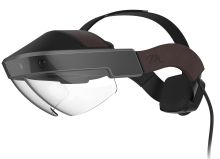 Meta 2 headset.

References
- ↑ 1.00 1.01 1.02 1.03 1.04 1.05 1.06 1.07 1.08 1.09 1.10 1.11 1.12 1.13 1.14 1.15 1.16 1.17 1.18 1.19 1.20 1.21 1.22 1.23 1.24 1.25 1.26 1.27 1.28 1.29 1.30 1.31 Alex Davies (2016-03-02). "Meta 2 Augmented Reality Glasses Portend Brighter, Nearer Future For AR (Updated)". Tom's Hardware. https://www.tomshardware.com/news/meta-2-augmented-reality-glasses%2C31314.html. Retrieved October 15, 2026.
- ↑ 2.0 2.1 2.2 Jason Odom (2016-12-21). "Breaking: The Meta 2 Augmented Reality Headset Is Shipping". Next Reality. https://meta.reality.news/news/breaking-meta-2-augmented-reality-headset-is-shipping-0175608/. Retrieved October 15, 2026.
- ↑ 3.0 3.1 3.2 3.3 3.4 3.5 3.6 3.7 Paul James (2016-03-02). "'Meta 2' AR Glasses Available to Pre-order, 1440p with 90 Degree FOV for $949". Road to VR. https://www.roadtovr.com/meta-2-ar-glasses-available-to-pre-order-1440p-with-90-degree-fov-for-949/. Retrieved October 15, 2026.
- ↑ 4.0 4.1 4.2 4.3 Dell (2018-01-18). "Dell Partners with Meta to Bring Augmented Reality to Industries". Dell, via PR Newswire. https://www.prnewswire.com/news-releases/dell-partners-with-meta-to-bring-augmented-reality-to-industries-300584525.html. Retrieved October 15, 2026.
- ↑ 5.00 5.01 5.02 5.03 5.04 5.05 5.06 5.07 5.08 5.09 5.10 5.11 5.12 5.13 5.14 Meta Company (2016). "Meta 2 Quick Start Guide, PN 100822 Rev C". Meta Company, via ManualsLib. https://www.manualslib.com/manual/1345660/Meta-Company-Meta-2.html. Retrieved October 15, 2026.
- ↑ 6.00 6.01 6.02 6.03 6.04 6.05 6.06 6.07 6.08 6.09 6.10 6.11 6.12 Ben Lang (2016-03-02). "Hands-on: Meta 2 Could Do for Augmented Reality What Rift DK1 Did for Virtual Reality". Road to VR. https://www.roadtovr.com/meta-2-development-kit-hands-on-could-do-for-augmented-reality-what-oculus-rift-dk1-did-for-virtual-reality/. Retrieved October 15, 2026.
- ↑ 7.0 7.1 7.2 7.3 Nicolas Wenk; Karin A. Buetler; Joaquin Penalver-Andres; René M. Müri; Laura Marchal-Crespo (2022-12-09). "Naturalistic visualization of reaching movements using head-mounted displays improves movement quality compared to conventional computer screens and proves high usability". Journal of NeuroEngineering and Rehabilitation 19: 137. doi:10.1186/s12984-022-01101-8. Retrieved October 15, 2026.
- ↑ 8.0 8.1 8.2 Lucas Matney (2016-03-02). "Hands-on with the $949 mind-bending Meta 2 augmented reality headset". TechCrunch. https://techcrunch.com/2016/03/02/hands-on-with-the-949-mind-bending-meta-2-augmented-reality-headset/. Retrieved October 15, 2026.
- ↑ 9.0 9.1 Ben Lang (2016-02-17). "Meta Shows Off Their Next-gen AR Glasses on Stage at TED". Road to VR. https://www.roadtovr.com/meta-shows-off-their-next-gen-ar-glasses-on-stage-at-ted/. Retrieved October 15, 2026.
- ↑ 10.0 10.1 Ben Lang (2017-07-31). "Following Delays, Meta Expects "Volume Shipping" of Meta 2 AR Headset in August". Road to VR. https://www.roadtovr.com/meta-2-shipping-manufacturing-delay/. Retrieved October 15, 2026.
- ↑ 11.0 11.1 11.2 Meta View (2019-05-28). "Meta View, Inc Announces the Acquisition of Meta Company Assets; Hires Jay Wright as CEO". Business Wire, via MarketScreener. https://ca.marketscreener.com/news/latest/Meta-View-Inc-Announces-the-Acquisition-of-Meta-Company-Assets-Hires-Jay-Wright-as-CEO-28667121/. Retrieved October 15, 2026.
- ↑ 12.0 12.1 Libby Prasuethsut (2016-05-04). "Meta 2 first impressions: AR feels closer than ever". Wareable. https://www.wareable.com/ar/meta-2-review. Retrieved October 15, 2026.
- ↑ 13.0 13.1 Brad Bourque (2016-03-02). "The Meta 2 dev kit makes the HoloLens look like an expensive toy". Digital Trends. https://www.digitaltrends.com/computing/meta-2-ar-dev-kit/. Retrieved October 15, 2026.
- ↑ Maya Georgieva (2017-03-17). "Augmented Reality with Meta Glasses at SXSW". Digital Bodies. https://www.digitalbodies.net/augmented-reality-with-meta-glasses-at-sxsw/. Retrieved October 15, 2026.
- ↑ 15.0 15.1 15.2 "Meta 2". Carnegie Mellon University Entertainment Technology Center. https://wiki.etc.cmu.edu/index.php/Meta_2. Retrieved October 15, 2026.
- ↑ 16.0 16.1 Kevin Carbotte (2017-09-06). "Meta 2 SDK Now Supports SteamVR". Tom's Hardware. https://www.tomshardware.com/news/meta2-headset-sdk-steamvr-support%2C35400.html. Retrieved October 15, 2026.
- ↑ 17.0 17.1 17.2 17.3 N. Wenk; J. Penalver-Andres; K. A. Buetler; T. Nef; R. M. Müri; L. Marchal-Crespo (2023). "Effect of immersive visualization technologies on cognitive load, motivation, usability, and embodiment". Virtual Reality 27 (1): 307-331. doi:10.1007/s10055-021-00565-8. Retrieved October 15, 2026.
- ↑ 18.0 18.1 18.2 18.3 John Lennon Oliveira Couto (2020). "Avaliação do desempenho de técnicas de interação com as mãos em Realidade Aumentada imersiva". Universidade de São Paulo. https://teses.usp.br/teses/disponiveis/3/3142/tde-02072021-094758/publico/JohnLennonOliveiraCoutoCorr20.pdf. Retrieved October 15, 2026.
- ↑ 19.0 19.1 Therese Persson; Benjamin Goeing; Greg White (2018). "“Enlightening”: An Interactive AR Educational Application". Stanford University EE267. https://stanford.edu/class/ee267/Spring2018/report_persson_goeing_white.pdf. Retrieved October 15, 2026.
- ↑ 20.0 20.1 Meta (2013-05-17). "Augmented Reality Pioneer meta Proclaims the End of the Flat Screen Era, Launches the World's First Full Augmented and Mediated Reality Glasses Device". Meta, via PR Newswire. https://www.prnewswire.com/news-releases/augmented-reality-pioneer-meta-proclaims-the-end-of-the-flat-screen-era-launches-the-worlds-first-full-augmented-and-mediated-reality-glasses-device-207878261.html. Retrieved October 15, 2026.
- ↑ 21.0 21.1 Signe Brewster (2015-01-29). "Meta raises $23M Series A to refine its augmented reality glasses". Gigaom, via Yahoo Finance. https://finance.yahoo.com/news/meta-raises-23m-series-refine-210037222.html. Retrieved October 15, 2026.
- ↑ 22.0 22.1 Michael Yang (2016-06-13). "Comcast Ventures Invests in Meta, A Pioneer in Augmented Reality". Comcast Corporation. https://corporate.comcast.com/comcast-voices/comcast-ventures-invests-in-meta-a-pioneer-in-augmented-reality. Retrieved October 15, 2026.
- ↑ Tom's Guide (2014-01-09). "Tom's Guide Announces Winners of Best of CES 2014 Awards". Marketwired, via MarketScreener. https://www.marketscreener.com/news/latest/Tom-s-Guide-Announces-Winners-of-Best-of-CES-2014-Awards-17778235/. Retrieved October 15, 2026.
- ↑ Scott Hayden (2019-01-22). "[Update] Meta Founder Confirms Insolvency & Asset Sale to Unnamed Buyer". Road to VR. https://www.roadtovr.com/meta-shuts-amidst-patent-infringement-lawsuit-asset-liquidation/. Retrieved October 15, 2026.