

Meta (augmented reality company)
More actions
| Meta (augmented reality company) | |
|---|---|
| Information | |
| Industry | Augmented Reality |
| Founded | 2012[1] |
| Founder | Meron Gribetz; co-founders Ben Sand and Raymond Lo[2] |
| Headquarters | Redwood City, California, United States (2016); San Mateo, California (2017)[3][1] |
| Notable Personnel | Meron Gribetz (CEO); Steve Mann (chief scientist, appointed in 2013)[4] |
| Products | Augmented reality headsets (Meta 1, Meta 2) |
Meta (also referred to as Meta Company) was a United States augmented reality startup that designed optical see-through AR headsets, best known for the Meta 1 and Meta 2 developer kits. It was founded in 2012 by Meron Gribetz.[1] Y Combinator identifies Ben Sand and Raymond Lo as co-founders alongside Gribetz.[2] This company is distinct from Meta Platforms, the parent of Facebook, which adopted the Meta name in October 2021.[5]
Meta sold developer hardware rather than a finished consumer computing platform.[6] After raising tens of millions of dollars from investors including Lenovo, Tencent, and Comcast Ventures, the company ran short of funding and furloughed staff in 2018.[7][8] By January 2019, its chief financial officer had told a federal court that a secured lender had foreclosed, sold its assets and left Meta insolvent.[9] A separate company, Meta View, subsequently announced the purchase of the intellectual property and appointment of Jay Wright as CEO.[10]
History
Founding and early funding
Meta was founded in 2012 by Meron Gribetz, who left Columbia University to start the company.[1][7] The company's May 2013 announcement described collaboration with Columbia AR researcher Steven Feiner and a developer kit combining see-through stereoscopic glasses, a depth-tracking camera and a Unity-based framework.[11] Steve Mann joined as chief scientist in May 2013.[4] Gribetz and W. Steve G. Mann are the named inventors on US patent application publication US 2014/0184496 A1, filed January 3, 2014 and claiming priority to provisional applications filed in January and December 2013. This is a documented patent application, rather than evidence that every described feature shipped in a headset.[12]
Meta was accepted into Y Combinator's Summer 2013 accelerator batch.[2] Its Kickstarter campaign for the Meta 1 developer kit ran from May 17 to June 16, 2013. The completed campaign records US$194,444 pledged by 501 backers against a US$100,000 goal.[13]
The company raised a US$23 million Series A round in January 2015 from backers that included Horizons Ventures, Tim Draper, BOE Optoelectronics, Garry Tan and Alexis Ohanian. Danhua Capital, Commodore Partners and Vegas Tech Fund also participated.[14] On June 13, 2016, Comcast Ventures announced that it had joined new investors Lenovo and Tencent and existing investor Horizons Ventures in a US$50 million Series B.[7] Those two named rounds total US$73 million; they do not establish the total of all financing, including borrowing.[14][7] TechCrunch reported nearly US$83 million raised, a US$300 million peak valuation and investors including Dolby.[15]
Products and the TED Talk
Meta shipped its first product, the Meta 1 developer kit, in September 2014.[16] Its intended customers were developers and prosumers.[6] Gribetz raised the company's public profile with a 2016 TED Talk that presented augmented reality as a successor to the smartphone and the personal computer.[8]
On March 2, 2016 the company announced the Meta 2, an optical see-through headset with an advertised 90-degree diagonal field of view and a 2560x1440 display, tethered to a Windows PC and controlled with hand gestures. It went up for pre-order at US$949, with shipping initially promised for the third quarter of 2016.[17][18] A December 21, 2016 report reproduced an email from Meta's customer-success director announcing that the first customer shipments had started and that larger waves were planned for early 2017.[19]
The Meta 2 ultimately reached developers later than planned. Manufacturing problems continued into 2017: the company's May update acknowledged limited shipments, and its July FAQ forecast volume shipping for mid-Q3 2017.[20] Former employees later gave differing sales estimates, one below 5,000 headsets and another closer to 3,000. Gribetz declined to disclose an exact unit count to Variety.[8]
Funding collapse and furloughs
While seeking further funding, Gribetz said he had made about 25 trips to China. A planned Chinese-led investment, reported at around US$20 million,[15] did not arrive in September 2018; Gribetz attributed the failure to trade tensions and restrictions on foreign investment.[8] Engadget, citing Bloomberg, reported furloughs affecting about two-thirds of roughly 100 staff.[21][9] Variety reported a retained team of around 15 and subsequent layoffs of the furloughed employees in October.[8]
The patent dispute predated those furloughs. Genedics LLC filed its complaint against Meta on August 1, 2017, alleging direct and indirect infringement of six US patents by the Meta 1 and Meta 2 developer kits and associated software. Meta initially participated in the litigation. Its counsel moved to withdraw in November 2018, and the court ordered the company to obtain replacement counsel.[1]
Insolvency and asset sale
Chief financial officer John Sines reported the foreclosure in a January 9, 2019 court status report.[1] His letter said Meta's first-priority secured lender had sold all assets to a third party in a Uniform Commercial Code (UCC) foreclosure sale. The sale price was below the outstanding loan amount, leaving Meta insolvent and without the resources to retain counsel or make a settlement offer.[9] Gribetz said he was "no longer the owner of the company".[8] He initially described the buyer only as a "known name".[15]
The court entered default on January 29, 2019 after Meta failed to retain counsel by its deadline. In February, Sines reported initiating dissolution; in April he said Meta no longer sold Meta 2 or held assets or inventory. On June 19 the court entered default judgment on liability. On August 13 it granted permanent injunctive relief against infringement involving the accused Meta 1 and Meta 2 systems and related software.[1] The liability judgment resulted from default, rather than a contested trial of the patent claims.[1]
The buyer was identified as Meta View Inc. in February 2019. Trademark-transfer records and confirmation from Mayer Gniwisch, a general partner at Olive Tree Ventures, connected the asset purchase to the new company.[22] On May 28, Meta View announced that Olive Tree had acquired intellectual property from Meta's lender and formed the new business in late 2018. It described itself as a separate, unaffiliated entity backed by Olive Tree Ventures and BNSG Capital, headquartered in San Mateo. Jay Wright, formerly a Qualcomm vice-president and Vuforia co-founder and president, became CEO. The announcement said Meta View would support existing Meta 2 owners but would not offer the headset for sale.[10] This was a statement of its 2019 plans, not a guarantee of present support.
The purchased technology later contributed to Campfire, which announced a different system for collaborative 3D-model viewing in April 2021.[23] In a December 2024 interview published by Campfire, Wright described the business as originating from investors' purchase of Meta Company assets and said it had subsequently moved from its own hardware to software for other headsets.[24]
Technology
Meta's headsets were optical see-through devices: rather than passing camera video through to a screen, they used transparent combiners so the wearer could see digital imagery overlaid on the real world. The initial Meta 1 announcement specified stereoscopic glasses and a depth-tracking camera, with a software development kit and example applications for gesture and surface tracking.[11]
The Meta 2 formed stereoscopic images by reflecting display content from its transparent visor. Published launch specifications listed computer-vision-based inside-out tracking, inertial sensors, a 720p front-facing camera and four near-ear speakers; the onboard sensor array supported hand tracking.[18] A contemporary demonstration used fist gestures to move virtual objects.[3] The headset required a wired PC connection, whereas the Microsoft HoloLens was self-contained.[18] A launch specification table described its cable as carrying video, data and power.[17]
Products
| Product | Year | Type | Notable details |
|---|---|---|---|
| Meta 1 | 2014 (first developer shipments) | Optical see-through AR developer kit | First shipping product; followed the company's 2013 Kickstarter and Y Combinator term; Unity-based development framework and gesture input.[16][11][2] |
| Meta 2 | 2016 (announced; initial customer shipments in December) | Tethered AR developer kit | Advertised 90-degree diagonal field of view; 2560x1440 display; gesture input; Windows PC connection; US$949 at pre-order. Larger-scale delivery was delayed into 2017.[17][18][19][20] |
Reception and legacy
The Meta 2 drew attention at its 2016 unveiling for offering a wider advertised field of view than the original HoloLens.[18] Its developer headset price was also lower: a December 2016 shipment report compared the US$949 Meta 2 with the US$3,000 HoloLens.[19] Its PC tether and separate processing requirements remained a practical distinction from Microsoft's standalone device.[18] Later reporting documented manufacturing delays and funding difficulties rather than fulfillment of the original ambition to replace desktop computers and smartphones.[20][8]
Research use
An original study published online in 2021 compared Meta 2 AR, HTC Vive VR and a computer monitor in a randomized within-subject experiment with 20 healthy adults aged 19-42. Participants performed seated reaching and counting tasks. The researchers disabled Meta 2's SLAM tracking and attached a Vive tracker to it, using Vive controllers and arm trackers across conditions. VR received higher self-reported motivation and usability ratings than AR and the monitor; both headsets produced higher embodiment ratings than the monitor, while overall cognitive-load differences were not statistically significant. The authors identified the small sample, registration and headset limitations, unequal visual environments and presentation-order imbalance, and questionnaire implementation errors, including a seven-point usability scale and mislabeled workload endpoints, as limitations. These results concern a custom experimental system and subjective ratings, rather than Meta 2's native hand tracking, clinical rehabilitation outcomes or general workplace productivity.[25]
See also
Gallery
-
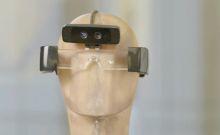 Meta 1 design shown in the 2013 crowdfunding campaign.
-
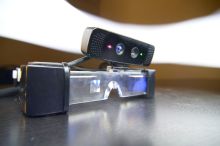 Meta 1 campaign hardware pictured in 2013.


References
- ↑ 1.0 1.1 1.2 1.3 1.4 1.5 1.6 1.7 Christopher J. Burke (2019-08-13). "Genedics, LLC v. Meta Company, Civil Action No. 17-1062-CJB: Memorandum Order". United States District Court for the District of Delaware. https://www.ded.uscourts.gov/sites/ded/files/opinions/17-1062.pdf. Retrieved October 14, 2026.
- ↑ 2.0 2.1 2.2 2.3 "Meta: Augmented reality glasses". Y Combinator. https://www.ycombinator.com/companies/meta. Retrieved October 14, 2026.
- ↑ 3.0 3.1 Lucas Matney (2016-03-02). "Hands-on with the $949 mind-bending Meta 2 augmented reality headset". TechCrunch. https://techcrunch.com/2016/03/02/hands-on-with-the-949-mind-bending-meta-2-augmented-reality-headset/. Retrieved October 14, 2026.
- ↑ 4.0 4.1 John Biggs (2013-05-21). "Meta, The World's First Entry-Level AR Glasses, Hires The Father Of Wearable Computing As Chief Scientist". TechCrunch. https://techcrunch.com/2013/05/21/meta-the-worlds-first-entry-level-vr-glasses-brings-on-steve-cyborg-mann-father-of-wearable-computing/. Retrieved October 14, 2026.
- ↑ "The Facebook Company Is Now Meta". Meta. 2021-10-28. https://about.fb.com/news/2021/10/facebook-company-is-now-meta/. Retrieved October 14, 2026.
- ↑ 6.0 6.1 Jay Donovan (2014-09-18). "Meta 1 Augmented Reality Glasses Are Dragging Us Into A VR Future". TechCrunch. https://techcrunch.com/2014/09/18/meta-1-augmented-reality-glasses-are-dragging-us-into-a-vr-future/. Retrieved October 14, 2026.
- ↑ 7.0 7.1 7.2 7.3 Michael Yang (2016-06-13). "Comcast Ventures Invests in Meta, A Pioneer in Augmented Reality". Comcast Corporation. https://corporate.comcast.com/comcast-voices/comcast-ventures-invests-in-meta-a-pioneer-in-augmented-reality. Retrieved October 14, 2026.
- ↑ 8.0 8.1 8.2 8.3 8.4 8.5 8.6 Janko Roettgers (2019-01-18). "The Story Behind Meta, the AR Startup That Just Had Its Assets Sold to a Mystery Buyer". Variety. https://variety.com/2019/digital/features/meta-ar-startup-asset-sale-1203111585/. Retrieved October 14, 2026.
- ↑ 9.0 9.1 9.2 Scott Hayden (2019-01-22). "[Update] Meta Founder Confirms Insolvency & Asset Sale to Unnamed Buyer". Road to VR. https://www.roadtovr.com/meta-shuts-amidst-patent-infringement-lawsuit-asset-liquidation/. Retrieved October 14, 2026.
- ↑ 10.0 10.1 "Meta View, Inc Announces the Acquisition of Meta Company Assets; Hires Jay Wright as CEO". Business Wire, via MarketScreener. 2019-05-28. https://ca.marketscreener.com/news/latest/Meta-View-Inc-Announces-the-Acquisition-of-Meta-Company-Assets-Hires-Jay-Wright-as-CEO-28667121/. Retrieved October 14, 2026.
- ↑ 11.0 11.1 11.2 "Augmented Reality Pioneer meta Proclaims the End of the Flat Screen Era, Launches the World's First Full Augmented and Mediated Reality Glasses Device". Meta, via PR Newswire. 2013-05-17. https://www.prnewswire.com/news-releases/augmented-reality-pioneer-meta-proclaims-the-end-of-the-flat-screen-era-launches-the-worlds-first-full-augmented-and-mediated-reality-glasses-device-207878261.html. Retrieved October 14, 2026.
- ↑ Meron Gribetz; W. Steve G. Mann (2014-07-03). "US 2014/0184496 A1: Extramissive Spatial Imaging Digital Eye Glass Apparatuses, Methods and Systems for Virtual or Augmediated Vision, Manipulation, Creation, or Interaction with Objects, Materials, or Other Entities". United States Patent and Trademark Office. https://patentimages.storage.googleapis.com/fc/5f/4a/2af0fd2bc451f9/US20140184496A1.pdf. Retrieved October 14, 2026.
- ↑ "meta: The Most Advanced Augmented Reality Glasses". Kickstarter. https://www.kickstarter.com/projects/551975293/meta-the-most-advanced-augmented-reality-interface. Retrieved October 14, 2026.
- ↑ 14.0 14.1 Signe Brewster (2015-01-28). "Meta raises $23M Series A to refine its augmented reality glasses". Yahoo Finance. https://finance.yahoo.com/news/meta-raises-23m-series-refine-210037222.html. Retrieved October 14, 2026.
- ↑ 15.0 15.1 15.2 Ingrid Lunden (2019-01-17). "AR startup Meta's assets sold to a mystery 'known name' that will support existing headsets". TechCrunch. https://techcrunch.com/2019/01/17/meta-ar-caveat-emptor/. Retrieved October 14, 2026.
- ↑ 16.0 16.1 Signe Brewster (2014-09-18). "Finally: Meta begins shipping its augmented reality glasses to developers". Yahoo Finance. https://finance.yahoo.com/news/finally-meta-begins-shipping-augmented-192652805.html. Retrieved October 14, 2026.
- ↑ 17.0 17.1 17.2 Alex Davies (2016-03-02). "Meta 2 Augmented Reality Glasses Portend Brighter, Nearer Future For AR (Updated)". Tom's Hardware. https://www.tomshardware.com/news/meta-2-augmented-reality-glasses%2C31314.html. Retrieved October 15, 2026.
- ↑ 18.0 18.1 18.2 18.3 18.4 18.5 Paul James (2016-03-02). "'Meta 2' AR Glasses Available to Pre-order, 1440p with 90 Degree FOV for $949". Road to VR. https://www.roadtovr.com/meta-2-ar-glasses-available-to-pre-order-1440p-with-90-degree-fov-for-949/. Retrieved October 14, 2026.
- ↑ 19.0 19.1 19.2 Jason Odom (2016-12-21). "Breaking: The Meta 2 Augmented Reality Headset Is Shipping". Next Reality. https://meta.reality.news/news/breaking-meta-2-augmented-reality-headset-is-shipping-0175608/. Retrieved October 14, 2026.
- ↑ 20.0 20.1 20.2 Ben Lang (2017-07-31). "Following Delays, Meta Expects "Volume Shipping" of Meta 2 AR Headset in August". Road to VR. https://www.roadtovr.com/meta-2-shipping-manufacturing-delay/. Retrieved October 14, 2026.
- ↑ Steve Dent (2019-01-18). "Mystery company buys Meta's augmented reality tech". Engadget. https://www.engadget.com/2019-01-18-meta-ar-sold-off.html. Retrieved October 15, 2026.
- ↑ Janko Roettgers (2019-02-01). "Meta AR Assets Acquired by Former Investor (EXCLUSIVE)". Variety. https://variety.com/2019/digital/news/meta-trademarks-sold-investor-1203126303/. Retrieved October 14, 2026.
- ↑ Ian Hamilton (2021-04-27). "Meta AR Headset Reborn With Launch Of Campfire Startup". UploadVR. https://www.uploadvr.com/campfire-meta-ar/. Retrieved October 14, 2026.
- ↑ "How Next-Gen Devices are Reshaping Enterprise XR". Campfire. 2024-12-18. https://campfire3d.com/blog/reshaping-enterprise-xr. Retrieved October 14, 2026.
- ↑ N. Wenk; J. Penalver-Andres; K. A. Buetler; T. Nef; R. M. Müri; L. Marchal-Crespo (2023). "Effect of immersive visualization technologies on cognitive load, motivation, usability, and embodiment". Virtual Reality 27 (1): 307-331. doi:10.1007/s10055-021-00565-8. Retrieved October 14, 2026.