

Epson Moverio BT-40
More actions
| Epson Moverio BT-40 | |
|---|---|

| |
| Basic Info | |
| VR/AR | Augmented Reality |
| Type | Smart Glasses |
| Subtype | Consumer AR, Enterprise AR |
| Platform | External host over USB-C DisplayPort Alt Mode |
| Creator | Epson |
| Developer | Epson |
| Manufacturer | Epson |
| Announcement Date | 2 March 2021 (United States)[1] |
| Release Date | March 2021 (Japan); December 2020 developer-news record[2][3] |
| Price | US$579 (BT-40); US$999 (BT-40S), announced US MSRP in March 2021[1] |
| Website | https://www.epson.com/ |
| Versions | BT-40; BT-40S includes BO-IC400 controller[4] |
| Requires | Host with USB-C DisplayPort Alt Mode output and power supply[4] |
| System | |
| Operating System | External host; BT-40S controller launched with Android 9, updated to Android 10[5][6] |
| Display | |
| Display | Binocular Si-OLED, 0.453-inch panels (16:9)[4] |
| Peak Brightness | 1000 cd/m2 maximum (manufacturer specification; measurement plane not stated)[7] |
| Resolution | 1920 × 1080 per eye[7] |
| Refresh Rate | 60 Hz[7] |
| Image | |
| Field of View | Approximately 34 degrees diagonal[8] |
| Optics | |
| Optics | See-through light guide[9] |
| Ocularity | Binocular |
| IPD Range | Fixed light guide; no mechanical IPD adjustment[9] |
| Passthrough | Optical see-through |
| Tracking | |
| Tracking | Headset motion and orientation sensor data; application dependent[10] |
| Rotational Tracking | Rotation-vector sensor data available to software[10] |
| Audio | |
| Audio | Earphones through cable-mounted CTIA jack[4] |
| Microphone | CTIA earphone microphone input; BO-IC400 has built-in microphones[4][5] |
| 3.5mm Audio Jack | Yes, on headset cable[7] |
| Camera | None in BT-40 headset; 13 MP autofocus camera on BO-IC400 controller[9] |
| Connectivity | |
| Connectivity | USB-C DisplayPort Alt Mode; USB 2.0 data[4] |
| Ports | USB-C; 4-pole earphone mini jack[4] |
| Wired Video | DisplayPort 1.2, 1080p at 60 Hz[7] |
| Power | USB-C host power, rated 5.0 V / 0.9 A (4.5 W)[8] |
| Device | |
| Dimensions | 194 × 164 × 41 mm without shade (English manual and Japan specification)[4] |
| Weight | Approximately 95 g without shade, cables, etc.; approximately 165 g assembly (English manual and Japan specification)[8] |
| Headstrap | Glasses temples |
| Color | Black frame in Epson's product illustration[7] |
| Sensors | Geomagnetic sensor, accelerometer, gyroscope, ambient light sensor[4] |
| Input | External host; touchscreen/trackpad on BO-IC400 in BT-40S[5] |
The Epson Moverio BT-40 is a binocular, optical see-through pair of smart glasses made by Epson. It displays an external phone, tablet or computer's video through a USB-C connection that also supplies power. Its Si-OLED displays have 1920 × 1080 pixels per eye and an approximately 34-degree diagonal field of view. The BT-40S package pairs the same BT-40 headset with the separate BO-IC400 Intelligent Controller.[4][7]
The headset has motion and ambient-light sensors, while applications and their processing run on the connected host. It has no built-in camera; the BT-40S controller's camera faces outward from the handheld unit.[9][5]
History and development
Epson's engineering account places the BT-40 within its fourth generation of optical engines. That generation uses 0.45-inch Full HD Si-OLED microdisplays. The interview describes RGB color filters that let each microdisplay produce a full-color image, and distinguishes these single-panel engines from Epson's three-panel projectors.[11]
| Model or event | Documented date | Context |
|---|---|---|
| Moverio BT-100 | 25 November 2011 | Epson's original Moverio product history records this release date.[12] |
| Moverio BT-200 | 6 May 2014 | Epson America announced commercial availability of its second generation.[13] |
| Moverio BT-300 | November 2016 | Epson Japan's support record gives this release month.[14] |
| BT-40 / BT-40S developer-news entry | 21 December 2020 | Epson's English technical-news archive labels the products released on this date; this entry does not establish availability in every market.[3] |
| BT-40 Japanese release | March 2021 | Release month recorded by Epson Japan.[2] |
| BT-40 / BT-40S US announcement | 2 March 2021 | Pre-orders announced at US$579 and US$999 MSRP. The release forecast Amazon and distributor availability in Q2 2021, rather than reporting immediate shipment.[1] |
Display technology and optics
The two Si-OLED displays are viewed through transparent optics, so the wearer can see the surrounding scene directly. Epson specifies 24-bit color, 60 Hz operation and a 500,000:1 contrast ratio. Its US specification sheet lists maximum brightness of 1000 cd/m2 without stating the measurement plane; that value is a manufacturer specification rather than an independent measurement of light reaching the eye.[7]
The approximately 34-degree field of view is diagonal. The English user guide illustrates a 60-inch virtual screen at 2.5 m, while the Japanese specification and US specification sheet describe a 120-inch screen at 5 m. These are stated viewing-distance equivalents. The US announcement instead uses 15 feet for its 120-inch comparison.[4][8][7][1]
A magnetic dark shade attaches in front of the glasses for viewing in bright surroundings. The US sheet gives transmittance values of 40% for the headset and 2% for the shade. Epson recommends black (zero RGB) backgrounds where an application should leave the underlying scene visible. Its SDK supports brightness control and switching between 2D and side-by-side 3D display modes.[7][15][9]
The light guide and its field of view are fixed. Epson's FAQ states that the optical assembly has no mechanical interpupillary-distance adjustment. Side-by-side stereoscopic content is supported through suitable applications or MOVERIO Link/MOVERIO Link Pro; this should be distinguished from ordinary mirrored 2D content.[9]
Physical design and audio
The frame has soft temples and a spring mechanism, replaceable nose pads, and a shade that can be removed. The user guide permits wearing the headset over prescription spectacles up to approximately 144 mm wide, subject to their shape. The headset's earphone jack is in the cable assembly and can be clipped to clothing.[7][4]
The English manual and Japanese specification list dimensions of 194 × 164 × 41 mm without the shade. They distinguish approximately 95 g without the shade, cables and other attachments from approximately 165 g for the assembly. Epson China's product page instead lists 195 × 174 × 40 mm and a maximum mass of approximately 151 g with the shade. These regional specification records differ; their figures do not establish a measured difference between hardware revisions.[4][8][16]
The headset supplies audio through a 3.5 mm CTIA-compatible four-pole jack for earphones with a microphone. Epson Japan lists earphone-jack audio for BT-40, with built-in microphones and speakers listed for its camera-equipped models. A three-pole earphone plug can play audio but does not provide microphone input. The connected host controls volume, and some headset buttons or other functions may be limited even with a compliant plug.[7][4][17]
| Headset specification | Epson documentation |
|---|---|
| Display | Si-OLED; 0.453-inch wide panels, 16:9; 1920 × 1080 pixels per eye[4] |
| Video input | DisplayPort Alt Mode through USB-C; DisplayPort 1.2; 1080p at 60 Hz; EDID and HDCP supported[7] |
| Data connection | USB 2.0 for sensor data, headset control and firmware updates[7] |
| Rated power | 4.5 W; 5.0 V / 0.9 A supplied by the host[8] |
| Operating conditions | 5-35 degrees C; 20-80% humidity without condensation[4] |
| Storage conditions | -10 to 60 degrees C; 10-90% humidity without condensation[4] |
| Water resistance | IPX2, excluding the USB connector. The guide identifies this as Epson evaluation, rather than a third-party evaluation.[4] |
Sensors and tracking
The headset contains an accelerometer, gyroscope, geomagnetic sensor and ambient-light sensor. Software can obtain motion and orientation data through Moverio's APIs. These readings describe the headset, while BO-IC400 also has its own sensors; a controller's movement is not automatically the wearer's head movement.[4][10]
The Controller Function SDK guide's sensor section explicitly covers controller system software version 2.1.00. It documents 100 Hz events for the BT-40's accelerometer, gyroscope, magnetic field and rotation-vector data, and 5 Hz for ambient light. Its headset-sensor-priority function depends on the headset being connected, Sensor Custom State being enabled, and the controller being in Trackpad or Assist mode. Those event rates are API behavior under that setup, rather than a 60 Hz display rate or a general position-tracking specification.[10]
The BT-40's supported sensors do not provide a documented built-in spatial-mapping or camera-based headset-tracking system. The controller's separate autofocus camera does not turn the BT-40 into an integrated six-degree-of-freedom head-tracked headset. Applications can add external equipment or implement their own tracking, as distinct from the hardware and APIs supplied with the glasses.[15][9]
Connectivity and software
External hosts
USB-C is the connector, but the source device must also support DisplayPort Alternate Mode video output and provide the required power. The headset does not accept every device that happens to have a USB-C port. The manual lists Windows 10 or later and Android 8 or later for data communication. Epson's developer guide notes that particular Android and Windows hosts may not support every Moverio function, and that Linux technical support is not provided.[4][15][9]
Epson Japan maintains separate tested smartphone and PC connection lists. The landing page reviewed in October 2026 dates both lists to November 2025 and describes devices released in Japan from 2019 onward. These are dated compatibility records, rather than a claim that every Android phone, Mac, tablet or adapter works. Epson's FAQ does not guarantee operation through third-party I/O adapters or hub switches.[18][9]
Moverio applications and development
The user guide names MOVERIO Link for a compatible Android smart device and the pre-installed MOVERIO Link Pro for BO-IC400. Their documented controls include display brightness, power-saving behavior and locking the connected device's screen against accidental touches. The FAQ also documents side-by-side 3D switching, subject to application and host compatibility. Windows applications need appropriate software support for 3D mode.[4][9]
The Moverio Basic Function SDK provides headset display and sensor controls. Its model matrix includes BT-40/BT-40S, with Unity and Android development documentation and Windows examples. Camera functions in the shared guide apply to camera-equipped models; the BT-40 column has no headset-camera support. The separate Moverio Controller Function SDK handles BO-IC400-specific functions, including button customization and user-interface modes. It is not a general SDK for ordinary Android phones or older BT-300 controllers.[15][19]
Epson's technical-news archive records Basic Function SDK 1.2.2 on 25 September 2025. The BT-40 headset update notes list firmware 1.2.1 dated 1 September 2022, with PC/smartphone interoperability and stability changes. The update tool's currently posted preparation requirements specify a DisplayPort-over-USB-C Windows 11 Enterprise or Pro computer; this is the update procedure's requirement, not a replacement for all video-host compatibility information. The FAQ says that Moverio Apps Market is unavailable for these models.[3][20][9]
BT-40S and Intelligent Controller
BT-40S is the headset-and-controller package. BO-IC400 supplies processing, a rechargeable battery, wireless connectivity and its own touchscreen, so the package can run applications without a separate phone. The glasses remain connected to the controller by their cable.[4][5]
| BO-IC400 specification | Original controller documentation |
|---|---|
| Processor and memory | Qualcomm Snapdragon XR1; 4 GB memory; 64 GB storage[5] |
| Display and input | 2.95-inch capacitive multi-touch display, 480 × 854; physical keys; touchscreen or trackpad use[5] |
| Expansion | microSD up to 2 GB, microSDHC up to 32 GB, microSDXC up to 2 TB[5] |
| Camera | Approximately 13 million pixels; autofocus; flash LED, on the controller[5] |
| Wireless and navigation | 802.11a/b/g/n/ac dual-band Wi-Fi; Bluetooth 5.0; GPS/GLONASS/Galileo/QZSS/BDS[5] |
| Audio | Built-in microphones, receiver, 0.5 W speaker and CTIA earphone-microphone jack[5] |
| Battery and charging | 3400 mAh, 13 Wh lithium-polymer battery; approximately 3 hours with the device off, a 5 V / 2 A supply and the headset USB-C connector[5] |
| Dimensions and mass | 55 × 110 × 23 mm without protruding parts; approximately 180 g in the user guide[5] |
The launch announcement specifies Android 9 and Google Mobile Services, including Google Play support. Epson's system-software history records the Android 10 upgrade in version 2.0.00 on 11 May 2022. Version 2.2.00, dated 21 November 2023, lists an August 5, 2023 security patch level and regional build qualifications. These are dated software records, not evidence of a continuing security-update schedule.[1][6]
Only BO-IC400's bottom, headset-designated USB-C port outputs DisplayPort video. The covered side port handles USB 2.0 peripherals and charging. Both support charging, but they have different capabilities. The controller can also operate without the headset as an Android terminal. The later BO-IC400N is a different model; Epson's FAQ states that its Google Mobile Services and Google Play support differ from BO-IC400.[5][9]
Applications and original research
Epson markets the BT-40 as an external personal display and a display for information such as subtitles. Its Japanese product directory identifies BT-40 for film/theatre subtitles and personal video viewing, while recommending its camera-equipped models for particular remote-assistance applications. Epson also presented BT-40/BT-40S in an April 2021 field-service event announcement. Epson's US launch also promoted business second-display use at home, at the office and in public spaces; its specification sheet names games and applications as display content. These are intended uses, with content provided by the host, rather than evidence of installation success or a measured productivity benefit.[17][21][1][7]
Image perception
A 2023 Radiography study had 38 radiographers at a Vienna congress compare ten static fluoroscopy/interventional-radiology images on BT-40 glasses connected to a laptop and an Eizo EV2360-BK monitor. Both displayed the same PowerPoint slides at default settings; participants could not zoom or window the images. Perceived image-quality scores were significantly higher with the glasses for eight of ten images. However, small-text eye-test performance was lower with the glasses, and agreement between observers was poor (Fleiss' kappa 0.095 across both display methods). This was subjective image grading in a conference room, rather than a test of diagnosis, live procedural performance or patient outcomes.[22]
Ultrasound display
A single-centre randomized radial-artery catheterization study conducted in 2022 and published in 2025 analyzed 119 adult patients: 60 with tablet-displayed ultrasound and 59 with BT-40 display. A Konted C10RL wireless probe sent video to a tablet, which fed the glasses by cable. One junior and one senior anesthetist performed the procedures after five model-training catheterizations. Table 2 reports shorter first-catheterization time for the junior operator with glasses (49.1 versus 99.7 seconds; p<0.001), but no significant difference for the senior operator. First-catheterization success differences were not statistically significant, and the patient groups differed in age. The authors identify the two-operator sample, learning effects and single-centre setting as limitations; head/neck movement was not measured. The result concerns that combined ultrasound system, not a general clinical benefit of BT-40.[23]
Modified fluorescence visor
Cipolato and colleagues used BT-40 in a custom visor reported online in December 2024. A 3D-printed attachment added laser-safety lenses, two near-infrared cameras and a thermal camera, with a separate mini-PC processing their images. The system displayed color-coded excitation, fluorescence and temperature information during tests on bovine and porcine tissue, including ex vivo vessel soldering and simulated perfusion/leak detection. Overlays required alignment, and figures recreated overlays for illustration. This was a modified experimental apparatus with external cameras, rather than native BT-40 fluorescence sensing or a clinical patient trial.[24]
Speech-to-text display
A 2025 laboratory comparison included a Moverio BT-40 system using Google transcription software version 6.6.589729414 and a controller microphone. One normal-hearing volunteer read transcriptions of German numbers, monosyllabic words and Oldenburg sentences in a sound booth, with sound and noise presented from the front. The Moverio setup scored 45% on monosyllables at 65 dB and 97% on sentences in quiet; performance depended on the microphone and transcription software. The authors explicitly describe a technical comparison rather than a clinical study. It does not establish benefit for a population with hearing loss or a native transcription feature in the BT-40 hardware.[25]
Comparison with BT-300
Compared with the BT-300's included computing controller, the BT-40 uses a USB-C external-host arrangement, except when sold in the BT-40S controller package. The following figures come from Epson's identified specifications and dated US announcements.[4][26]
| Feature | Moverio BT-40 | Moverio BT-300 |
|---|---|---|
| Documented US pricing | US$579 headset; US$999 BT-40S MSRP announced March 2021[1] | US$779 Developer Edition available January 2017; US$799 Drone Edition announced for later that month[27] |
| Display resolution | 1920 × 1080 per eye[7] | 1280 × 720 per eye[26] |
| Field of view | Approximately 34 degrees diagonal[8] | Approximately 23 degrees diagonal[26] |
| Headset mass excluding cable/shade | Approximately 95 g[8] | 69 g[26] |
| Display technology | Si-OLED, fourth-generation optical engine[11] | Si-OLED[27] |
| Computer and connections | External USB-C DisplayPort Alt Mode host; BO-IC400 included with BT-40S[4] | Included Android controller; micro-USB, controller connector and microSD slot[26] |
| Headset camera | None[9] | 5 MP[26] |
Comparison with other display glasses
The comparison below lists documented resolution, field of view and mass for BT-40, Nreal Air and Rokid Air. Epson and NTT Docomo specify diagonal field of view; Rokid's cited English specification gives 43 degrees without naming the axis. Mass exclusions also differ or are not stated, so the numbers are published specifications rather than controlled comparative measurements. The Nreal column describes the original Air, not Air 2 or later models.[28][29]
| Feature | Epson BT-40 | Nreal Air | Rokid Air |
|---|---|---|---|
| Resolution | 1920 × 1080 per eye[7] | 1920 × 1080 per eye[28] | 1920 × 1080 per eye[29] |
| Published field of view | Approximately 34 degrees diagonal[8] | 46 degrees diagonal[28] | 43 degrees, axis not specified on cited page[29] |
| Published mass | Approximately 95 g excluding shade, cables and other attachments[8] | Approximately 79 g excluding accessories[28] | 83 g; exclusions not specified on cited page[29] |
Support status
Epson's developer portal still lists BT-40 headset documentation and the dated firmware/software releases described above. On 14 October 2026, Epson Japan's BT-40 contact page listed a repair-acceptance deadline of 31 March 2034. This regional repair listing does not establish stock, support availability in other countries, or updates beyond the published software records.[2][20][6]
See Also
Gallery
-
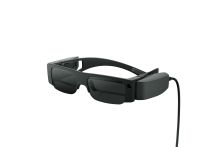 Moverio BT-40 with tinted shields.
-
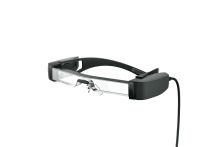 Moverio BT-40 without tinted shields.


References
- ↑ 1.0 1.1 1.2 1.3 1.4 1.5 1.6 "Epson Unveils Next Generation of Moverio Augmented Reality Smart Glasses". Epson Newsroom. 2021-03-02. https://news.epson.com/news/moverio-bt-40-40s-ar-smart-glasses. Retrieved 2026-10-14.
- ↑ 2.0 2.1 2.2 "BT-40: Contact and support information". Epson Japan. https://www.epson.jp/support/portal/info/bt-40.htm. Retrieved 2026-10-14.
- ↑ 3.0 3.1 3.2 "List of news (Archives)". Epson Moverio Technical Information. https://tech.moverio.epson.com/en/whats_new.html. Retrieved 2026-10-14.
- ↑ 4.00 4.01 4.02 4.03 4.04 4.05 4.06 4.07 4.08 4.09 4.10 4.11 4.12 4.13 4.14 4.15 4.16 4.17 4.18 4.19 4.20 4.21 4.22 4.23 "BT-40/BT-40S User's Guide (414016900 EN)". Epson. 2020-07. https://files.support.epson.com/docid/other/4140169.pdf. Retrieved 2026-10-14.
- ↑ 5.00 5.01 5.02 5.03 5.04 5.05 5.06 5.07 5.08 5.09 5.10 5.11 5.12 5.13 "BO-IC400 User's Guide". Epson. https://download.epson-europe.com/pub/download/6421/epson642103eu.pdf. Retrieved 2026-10-14.
- ↑ 6.0 6.1 6.2 "BO-IC400 / BO-IC400N system software Release Note (Version 2.2.00)". Epson Moverio Technical Information. https://tech.moverio.epson.com/en/software_updates/bt-40s_bo-ic400_controller/release_note/. Retrieved 2026-10-14.
- ↑ 7.00 7.01 7.02 7.03 7.04 7.05 7.06 7.07 7.08 7.09 7.10 7.11 7.12 7.13 7.14 7.15 7.16 "Moverio BT-40 Smart Glasses with USB Type-C Connectivity: Specification Sheet (CPD-60655)". Epson America. 2021-02. https://mediaserver.goepson.com/ImConvServlet/imconv/fb2362376fe4470fc110f39ac89117d806722af5/original?assetDescr=Moverio_BT-40_Specification_Sheet_CPD-60655.pdf. Retrieved 2026-10-14.
- ↑ 8.00 8.01 8.02 8.03 8.04 8.05 8.06 8.07 8.08 8.09 "MOVERIO BT-40: Specifications". Epson Japan. https://www.epson.jp/products/moverio/bt40s/spec.htm. Retrieved 2026-10-14.
- ↑ 9.00 9.01 9.02 9.03 9.04 9.05 9.06 9.07 9.08 9.09 9.10 9.11 9.12 "FAQs: Hardware, System and Development". Epson Moverio Technical Information. https://tech.moverio.epson.com/en/technical_faq/. Retrieved 2026-10-14.
- ↑ 10.0 10.1 10.2 10.3 "Developing Android Apps: Moverio Controller Function SDK". Epson Moverio Technical Information. https://tech.moverio.epson.com/en/controller_function_sdk/developers_guide/developing_android_apps.html. Retrieved 2026-10-14.
- ↑ 11.0 11.1 "Moverio and the Future of Visual Innovation". Seiko Epson. https://corporate.epson/en/technology/interview/moverio.html. Retrieved 2026-10-14.
- ↑ "The Moverio BT-100, Binocular, See-through Smart Glasses". Seiko Epson. https://corporate.epson/en/about/history/milestone-products/2011-11-bt100.html. Retrieved 2026-10-14.
- ↑ "Epson Moverio BT-200 Advanced Augmented Reality Smart Glasses Shipping Commercially". Epson Newsroom. 2014-05-06. https://news.epson.com/news/epson-moverio-bt-200-advanced-augmented-reality-smart-glasses-shipping-commercially. Retrieved 2026-10-14.
- ↑ "BT-300: Support menu". Epson Japan. https://www.epson.jp/support/portal/support_menu/bt-300.htm. Retrieved 2026-10-14.
- ↑ 15.0 15.1 15.2 15.3 "Introduction: Moverio Basic Function SDK Developer's Guide for Android & Windows". Epson Moverio Technical Information. https://tech.moverio.epson.com/en/basic_function_sdk/developers_guide/introduction.html. Retrieved 2026-10-14.
- ↑ "Epson MOVERIO BT-40: Product and specifications". Epson China. https://www.epson.com.cn/products/hmd/bt-40/. Retrieved 2026-10-14.
- ↑ 17.0 17.1 "Smart glasses: Products and recommended applications". Epson Japan. https://www.epson.jp/products/smartglasses/?fwlink=jptop_carousel_12. Retrieved 2026-10-14.
- ↑ "BT-40: Connection verification lists (November 2025)". Epson Japan. 2025-11. https://www.epson.jp/products/moverio/bt40s/list.htm?page=1&sort=1. Retrieved 2026-10-14.
- ↑ "Introduction: Moverio Controller Function SDK Developer's Guide for Android". Epson Moverio Technical Information. https://tech.moverio.epson.com/en/controller_function_sdk/developers_guide/introduction.html. Retrieved 2026-10-14.
- ↑ 20.0 20.1 "BT-40/40S Headset Firmware Update Tool Release Note (Ver.1.2.1)". Epson Moverio Technical Information. https://tech.moverio.epson.com/en/software_updates/bt-40_headset/release_note/. Retrieved 2026-10-14.
- ↑ "Epson to Showcase Moverio AR Glasses for Field Service at the Field Service Connect Virtual Event". Epson Newsroom. 2021-04-15. https://news.epson.com/news/moverio-ar-glasses-field-service-connect-2021. Retrieved 2026-10-14.
- ↑ England, A.; Thompson, J.; Dorey, S.; Al-Islam, S.; Long, M.; Maiorino, C.; McEntee, M. F. (2023). "A comparison of perceived image quality between computer display monitors and augmented reality smart glasses". Radiography 29 (3): 641-646. doi:10.1016/j.radi.2023.04.010. Retrieved 2026-10-14.
- ↑ Gözen, M.; Şafak, B.; Güven, A.; Bermede, O. (2025). "The Effect of Using Smart Glasses Integrated Ultrasonography in Radial Artery Catheterization: A Prospective Randomized Trial". Turkish Journal of Anaesthesiology and Reanimation 53 (6): 350-356. doi:10.4274/TJAR.2025.252052. Retrieved 2026-10-14.
- ↑ Cipolato, O.; Fauconneau, M.; LeValley, P. J.; Nißler, R.; Suter, B.; Herrmann, I. K. (2025). "An Augmented Reality Visor for Intraoperative Visualization, Guidance, and Temperature Monitoring Using Fluorescence". Journal of Biophotonics 18 (2): e202400417. doi:10.1002/jbio.202400417. Retrieved 2026-10-14.
- ↑ Rhodin, H.; Ersoy, I.; Aygun, S.; Pfeiffer, C. J.; Vollmer, A. L.; Todt, I. (2025). "Comparison of augmented reality glasses for the assistive communication support of hearing loss". Frontiers in Neurology 16: 1635699. doi:10.3389/fneur.2025.1635699. Retrieved 2026-10-14.
- ↑ 26.0 26.1 26.2 26.3 26.4 26.5 "Moverio BT-300: Specifications". Epson Japan. https://www.epson.jp/products/back/moverio/bt300/spec.htm?imgsize=0. Retrieved 2026-10-14.
- ↑ 27.0 27.1 "Epson Announces Availability of Developer and Drone Editions of Moverio BT-300 AR Smart Glasses". Epson Newsroom. 2017-01-04. https://news.epson.com/news/epson-announces-availability-of-developer-and-drone-editions-of-moverio-bt-300-ar-smart-glasses. Retrieved 2026-10-14.
- ↑ 28.0 28.1 28.2 28.3 "ARグラス「Nreal Air」を発売". NTT Docomo. 2022-02-14. https://www.docomo.ne.jp/info/news_release/2022/02/14_00.html. Retrieved 2026-10-14.
- ↑ 29.0 29.1 29.2 29.3 "Rokid Air: Tech Specs". Rokid. https://air.rokid.com/product. Retrieved 2026-10-14.