

Samsung Galaxy XR
More actions
| Samsung Galaxy XR[1][2] | |
|---|---|

| |
| Basic Info | |
| VR/AR | Virtual Reality, Augmented Reality |
| Type | Head-mounted display |
| Subtype | Standalone VR, Mixed Reality |
| Platform | Android XR |
| Creator | Samsung |
| Developer | Samsung, in collaboration with Google and Qualcomm |
| Manufacturer | Samsung |
| Announcement Date | October 21, 2025 |
| Release Date | October 21, 2025 (U.S.); October 22, 2025 (South Korea); July 8, 2026 (U.K.) |
| Price | US$1,799.99 (256 GB; U.S. launch price, October 2025; controllers sold separately); £1,699 (U.K. RRP, July 2026) |
| Website | https://www.samsung.com/galaxy-xr/ |
| AI Wiki | Samsung Galaxy XR[1][2] |
| Versions | 256GB |
| Requires | Google account |
| System | |
| Operating System | Android XR |
| Chipset | Qualcomm Snapdragon XR2+ Gen 2 |
| Storage | |
| Storage | 256GB |
| Memory | 16GB RAM |
| SD Card Slot | No |
| Display | |
| Display | Dual micro-OLED |
| Resolution | 3,552 x 3,840 pixels per eye (approx. 27 megapixels combined) |
| Refresh Rate | 60 Hz, 72 Hz (default), 90 Hz maximum (upon service request) |
| Image | |
| Field of View | 109 degrees horizontal; 100 degrees vertical |
| Horizontal FoV | 109 degrees |
| Vertical FoV | 100 degrees |
| Optics | |
| Optics | Pancake lenses |
| Ocularity | Binocular |
| IPD Range | 54-70mm |
| Adjustable Diopter | No (prescription lens inserts available) |
| Passthrough | Color |
| Tracking | |
| Tracking | 6DoF, inside-out tracking |
| Eye Tracking | Yes |
| Hand Tracking | Yes |
| Rotational Tracking | Yes |
| Positional Tracking | Yes |
| Audio | |
| Audio | Integrated spatial audio speakers |
| Microphone | Yes |
| Connectivity | |
| Connectivity | Wi-Fi, Bluetooth |
| Ports | USB-C |
| Battery Life | ~2 hours general use, ~2.5 hours video playback |
| Device | |
| Weight | 545 g with forehead cushion, excluding light shield and cushion size adjusters; separate battery: 302 g |
| Input | Hand tracking, eye tracking, voice (Gemini), optional Galaxy XR Controllers |
Samsung Galaxy XR (codenamed Project Moohan during development) is a standalone mixed reality headset developed by Samsung in collaboration with Google and Qualcomm. It was unveiled on October 21, 2025, and released the same month in the United States and South Korea at US$1,799.99[3][4]. It is the first device to run Google's Android XR operating system and serves as the flagship hardware for the platform, with Google's Gemini AI assistant integrated at the system level[4]. As of September 2026, Samsung's U.S. online store still lists the headset from US$1,799.99, and it has been on sale in the United Kingdom since July 2026.[5][6]
The Galaxy XR is positioned as a competitor to the Apple Vision Pro, launching at $1,700 less than Apple's headset[7].
History and development
Samsung, Google, and Qualcomm announced their extended reality partnership in February 2023. The headset was first revealed under the codename Project Moohan ("infinity" in Korean) in December 2024, alongside Google's announcement of the Android XR platform. After appearances at Galaxy Unpacked and Google I/O 2025, the finished product was unveiled as the Samsung Galaxy XR on October 21, 2025, with sales beginning in the United States and South Korea that month[3][4]. Samsung described a measured rollout, with Germany, France, Canada, and the United Kingdom reported as the next markets to receive the headset during 2026[8]. In the United Kingdom, pre-orders opened on June 17, 2026, and the headset became available on July 8, 2026 at a recommended retail price of £1,699.[9][6]
The device occupies a niche position in the headset market. The analyst firms IDC and Counterpoint Research, as cross-referenced in one market report, estimated Galaxy XR shipments of roughly 40,000 units in 2025, a small share of an XR market of around 14.5 million units that year[10].
Hardware
The Galaxy XR is powered by the Qualcomm Snapdragon XR2+ Gen 2 chipset with 16GB of RAM and 256GB of internal storage[3]. Its dual micro-OLED displays provide a resolution of 3,552 x 3,840 pixels per eye (approximately 27 megapixels combined), with supported refresh rates of 60Hz, 72Hz, and 90Hz (72Hz default)[11]. The field of view measures approximately 109 degrees horizontally and 100 degrees vertically, and interpupillary distance adjustment covers 54-70mm[3].
The head-mounted unit weighs 545 grams with the forehead cushion, excluding the light shield and cushion size adjusters.[1] Power is supplied by a separate 302-gram external battery pack connected via cable, providing roughly two hours of general use or 2.5 hours of video playback[3]. The headset carries six tracking cameras, two passthrough cameras, a depth sensor, four eye-tracking cameras, and an iris sensor used for biometric authentication[12].
Eye tracking and hand tracking are the primary input methods and are included as standard. Optional Galaxy XR Controllers (6DoF, sold separately at $249.99) provide traditional VR controller input[4]. The controllers are ringless, powered by a replaceable AA battery, and include haptics with the standard A, B, X, and Y buttons, thumbsticks, and triggers; they are tracked by infrared LEDs read by the headset cameras[12]. The controllers were offered at a reduced $175 when bundled with the headset before November 17, 2025, and the initial stock sold out within about two hours of launch[4].
Software
The Galaxy XR runs Android XR, Google's operating system for headsets and smart glasses. The platform provides access to the full Google Play catalog of 2D Android apps alongside spatialized XR experiences, and integrates Google's Gemini AI assistant for multimodal interaction, so the assistant can see what the user sees and act on it[12]. Color passthrough supports mixed reality experiences, and the headset supports immersive video, spatialized photos, and PC VR streaming options through third-party apps[12].
Google provided XR versions of several of its own services at launch, including Google Maps with Immersive View, YouTube with 180- and 360-degree content, Google TV, Google Photos with conversion of 2D media into 3D, Chrome with WebXR support, and Circle to Search. Third-party launch software included Netflix, HBO Max, Peacock, Crunchyroll, and Adobe's immersive video editing app Project Pulsar, with more than 50 experiences built for XR available at release[13][14]. The platform supports the OpenXR standard, and Virtual Desktop forwards eye and face tracking to OpenXR applications running on a connected PC[4]. More than a dozen games were available at launch, including Walkabout Mini Golf, Synth Riders, Job Simulator, FitXR, and the Arizona Sunshine remake[4].
Buyers were offered a limited-time "Explorer Pack" bundle of apps and subscriptions. Google described it as including 12 months of Google AI Pro, YouTube Premium, and Google Play Pass, a discounted three-month YouTube TV trial in the United States, a regional sports pass (NBA League Pass in the United States, Coupang Play Sports Pass in Korea), and apps such as Project Pulsar, Asteroid, Calm, and Status Pro's NFL Pro Era[13][14].
Software updates
Android XR receives updates that are shared across the platform. A December 2025 update, rolled out in the United States and South Korea starting December 8, 2025, added three features: PC Connect (beta), which links a Windows PC to the headset so the user can pull in the full desktop or a single application window; Likeness (beta), a realistic digital representation of the user's face that mirrors facial expressions and hand gestures in real time during video calls; and Travel Mode, which keeps the view stable during travel such as a flight.[15][16] In April 2026 an update added auto-spatialization, which uses an on-device machine-learning model to convert 2D apps, games, websites, images, and video into stereoscopic 3D; the ability to pin app windows to physical walls; hand occlusion, which segments the user's hands from the passthrough feed and draws them in front of virtual content in home space mode; and session restore, which reopens up to three previously used windowed apps after a reboot[17][18]. The same update introduced support for Android Enterprise, with zero-touch enrollment and managed Google Play, and Samsung committed to regular software updates and security patches for up to five years[19][20]. The update also added customizable virtual keyboard positioning and accessibility options including single-eye tracking, and Google reported more than 100 XR-optimized apps available by that point[17][19].
Reception
Early reviews described the Galaxy XR as a capable first-generation headset whose main advantage is software and app compatibility rather than novel hardware. Writing for Android Central, Nicholas Sutrich praised the OLED displays and lenses, the modular forehead pad and battery design, and access to the full Google Play app catalog, while noting the high price, the lack of bundled controllers, and a head strap that could be more adjustable[21]. Abner Li of 9to5Google highlighted the comfortable weight distribution and a less isolating open design, but criticized passthrough that remained too soft for reading nearby phone or laptop screens, an audible cooling fan, and limited voice and computer-use capabilities from Gemini[22]. Tom's Guide found the headset lighter and more comfortable than the Apple Vision Pro and cheaper, but reported performance bugs, eye and hand tracking that was less reliable than Apple's, a limited app selection, and occasional fan noise, advising buyers to wait for further refinement[7].
See also
Gallery
-
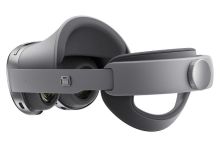 Rear three-quarter view of Samsung Galaxy XR.
 -
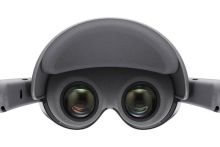 Samsung Galaxy XR lenses and face cushion.
 -
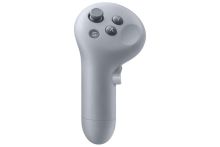 A Samsung Galaxy XR controller.


References
- ↑ 1.0 1.1 "Introducing Galaxy XR: Opening New Worlds". Samsung Mobile Press. 2025-10-22. https://www.samsungmobilepress.com/articles/galaxy-xr-opening-new-worlds. Retrieved 2026-09-17.
- ↑ "Introducing Galaxy XR: Opening New Worlds". Samsung U.S. Newsroom. 2025-10-21. https://news.samsung.com/us/introducing-galaxy-xr-opening-new-worlds/. Retrieved 2026-09-17.
- ↑ 3.0 3.1 3.2 3.3 3.4 "Samsung Android XR Headset Gets Price, Specs and Release Date". Road to VR. October 2025. https://roadtovr.com/samsung-galaxy-xr-headset-price-specs-release-date/. Retrieved June 13, 2026.
- ↑ 4.0 4.1 4.2 4.3 4.4 4.5 4.6 "Samsung Galaxy XR With Android XR Out Now For $1800, Controllers $250". UploadVR. October 21, 2025. https://www.uploadvr.com/samsung-galaxy-xr-google-android-xr-out-now/. Retrieved June 13, 2026.
- ↑ "Samsung Galaxy XR - AI-Powered XR Headset". Samsung US. Samsung Electronics America. https://www.samsung.com/us/xr/galaxy-xr/galaxy-xr/. Retrieved 2026-09-27.
- ↑ 6.0 6.1 "Galaxy XR is Available to Buy Now in the UK". Samsung Newsroom U.K.. 2026-07-10. https://news.samsung.com/uk/galaxy-xr-is-available-to-buy-now-in-the-uk. Retrieved 2026-09-27.
- ↑ 7.0 7.1 "Samsung Galaxy XR review: This Apple Vision Pro challenger is cheaper, lighter and buggier". Tom's Guide. October 2025. https://www.tomsguide.com/computing/augmented-reality/galaxy-xr-review. Retrieved June 14, 2026.
- ↑ "Samsung's Galaxy XR coming to additional markets in 2026". SamMobile. November 5, 2025. https://www.sammobile.com/news/samsung-galaxy-xr-launch-additional-countries-2026/. Retrieved June 14, 2026.
- ↑ Damien Wilde (2026-06-17). "Samsung Galaxy XR pre-orders open in UK, available July 8". 9to5Google. https://9to5google.com/2026/06/17/the-samsung-galaxy-xr-pre-orders-open-in-uk-available-july-8/. Retrieved 2026-09-27.
- ↑ "XR and Smart Glasses Market Statistics Report (2026)". Treeview. 2026. https://treeview.studio/blog/xr-spatial-computing-smart-glasses-market-statistics-report. Retrieved June 14, 2026.
- ↑ "Samsung Galaxy XR launches: a $1,800 headset with 27MP displays that runs all Android apps". GSMArena. October 2025. https://www.gsmarena.com/samsung_galaxy_xr_launches_the_1800_headset_has_27mp_displays_runs_all_android_apps-news-69992.php. Retrieved June 13, 2026.
- ↑ 12.0 12.1 12.2 12.3 "Samsung Galaxy XR: Price, specs, games, controllers, and everything you need to know". Android Central. October 2025. https://www.androidcentral.com/gaming/virtual-reality/samsung-galaxy-xr. Retrieved June 13, 2026.
- ↑ 13.0 13.1 "Introducing Galaxy XR, the first Android XR headset". Google Blog. October 21, 2025. https://blog.google/products-and-platforms/platforms/android/samsung-galaxy-xr/. Retrieved June 14, 2026.
- ↑ 14.0 14.1 "Samsung Galaxy XR: Everything you need to know". Engadget. October 2025. https://www.engadget.com/ar-vr/samsung-galaxy-xr-everything-you-need-to-know-111532664.html. Retrieved June 14, 2026.
- ↑ Shahram Izadi (2025-12-08). "The Android Show: New features for Galaxy XR and a look at future devices". Google Blog. https://blog.google/products-and-platforms/platforms/android/android-show-xr-edition-updates/. Retrieved 2026-09-27.
- ↑ "Connected, Creative, Expanded: Android XR's Next Wave of Innovation Enhances the Galaxy XR Experience". Samsung Global Newsroom. 2025-12-09. https://news.samsung.com/global/connected-creative-expanded-android-xrs-next-wave-of-innovation-enhances-the-galaxy-xr-experience. Retrieved 2026-09-27.
- ↑ 17.0 17.1 "5 new features for Android XR". Google Blog. April 7, 2026. https://blog.google/products-and-platforms/platforms/android/android-xr-immersive-features-update-april-2026/. Retrieved June 14, 2026.
- ↑ "Android XR Got Auto-Spatialization, Window Wall Pinning and Hand Occlusion". UploadVR. May 21, 2026. https://www.uploadvr.com/google-android-xr-2026-update-samsung-galaxy-xr/. Retrieved June 14, 2026.
- ↑ 19.0 19.1 "Android XR Update Adds Deep Enterprise Support, Auto-3D Conversion and More". Road to VR. April 9, 2026. https://www.roadtovr.com/android-xr-update-samsung-galaxy-xr-enterprise/. Retrieved June 14, 2026.
- ↑ "Samsung Galaxy XR Evolves Work in the AI Era With New Enterprise Capabilities and Everyday Features". Samsung Global Newsroom. April 7, 2026. https://news.samsung.com/global/samsung-galaxy-xr-evolves-work-in-the-ai-era-with-new-enterprise-capabilities-and-everyday-features. Retrieved June 14, 2026.
- ↑ "Samsung Galaxy XR review: Paving the way for the future". Android Central. February 26, 2026. https://www.androidcentral.com/gaming/virtual-reality/samsung-galaxy-xr-review. Retrieved June 14, 2026.
- ↑ "Samsung Galaxy XR review: For those who have been waiting". 9to5Google. October 31, 2025. https://9to5google.com/2025/10/31/samsung-galaxy-xr-review/. Retrieved June 14, 2026.