

Pico Neo 2
More actions
| Pico Neo 2 | |
|---|---|
 
| |
| Basic Info | |
| VR/AR | Virtual Reality |
| Type | Head-mounted display |
| Subtype | Standalone VR |
| Platform | Pico OS |
| Creator | Pico Interactive |
| Developer | Pico Interactive |
| Manufacturer | Pico Interactive |
| Announcement Date | March 2019 (development preview); January 2020 (Neo 2 / Eye announcement)[1][2] |
| Release Date | March 2020 introduction reported in Chinese-market coverage; worldwide shipping announced May 27, 2020[3][4] |
| Price | US$699 / US$899 Eye (May 2020 enterprise offer); RMB 4399 base reported in China[4][3] |
| Website | https://www.picoxr.com/ |
| Versions | Pico Neo 2; Pico Neo 2 Eye[2] |
| Requires | No host computer for standalone use; VR-ready PC for PC streaming[4] |
| Predecessor | Pico Neo (December 2017 announcement)[5] |
| Successor | Pico Neo 3 family, including Pico Neo 3 Pro[6] |
| System | |
| Operating System | PUI, Android-based; Japanese specification lists Android 8.x[7] |
| Chipset | Qualcomm Snapdragon 845[7] |
| CPU | Kryo 385, eight cores (chip specification; headset clock rates not established)[8] |
| GPU | Adreno 630 (Snapdragon 845 visual processing subsystem)[8] |
| Storage | |
| Storage | 128 GB; microSDXC expansion up to 256 GB in the Japanese specification[7] |
| Memory | 4 GB RAM (Japanese Neo 2 specification); 6 GB RAM (Neo 2 Eye review)[7][9] |
| SD Card Slot | microSD[10] |
| Display | |
| Display | Single 5.5-inch TFT LCD[7] |
| Resolution | 3840 × 2160 total; 1920 × 2160 per eye[11] |
| Pixel Density | 818 PPI (panel specification)[7] |
| Refresh Rate | 75 Hz[7] |
| Image | |
| Field of View | 101° (advertised; axis unspecified in the cited specification)[7] |
| Horizontal FoV | 86° binocular (2022 camera measurement at mean eye relief)[12] |
| Vertical FoV | 88° (same 2022 camera measurement)[12] |
| Foveated Rendering | Gaze-driven dynamic foveation on Neo 2 Eye with compatible software[2] |
| Optics | |
| Optics | Fresnel lenses[7] |
| Ocularity | Binocular[11] |
| IPD Range | 55-71 mm (software adjustment; fixed lens spacing)[13] |
| Adjustable Diopter | No myopia adjustment; guide allows most standard glasses under 160 mm frame width[10] |
| Passthrough | Camera view outside the safety boundary; monochrome in July 2020 review[7][9] |
| Tracking | |
| Tracking | 6DoF optical inside-out head tracking; electromagnetic/inertial controller tracking[11][13] |
| Tracking Frequency | 240 Hz controller report rate (ELSA specification)[7] |
| Base Stations | None required[7] |
| Eye Tracking | Base Neo 2: absent; Neo 2 Eye: integrated Tobii eye tracker[2] |
| Rotational Tracking | Yes[10] |
| Positional Tracking | Yes[10] |
| Tracking Volume | Room-scale; actual tracking depends on surroundings[10] |
| Play Space | Room-scale or stationary setup, as observed in July 2020[9] |
| Audio | |
| Audio | Integrated stereo speakers in the headband[4][10] |
| Microphone | Two microphones[10] |
| 3.5mm Audio Jack | Yes[14][10] |
| Camera | Two front tracking cameras[13] |
| Connectivity | |
| Connectivity | Wi-Fi 5; Bluetooth; USB-C[7][10] |
| Ports | USB-C; microSD; 3.5 mm audio; separate DC power jack varies by hardware/region[10] |
| Wired Video | Tethered PC streaming reported as a beta in July 2020[9] |
| Wireless Video | Wi-Fi PC VR streaming, historically documented with Streaming Assistant[7][15] |
| WiFi | IEEE 802.11ac, 2×2 MIMO[7] |
| Bluetooth | Bluetooth (guide documents its radio; version not established)[10] |
| Power | Internal non-removable battery; rear-mounted battery pack[10][13] |
| Battery Capacity | 4500 mAh (Neo 2 Japanese specification)[7] |
| Battery Life | Approximately 2.5 hours (ELSA specification; workload dependent)[7] |
| Device | |
| Weight | 670 g total; 340 g excluding strap and rear battery (June 2020 reported Neo 2 specification)[3] |
| Material | PU facial interface advertised at launch[4] |
| Headstrap | Rigid side straps, adjustable top strap and rear fit dial[10] |
| Haptics | Haptic controllers documented in Neo 2 Eye specifications[16] |
| Color | White (Neo 2); dark grey (Neo 2 Eye), CES 2020 versions[13] |
| Sensors | Two front tracking cameras; proximity sensor[13][10] |
| Input | Two rechargeable 6DoF controllers; headset Home, Confirm and Back buttons[10] |
| Compliance | Manufacturer EU conformity declaration and FCC Part 15 Class B statement in the August 2020 guide[10] |
The Pico Neo 2 is a standalone virtual reality head-mounted display developed by Pico Interactive. Pico sold it to enterprises in Western markets and to consumers in China. It combines a Snapdragon 845 processor, a single 3840 × 2160 LCD panel and six-degree-of-freedom head and controller tracking. The base model lacks integrated eye tracking; the separately offered Pico Neo 2 Eye adds Tobii eye-tracking hardware. Pico announced worldwide shipping on May 27, 2020, with US launch prices of $699 and $899 respectively. A June 2020 founder interview reported its introduction in March and a Chinese-market price of RMB 4399.[4][2][11][3]
The headset tracks its position through two front cameras, while its controllers combine electromagnetic tracking with inertial sensing. This lets controller tracking operate without the headset cameras seeing the controllers. It does not make tracking immune to interference or guarantee accuracy throughout an unlimited volume. A rear battery and fit dial form part of the headband. Native applications run on the headset, while a documented PC streaming mode uses a separate VR-ready computer.[13][7]
History and development
Pico was founded in 2015 and announced the original Pico Neo in December 2017. That earlier product used a Snapdragon 835, a 3K display and ultrasonic controllers. The Neo 2 is a later device with a different processor, display and controller system.[5][7]
In March 2019, Qualcomm identified the developing Neo 2 as Pico's proposed implementation of its Boundless XR for PC reference design, then forecast for the second half of 2019. That announcement concerned a reference design with 60 GHz wireless and a claimed motion-to-photon delay below 20 ms. Those figures do not establish the connectivity or measured latency of the later retail Neo 2.[1]
The Neo 2 and Neo 2 Eye production range was announced for CES 2020 in a January 6, 2020 joint announcement from Pico and Tobii. A contemporary CES hands-on described the two variants, their software IPD adjustment and electromagnetic/inertial controllers.[2][13]
| Date | Documented event | Scope |
|---|---|---|
| March 2019 | Qualcomm named Neo 2 as an upcoming Boundless XR device. | Development preview and forecast, rather than shipment confirmation.[1] |
| January 2020 | Pico and Tobii announced Neo 2 and Neo 2 Eye at CES. | Production-range announcement; Eye adds native eye tracking.[2] |
| March 2020 | Neo 2 was introduced, according to a June 2020 founder interview. | KrASIA's Chinese-market coverage reported the base model at RMB 4399; it does not establish a worldwide first-shipment day.[3] |
| April 2, 2020 | ELSA Japan announced its distribution agreement and domestic Neo 2 sales. | Its release scheduled shipments for early April; the announcement alone does not confirm the actual first delivery date.[17] |
| May 27, 2020 | Pico announced worldwide shipping and direct enterprise sales. | US prices were $699 for Neo 2 and $899 for Neo 2 Eye.[4] |
| May 10, 2021 | Pico announced Neo 3 Pro and Neo 3 Pro Eye for Western enterprise markets. | Successor announcement; the release forecast availability in Q3 2021.[6] |
Pico marketed Neo 2 to businesses for training, education, simulation and other enterprise applications. Its May 2020 launch also announced Firefox Reality, including WebXR support, and sales through a dedicated enterprise team. These describe the launch offering, rather than the present availability of each application or service.[4]
Design and fit
The rear-mounted battery counterbalances the front housing. The August 2020 series guide shows rigid side straps that rotate upward, a rear tightening dial, a rear head pad and a removable top strap with three length settings. The facial cushion is removable. The launch announcement advertised a PU facial interface; the guide separately discusses PU and fabric cushions, so care requirements depend on the actual fitted part.[10][4]
The guide states that there is no myopia adjustment. It allows most standard prescription glasses with frames narrower than 160 mm and warns against contact between prescription lenses and the headset lenses. This fit allowance is different from optical diopter adjustment or a guarantee that every frame fits.[10]
Weight figures need a consistent measurement boundary. KrASIA's June 2020 founder interview reports Neo 2 at 340 g without the strap and rear battery, and 670 g for the complete headset. ELSA separately advertised a 340 g body. The June 2020 Cas & Chary review tested Neo 2 Eye and reported 692 g for the whole headset. These are published figures for different assemblies and variants; the sources do not provide a common independent weighing protocol.[3][17][14]
Early reviewers generally liked the rear-battery balance, but their assessments were individual impressions. Scott Hayden's CES demonstration found it better balanced than Quest, while the July 2020 Eye review still reported some front imbalance and pressure near the nose. These observations describe those reviewers' fits and samples.[13][9]
Display and optics
ELSA's base-model specification lists one 5.5-inch TFT LCD with 3840 × 2160 total pixels, an advertised panel density of 818 PPI and a 75 Hz refresh rate. Contemporary reporting describes 1920 × 2160 pixels per eye. The optics are Fresnel lenses. Panel PPI describes the physical screen and is not a measurement of pixels per degree through the optics.[7][11]
The stated interpupillary distance range is 55-71 mm, adjusted in software. The lenses do not move to match the user's IPD. At CES, Hayden reported using the headset at about 63 mm IPD without difficulty, while the later Cas & Chary Eye review reported initial discomfort at around 59 mm and preferred movable lenses. Software adjustment changes the displayed views; it does not physically align the lenses with every user's eyes.[13][14]
The July 2020 Eye reviewer described comparatively clear text and a low apparent screen door effect, but also peripheral chromatic aberration and circular glare around bright elements in dark scenes. This was a review of one Eye sample rather than a comparative optical laboratory measurement of every Neo 2 unit.[9]
Advertised and measured field of view
ELSA's cited specification advertises 101° without identifying an axis. In a 2022 study, Sauer and colleagues measured a Pico Neo 2 with a calibrated 200° fisheye Raspberry Pi camera. They moved the camera relative to the lens and measured eye relief in 21 adults. At the mean eye relief, their table reports a binocular visible field of approximately 86° horizontally by 88° vertically. This is a camera measurement under the study's alignment assumptions, rather than the software's rendered field or a fixed result for every wearer.[12]
The study's mean Neo eye relief was 18.3 mm, with measured values from 14.8 to 23.2 mm. Its procedure used closed-eye measurements without correcting eyelid thickness or eye retraction, and binocular calculations assumed a mirrored right-eye view and correct IPD alignment. Eye position and headset fit therefore matter when comparing the measured values with the advertised 101°. The study's separate six-person comparison with clinical perimetry used Vive Pro Eye and StarVR One, not Neo 2.[12]
Processing and storage
Neo 2 uses the Qualcomm Snapdragon 845 platform. Qualcomm's chip brief identifies eight Kryo 385 CPU cores arranged as four performance cores and four efficiency cores, a 10 nm LPP process, and the Adreno 630 visual processing subsystem. These are platform characteristics; the chip brief's maximum clock or optional wireless capabilities do not establish the settings and installed components of the headset.[8][7]
The Japanese base-model specification lists 4 GB RAM, 128 GB internal storage and a microSDXC slot accepting up to 256 GB of additional storage. The July 2020 Eye review lists 6 GB RAM for that variant, and contemporary launch reporting confirms that the Eye had more RAM than the base version. This is a variant distinction, rather than evidence that every Neo 2 had 6 GB RAM.[7][9][11]
The processor is a later Snapdragon generation than the original Quest's 835. That component comparison alone does not establish a general frame-rate advantage, thermal ceiling or application benchmark: the headset software, rendering workload and display resolution also differ.[7][18]
Tracking and play area
Head tracking and camera view
Two front cameras provide optical inside-out head tracking, allowing translational and rotational movement without installed base stations. The headset uses a safety boundary, and ELSA's documentation describes automatically showing the outside camera view when the user leaves that boundary. The July 2020 Eye review identifies this view as black and white.[13][7][9]
The series guide calls for a well-lit indoor space with at least 2 × 2 m of clear area and cautions about large uniform walls, mirrors, glass and moving imagery. Its boundary system is an aid rather than a guarantee of physical safety. The July 2020 reviewer described stationary and room-scale setup options, with a roughly 3 × 3 m room-scale limit on the tested software. This is a dated observation, not a current maximum for every firmware version.[10][9]
In the CES demonstration, Hayden found head tracking less refined than Quest's and noted the difficult show-floor conditions. The July Eye review reported small drift and visible unevenness during movement. These are observed limitations of those demonstrations and review software; neither report supplies a measured motion-to-photon latency for the retail base model.[13][9]
Electromagnetic controller tracking
The controllers fuse electromagnetic and inertial measurement unit data. Contemporary reporting identifies the design with NDI's Atraxa platform. Their position is not determined by the headset cameras seeing illuminated controller rings. In a July 2020 review, tracking continued near the faceplate and behind the head or back, positions that can occlude a camera-tracked controller.[11][9]
ELSA specifies a controller report rate of 240 Hz and advertises position error within 10 mm inside a 1 m range. These are distributor specifications with a stated distance bound, not an independent tracking test. They are separate from the LCD's 75 Hz refresh rate.[7]
The system can be affected by electromagnetic interference and surrounding metal. In the July Eye review, the virtual controllers also showed small movement when held still and apparent filtering delay during motion. Avoiding optical occlusion therefore does not establish unlimited range, zero latency or the accuracy required by every precision task.[13][9]
Controllers and headset input
The series guide shows distinct left and right controllers. Each has a clickable thumbstick, trigger, grip button, Home button and App/Back button. The left controller has X/Y buttons and the right has A/B buttons. The controllers charge through USB-C and use built-in rechargeable batteries; they are not documented as replaceable-AA devices. The included split charging cable charges the pair from one USB source.[10][9]
The headset itself has Home, Confirm and App/Back controls. Its head-control mode allows selection by moving a head-directed crosshair and pressing the headset buttons when no controller is connected. A proximity sensor supports automatic sleep and wake behavior. These controls allow basic launcher interaction without inferring camera-based hand tracking.[10]
Tobii's Eye-model specifications describe haptic controllers. In their June 2020 review of the Eye unit, Cas & Chary reported that the controllers lacked capacitive finger sensing and found their ergonomics less comfortable than their button layout suggested. Those observations should not be confused with eye tracking or controller positional tracking.[16][14]
Controller measurements in research
Kern and colleagues' 2021 Off-The-Shelf Stylus paper measured consumer XR controllers with a digital caliper and electronic kitchen scale. Their table lists the Pico Neo 2 controller at 135 g including its battery, with 47 mm width, 54 mm height, 150 mm length and 29 mm grip width. They attached an Apple Pencil tip to demonstrate a possible stylus conversion. Their subsequent reference implementation, latency/precision measurements and ten-person usability study used Rift S with Oculus Touch, so those results are not Neo 2 controller benchmarks.[19]
Audio and connectivity
Stereo speakers are built into the sides of the headband. The guide labels a main microphone and a second microphone, an audio jack on the underside, and a separate 3.5 mm DC power jack whose availability varies by hardware version or region. The audio jack and DC jack have different purposes. A June 2020 Eye reviewer also described connecting headphones through the 3.5 mm audio jack or Bluetooth.[10][14]
The USB-C port is described in the guide as supporting USB 3.0 data and OTG expansion, while the supplied data cable is labeled USB-C 2.0. An accessory cable's rating should not be substituted for the port specification. The guide also identifies the microSD slot and documents Bluetooth and Wi-Fi radio frequency ranges.[10]
The base-model ELSA specification identifies IEEE 802.11ac Wi-Fi with 2×2 MIMO. Its planned-launch description uses a 5 GHz connection for PC streaming. The earlier Qualcomm reference design's 60 GHz capability does not establish that the retail product has that radio.[7][17][1]
Battery and maintenance
The Japanese Neo 2 specification lists a 4500 mAh battery, quick-charge support and approximately 2.5 hours of continuous operation. The series guide describes the headset battery as internal and non-removable, with replacement by Pico or an authorized service provider. This describes the documented construction and service route rather than a promise of present spare-part availability.[7][10]
Reported runtime varies with the workload and tested variant. Cas & Chary obtained about two hours while recording on their Neo 2 Eye; the July Eye reviewer reported less than two hours during use that included intensive recording or streaming. These Eye review results do not replace the base-model specification with a universal battery duration or establish a precise charge time.[14][9]
The August 2020 guide gives different cleaning instructions for the lenses and for the facial cushion/housing. It warns against alcohol or abrasive cleaners on lenses, describes replaceable cushions and straps, and cautions that repeated disinfection can degrade the cushion. Its instructions discourage hand or machine washing of the cushion. The relevant guide and fitted material matter when interpreting general claims about a washable or hygienic interface.[10]
The August 2020 guide includes Pico's declaration of conformity with EU Directive 2014/53/EU and a statement that the equipment complies with FCC Part 15 limits for a Class B digital device. These are manufacturer statements in the series guide, with regional regulatory information available on the headset.[10]
Enterprise software and PC streaming
Native applications and kiosk deployment
Native applications run on Pico's Android-based PUI environment. The historical ELSA specification lists Android Oreo 8.x, while later kiosk documentation gives explicit PUI version requirements. The same operating-system base does not make software packaged for another vendor's headset automatically compatible: the June 2020 Eye review notes that Quest content requires developer porting.[7][20][14]
That June review found the native content selection limited for a Western consumer, while the July Eye reviewer described preinstalled enterprise demonstrations and a store with relatively few games. These are dated reviews of the launch-period offering. The July review also documented a quick menu opened by double-pressing Home, with screen recording that could include microphone audio and the outside camera view.[14][9]
Pico's Neo 2 kiosk guide documents replacing the normal launcher with an organization's application. Its configuration-file method requires PUI 4.1.0 or later; its Business Settings method requires Business Settings 1.1.3 or later and an up-to-date PUI for that historical procedure. It also describes a separate Android property method from Neo 2 PUI 3.12.0. These are version-specific deployment options, rather than one universal menu path for all software releases.[20]
The PICO Unity XR SDK 2.2.0 PXR_Enterprise reference explicitly includes Neo2 and Neo2 Eye in its device scope. Its documented interfaces include reading device information and battery state, controlling brightness and volume, setting Wi-Fi configuration and managing applications. Some installation or device-control functions are protected and need additional manifest permissions that make an application ineligible for the PICO Store. This versioned API documentation is not evidence that every later SDK or business-management product supports Neo 2.[21]
PC VR streaming
PC streaming separates the PC's content rendering from the standalone headset's tracking and display work. The Neo 2 launch advertised streaming from a VR-ready PC, and ELSA's support instructions identify SteamVR, a compatible application and Pico VR Streaming Assistant as the required software. ELSA's base-model specification identifies Windows 10 for its documented PC mode. These sources describe a historical setup, not a test against current graphics drivers and SteamVR releases.[4][15][7]
In July 2020, the Eye reviewer tested wireless streaming with two routers and reported delay, stutter and compression artifacts, particularly when reducing quality to maintain smoothness. The same review described tethered streaming as a beta offering. The tethered-streaming report does not establish a native DisplayPort input. The guide documents a USB data connection, while the later Neo 3 Pro announcement explicitly introduced DisplayPort connectors and direct-mode PC rendering for that successor.[9][10][6]
Sales and software-support status
The ELSA Japan product page states that sales of its Neo 2 business model have ended, without supplying an end-of-sale date. This is a Japanese distributor's sales status, rather than a worldwide inventory statement.[7]
Tobii's Ocumen FAQ lists Neo 2 Eye as supported in its 2021 releases but removes support beginning with 2023.1.0. Tobii attributes that decision to Pico no longer officially supporting the Eye headset, and says an older configuration may still work without Tobii support. This is a specific vendor's SDK-support statement about Neo 2 Eye, rather than a dated global support policy for every base Neo 2 component.[22]
ManageXR's own supported-device page places Neo 2 and Neo 2 Eye in Long Term Support from June 1, 2026. In that third-party device-management service, critical hotfixes continue but new features do not. ManageXR's maintenance policy is separate from manufacturer firmware support and does not guarantee a PC streaming configuration.[23]
Neo 2 Eye variant
The separately sold Pico Neo 2 Eye integrates Tobii eye tracking and was $200 above the base model at the May 2020 US launch. Contemporary reporting says it was about 20 g heavier and had more RAM. Tobii's specification lists binocular gaze output at 90 Hz, a five-point calibration, an ideal eye-rotation accuracy of 0.5°, and gaze angles of 25° left/right/down and 20° up. These are Eye-model supplier specifications, not measurements for the base model or a guarantee of calibrated accuracy for every wearer.[4][11][16]
Tobii Spotlight Technology supports gaze-driven foveated rendering in compatible Eye applications. The January 2020 announcement reported up to 66% higher frame rates and up to 72% lower shading loads, with a footnote identifying tests in Tobii's Spot's Apartment demo on Neo 2 Eye. Those maxima describe that vendor benchmark, not all applications, a comparison against the base Neo 2, or a measured battery-life increase of the same percentage.[2]
Tobii also described gaze selection, avatar eye behavior, voice commands and analytical uses in training or customer research. The available output and software integration determine what an application can do; the base Neo 2 does not gain eye tracking from a software setting.[16]
Comparison with the original Quest
The following comparison concerns the original 2019 Oculus Quest and Neo 2's 2020 launch configuration. It combines published device specifications rather than measured application performance. The price rows compare a Western enterprise Neo 2 offer with Quest's consumer starting price, so they are not equivalent business-service packages.[4][18]
| Feature | Pico Neo 2 | Original Oculus Quest |
|---|---|---|
| Announced starting US price | $699 for the base model in May 2020.[4] | $399 consumer starting price.[18] |
| Processor | Qualcomm Snapdragon 845[7] | Qualcomm Snapdragon 835[18] |
| Display | One 3840 × 2160 LCD, 1920 × 2160 per eye.[11] | Two 1600 × 1440 OLED screens, as listed in the May 2019 developer post.[18] |
| Refresh rate | 75 Hz.[7] | 72 Hz.[18] |
| RAM | 4 GB in the Japanese base-model specification; Eye review lists 6 GB.[7][9] | 4 GB.[18] |
| Controller tracking | Electromagnetic/inertial sensing.[11] | Headset cameras track Touch controllers, with position estimation when out of camera view.[18] |
| IPD adjustment | Software-only; fixed lens positions.[13] | Contemporary Neo 2 reviewer preferred Quest's physical adjustment.[14] |
| Reported complete weight | 670 g in a June 2020 founder-interview report.[3] | 571 g in the same comparison; a common independent weighing procedure is not provided.[3] |
| Eye tracking | Integrated only in the separate Neo 2 Eye variant.[2] | Eye tracking is not specified in the cited May 2019 hardware description.[18] |
Technical specifications summary
| Specification | Documented value and qualification |
|---|---|
| Display | Single 5.5-inch TFT LCD; 3840 × 2160 total; 1920 × 2160 per eye.[7][11] |
| Refresh rate | 75 Hz.[7] |
| Field of view | Advertised 101° with unspecified axis. The 2022 camera study reports about 86° × 88° visible binocular FoV at mean eye relief.[7][12] |
| Processor | Snapdragon 845, with Kryo 385 CPU and Adreno 630 visual processing subsystem.[7][8] |
| Memory and storage | Base Neo 2: 4 GB RAM and 128 GB storage; microSDXC expansion up to 256 GB in ELSA's Japanese specification.[7] |
| Tracking | Two-camera optical inside-out head tracking and electromagnetic/inertial controllers; no external base stations.[7][13][11] |
| Eye tracking | Absent on base Neo 2; integrated Tobii tracker on Neo 2 Eye.[2] |
| Battery | 4500 mAh and approximately 2.5 hours in the Japanese base-model specification; runtime depends on usage.[7] |
| Weight | Neo 2: 670 g complete, or 340 g without strap/rear battery in a June 2020 report. A separate Eye review reports 692 g complete; these are different variants and reporting methods.[3][14] |
| Launch price | US$699 base model / US$899 Eye, May 2020 enterprise offer.[4] |
See Also
Gallery
-
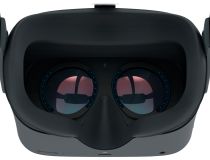 Pico Neo 2 Eye lenses and eye-tracking illuminators.

References
- ↑ 1.0 1.1 1.2 1.3 Hugo Swart (2019-03). "GDC 2019: Boundless XR for PC, cutting the cord". Qualcomm. https://www.qualcomm.com/news/onq/2019/03/gdc-2019-boundless-xr-pc-cutting-cord. Retrieved 2026-10-14.
- ↑ 2.00 2.01 2.02 2.03 2.04 2.05 2.06 2.07 2.08 2.09 "Pico Interactive and Tobii Announce World’s First Commercial Standalone VR Headset with Native Eye Tracking". Tobii. 2020-01-06. https://mb.cision.com/Main/2874/3001606/1170406.pdf. Retrieved 2026-10-14.
- ↑ 3.0 3.1 3.2 3.3 3.4 3.5 3.6 3.7 3.8 Wency Chen (2020-06-28). "This company wants to challenge Facebook's Oculus: Inside China's Startups". KrASIA. https://kr-asia.com/this-company-wants-to-challenge-facebooks-oculus-inside-chinas-startups. Retrieved 2026-10-14.
- ↑ 4.00 4.01 4.02 4.03 4.04 4.05 4.06 4.07 4.08 4.09 4.10 4.11 4.12 4.13 "Pico Interactive Announces Availability of its Neo 2 and Neo 2 Eye Virtual Reality Headsets". Pico Interactive / GlobeNewswire. 2020-05-27. https://www.globenewswire.com/news-release/2020/05/27/2039415/0/en/pico-interactive-announces-availability-of-its-neo-2-and-neo-2-eye-virtual-reality-headsets.html. Retrieved 2026-10-14.
- ↑ 5.0 5.1 "Pico Technology Co., Ltd. (Pico) Announces Details On Pico Neo, Features First Mass-Produced VR Standalone With 6DoF Head Tracking And 6DoF Controller Tracking". Pico / PR Newswire. 2017-12-26. https://www.prnewswire.com/news-releases/pico-technology-co-ltd-pico-announces-details-on-pico-neo-features-first-mass-produced-vr-standalone-with-6dof-head-tracking-and-6dof-controller-tracking-300575285.html. Retrieved 2026-10-14.
- ↑ 6.0 6.1 6.2 "Pico Interactive Announces Next Gen Enterprise 6DoF Headsets: Neo 3 Pro and Neo 3 Pro Eye". Pico Interactive / GlobeNewswire. 2021-05-10. https://www.globenewswire.com/news-release/2021/05/10/2226373/0/en/Pico-Interactive-Announces-Next-Gen-Enterprise-6DoF-Headsets-Neo-3-Pro-and-Neo-3-Pro-Eye.html. Retrieved 2026-10-14.
- ↑ 7.00 7.01 7.02 7.03 7.04 7.05 7.06 7.07 7.08 7.09 7.10 7.11 7.12 7.13 7.14 7.15 7.16 7.17 7.18 7.19 7.20 7.21 7.22 7.23 7.24 7.25 7.26 7.27 7.28 7.29 7.30 7.31 7.32 7.33 7.34 7.35 7.36 7.37 7.38 7.39 "Pico Neo 2(ビジネス版)". ELSA Japan. https://www.elsa-jp.co.jp/products/detail/pico-neo-2business/. Retrieved 2026-10-14.
- ↑ 8.0 8.1 8.2 8.3 "Qualcomm Snapdragon 845 Mobile Platform". Qualcomm. https://www.qualcomm.com/media/documents/files/snapdragon-845-mobile-platform-product-brief.pdf. Retrieved 2026-10-14.
- ↑ 9.00 9.01 9.02 9.03 9.04 9.05 9.06 9.07 9.08 9.09 9.10 9.11 9.12 9.13 9.14 9.15 9.16 Skarredghost (2020-07-19). "Pico Neo 2 Eye review: the new best enterprise standalone headset". The Ghost Howls. https://skarredghost.com/2020/07/19/pico-neo-2-eye-review-2/. Retrieved 2026-10-14.
- ↑ 10.00 10.01 10.02 10.03 10.04 10.05 10.06 10.07 10.08 10.09 10.10 10.11 10.12 10.13 10.14 10.15 10.16 10.17 10.18 10.19 10.20 10.21 10.22 10.23 10.24 10.25 10.26 "User Guide for Pico Neo 2 Series". Pico Technology. 2020-08. https://www.elsa-jp.co.jp/wp-content/uploads/2020/10/Pico_Neo_2_User_Guide.pdf. Retrieved 2026-10-14.
- ↑ 11.00 11.01 11.02 11.03 11.04 11.05 11.06 11.07 11.08 11.09 11.10 11.11 Scott Hayden (2020-05-27). "Enterprise-focused Standalone Pico Neo 2 & Eye-tracking Version Now Available". Road to VR. https://roadtovr.com/pico-neo-2-eye-price-release-date/. Retrieved 2026-10-14.
- ↑ 12.0 12.1 12.2 12.3 12.4 Yannick Sauer; Alexandra Sipatchin; Siegfried Wahl; Miguel García García (2022-01-15). "Assessment of consumer VR-headsets’ objective and subjective field of view (FoV) and its feasibility for visual field testing". Virtual Reality 26: 1089-1101. doi:10.1007/s10055-021-00619-x. Retrieved 2026-10-14.
- ↑ 13.00 13.01 13.02 13.03 13.04 13.05 13.06 13.07 13.08 13.09 13.10 13.11 13.12 13.13 13.14 Scott Hayden (2020-01-10). "Hands-on: Pico Neo 2 Could Be the Next Best Standalone After Quest". Road to VR. https://www.roadtovr.com/ces-2020-hands-on-pico-neo-2-eye-standalone/. Retrieved 2026-10-14.
- ↑ 14.00 14.01 14.02 14.03 14.04 14.05 14.06 14.07 14.08 14.09 "Cas & Chary Present: Pico Neo 2 Overview and Impressions". Road to VR. 2020-06-15. https://roadtovr.com/pico-neo-2-review-overview-cas-chary-present/. Retrieved 2026-10-14.
- ↑ 15.0 15.1 "【HMD20-023】Pico Neo 2 とパソコンを無線で接続する方法を教えてください". ELSA Japan. https://www.elsa-jp.co.jp/support/qa/detail/hmd20-023/. Retrieved 2026-10-14.
- ↑ 16.0 16.1 16.2 16.3 "All-in-one standalone VR Headset: Pico Neo 2 Eye". Tobii. https://www.tobii.com/products/integration/xr-headsets/device-integrations/pico-neo-2-eye. Retrieved 2026-10-14.
- ↑ 17.0 17.1 17.2 "エルザ ジャパン、Pico社との代理店契約締結およびPico Neo 2の販売開始を発表". ELSA Japan. 2020-04-02. https://www.elsa-jp.co.jp/newsrelease/release-pico-neo-2/. Retrieved 2026-10-14.
- ↑ 18.0 18.1 18.2 18.3 18.4 18.5 18.6 18.7 18.8 Chris Pruett (2019-05-02). "Down The Rabbit Hole w/ Oculus Quest: The Hardware + Software". Oculus Developer Blog. https://developers.meta.com/vr/blog/down-the-rabbit-hole-w-oculus-quest-the-hardware-software/. Retrieved 2026-10-14.
- ↑ Florian Kern; Peter Kullmann; Elisabeth Ganal; Kristof Korwisi; René Stingl; Florian Niebling; Marc Erich Latoschik (2021-06-04). "Off-The-Shelf Stylus: Using XR Devices for Handwriting and Sketching on Physically Aligned Virtual Surfaces". Frontiers in Virtual Reality 2: 684498. doi:10.3389/frvir.2021.684498. Retrieved 2026-10-14.
- ↑ 20.0 20.1 "2 Replacing Launcher on Neo 2/G2 4K". PicoVR Kiosk Mode documentation. https://static.appstore.picovr.com/docs/KioskMode/chapter_two.html. Retrieved 2026-10-14.
- ↑ "PICO Unity XR SDK 2.2.0: PXR_Enterprise Class Reference". PICO Developer. https://pdocor.pico-interactive.com/reference/unity/xr/2.2.0/class_unity_1_1_x_r_1_1_p_x_r_1_1_p_x_r___enterprise.html. Retrieved 2026-10-14.
- ↑ "Tobii Ocumen - FAQ". Tobii XR Devzone. https://developer.tobii.com/xr/ocumen/faq/. Retrieved 2026-10-14.
- ↑ "Supported Devices". ManageXR Help Center. https://help.managexr.com/en/articles/5281345-supported-devices. Retrieved 2026-10-14.