

Pico Goblin
More actions
| Pico Goblin | |
|---|---|

| |
| Basic Info | |
| VR/AR | Virtual Reality |
| Type | Head-mounted display |
| Subtype | Standalone VR |
| Platform | Android |
| Creator | Pico Interactive |
| Announcement Date | 10 May 2017 (China, Pico open day in Beijing); US pre-orders opened 13 June 2017 |
| Release Date | 2017 (China); week of 22 August 2017 (North America); following week (Europe) |
| Price | 1,899 yuan (China, standard edition); US$269 (US$249 pre-order), £269 (UK), €299 (Europe); 2017 launch prices |
| Website | https://www.picoxr.com |
| Versions | Standard edition (Snapdragon 820, 3 GB RAM, 16 GB storage); Enhanced edition in China (Snapdragon 821, 4 GB RAM, 32 GB storage) |
| Successor | Pico G2 |
| System | |
| Operating System | Pico UI 2.0, based on a customized version of Android |
| Chipset | Qualcomm Snapdragon 820 (Enhanced edition: Snapdragon 821) |
| CPU | Qualcomm Kryo, quad-core, 2.2 GHz, 64-bit, 14 nm |
| GPU | Adreno 530 |
| Storage | |
| Storage | 16 GB eMMC 5.1 + microSD up to 128 GB |
| Memory | 3 GB LPDDR4-1866 |
| Display | |
| Display | 5.5" fast-switch TFT LCD |
| Resolution | 2560 x 1440 (1280 x 1440 per eye) |
| Refresh Rate | 70 Hz |
| Image | |
| Field of View | 92° |
| Optics | |
| Optics | Aspheric lenses |
| IPD Range | 54-71 mm (adaptive; no IPD adjustment) |
| Adjustable Diopter | Yes, focus dial for myopia from 0 to 800 degrees |
| Tracking | |
| Tracking | 3DoF |
| Audio | |
| Audio | Built-in speaker; 3.5mm headphone jack |
| Microphone | Built-in |
| Connectivity | |
| Connectivity | 802.11n Wi-Fi (2.4 GHz), Bluetooth 4.2 |
| Ports | Micro-USB, 3.5mm headphone jack, microSD card slot |
| Battery Capacity | 3,500 mAh |
| Battery Life | Up to 3 hours (Pico); 2.5 hours in Pico's US pre-order specifications |
| Device | |
| Weight | 440 g without head strap (Pico) |
| Material | Polycarbonate body with metal-silver UV paint, fabric front panel |
| Sensors | 9-axis motion sensor (1000 Hz), proximity sensor |
| Input | 3DoF controller |
The Pico Goblin (Chinese: 小怪兽, "little monster") was a standalone virtual reality head-mounted display developed by Pico Interactive. Released in 2017, the Goblin was one of the first untethered standalone VR headsets available to consumers, requiring no smartphone or PC connection. It used a Qualcomm Snapdragon 820 processor and a 2.5K resolution display.[1] In the United States it cost $269, or $249 for pre-orders.[2]
Pico unveiled the Goblin at an open day at its Beijing headquarters on 10 May 2017 and sold it in China for 1,899 yuan.[3] US pre-orders opened in June 2017, and Pico said the headset reached North American customers in the week of 22 August 2017, with European shipments following a week later.[4][5] The headset tracks head rotation only (3DoF) and comes with a single 3DoF motion controller. Pico followed it in 2018 with the Pico G2, announced as the second Goblin headset (Goblin 2).[6]
History and development
Pico Interactive
Pico Interactive is a VR technology company that became known for its standalone VR headsets. According to a June 2017 press release from Pico Technology Japan, the Beijing company Pico Technology Co., Ltd. (北京小鸟看看科技有限公司) was founded on 27 April 2015.[7] Before the Goblin, Pico sold the Pico Neo DK, a 2016 device that placed the Snapdragon 820 chip, memory and storage in a handheld unit rather than in the headset itself.[8] The Goblin represented an early entry in the standalone VR market, predating the Oculus Go and offering an alternative to phone-based VR solutions. VR Tuoluo, in a 2022 history of the company, described it as Pico's first consumer G-series all-in-one headset and noted that it came out a full year before the Oculus Go.[8]
Announcement in China
The Goblin was one of four products Pico launched at its 10 May 2017 event in Beijing, which 0-tech reported was titled "From a moment of curiosity to a way of life" (从一次好奇,到一种生活).[9] VR Tuoluo lists the other products as the Pico U, the Pico Neo DKS and the Pico Tracking kit.[8] Pico's Chinese product page offered the Goblin in two versions: a standard edition with a Snapdragon 820, 3 GB of RAM and 16 GB of storage, and an enhanced edition (增强版) with a 2.4 GHz Snapdragon 821, 4 GB of RAM and 32 GB of storage.[10] Sspai, whose reviewer bought a retail unit in June 2017, also gave the price as 1,899 yuan.[11]
Western launch
Pocket-lint reported on 10 May 2017 that Pico planned to show the Goblin at E3 2017 in Los Angeles.[12] On 13 June 2017 Pico opened US pre-orders at $249, a $20 discount on the $269 list price, and said it would ship in six to eight weeks. Pre-order customers were promised five premium VR games.[4][13] Paul Viglienzone, Pico's vice president of business development, said in the announcement that the price was meant to address "the high cost of entry" for VR.[4] In Japan, Pico Technology Japan showed the Goblin for the first time at the 3rd Advanced Content Technology Expo at Tokyo Big Sight from 28 to 30 June 2017.[7]
Early standalone headset
The Pico Goblin was among the first standalone VR headsets sold to consumers that needed neither a tethered PC nor an inserted smartphone.[4] Tom's Hardware wrote in June 2017 that Pico had beaten larger companies such as Google, HTC and Oculus to market; at that point their standalone headsets had only been announced or shown as prototypes and reference designs.[4] When the Goblin went on sale in August 2017, UploadVR wrote that Pico had "beaten it to the punch", referring to Google's planned standalone headsets.[14]
Pico announced on 22 August 2017 that the Goblin was available for $269 in the US, £269 in the UK and €299 in Europe. It was sold through Pico's Goblin website and at Pico's booth at Gamescom in Germany from 22 to 26 August 2017.[5][14]
| Market | Price | Source |
|---|---|---|
| China (standard edition) | 1,899 yuan | 93913, Sspai[3][11] |
| United States | $269 ($249 pre-order) | Pico, Liliputing[5][2] |
| United Kingdom | £269 | Pico[5] |
| Europe | €299 | Pico[5] |
Design and hardware
Processor
The Goblin was powered by the Qualcomm Snapdragon 820. Pico's specification page lists a quad-core 64-bit Kryo CPU at 2.2 GHz made on a 14 nm process, an Adreno 530 GPU and a Hexagon 680 DSP that handles motion-sensor data.[15]
- CPU: Quad-core Kryo
- GPU: Adreno 530
- RAM: 3 GB LPDDR4-1866[16]
- Storage: 16 GB eMMC 5.1 with microSD expansion up to 128 GB[17]
Display system
The headset uses a single 5.5-inch TFT LCD panel with a resolution of 2560 x 1440, split between the two eyes, running at 70 Hz.[2][16][3] Pico marketed the display as "2.5K" in its August 2017 press release; its English product page described a custom-made fast-switch panel with "down to 20ms" latency.[5][18] Before launch Pocket-lint described two 70 Hz displays, one per eye, but Pico's specification page and other reports list a single 5.5-inch panel.[12][15]
- Panel: 5.5-inch TFT LCD
- Resolution: 2560 x 1440 (2.5K)
- Per eye: 1280 x 1440
- Refresh rate: 70 Hz
In its review, UploadVR said the display "provided a much clearer image than I was expecting for the price of the headset". It also noticed slight blur when moving the controller quickly, which it put down to the 70 Hz refresh rate.[1]
Optics and field of view
Pico lists a 92-degree field of view for the Goblin.[15] The Chinese industry site 93913 described this as a horizontal field of view in its launch report; Android Headlines gave 90 degrees.[3][13] 0-tech reported that the headset uses aspheric lenses.[9]
A focus dial on top of the headset adjusts the lenses for nearsighted users. Pico's specification page gives a myopia correction range of 0 to 800 degrees, with automatic adaptation to a difference of up to 200 degrees between the two eyes, and an adaptive interpupillary distance range of 54 to 71 mm.[15][10] There is no IPD adjustment, and 0-tech found that glasses fit inside the headset only with difficulty.[9] UploadVR compared the focus dial to the one on the Samsung Gear VR.[1]
Form factor
Pico gives the weight as 440 g, not including the head strap.[15] UploadVR wrote that "the whole thing weighs 500 grams", a little more than the 470 g it gave for the Oculus Rift and HTC Vive, and 0-tech measured 506 g with the strap.[1][9]
- Weight: 440 grams without the strap (Pico)
- Design: Fully portable, no cables required
- Straps: Adjustable velcro straps for easy fit
The body is made of polycarbonate with a metal-silver UV-painted finish and a fabric-covered front panel. It uses a T-shaped head strap and a removable face pad.[15][10][9] UploadVR said the velcro straps wrap around the sides and top of the head and are easily adjustable.[1] The headset has power, home, confirm and volume buttons, and a proximity sensor between the lenses that turns the screen on when the headset is worn.[15][9]
Tracking
The Pico Goblin utilized 3 degrees of freedom (3DoF) tracking for head movement, detecting rotation but not positional movement in space. Pico lists a 9-axis motion sensor with a 1000 Hz sample rate.[15] UploadVR called the lack of positional tracking "one major omission" and said it might hinder the Goblin in the long run.[1]
Controller
The included 3DoF controller featured:[15]
- Touchpad: Clickable for selection
- Buttons: Back/App button, Home/Power button, volume adjustment
- Sensors: 9-axis attitude sensor for high-precision hand movement tracking
- Power: Two AAA batteries
- Connectivity: Bluetooth 4.0 (BLE)
- Design: Lightweight, remote-like
Holding the home button recenters the view, and the controller lets users point at menu items instead of steering with head movement.[9][3] UploadVR described it as "a super-light remote-like device with two buttons and a clickable touchpad".[1]
Battery
- Capacity: 3,500 mAh[15]
- Runtime: Up to 3 hours of continuous gaming and media playback according to Pico's specification page; Pico's US pre-order specifications quoted 2.5 hours[15][2]
- Type: Integrated rechargeable lithium-ion, charged over Micro-USB[10]
In UploadVR's test the battery lasted about two hours, and recharging took about as long. UploadVR also noted that the headset did not generate excessive heat.[1] 0-tech saw the charge fall from 88% to 65% over an hour of use.[9]
Audio
Software
Operating system
The Goblin ran a customized version of Android, optimized for VR experiences.[1] Its interface was Pico UI 2.0, which Pico presented alongside the Goblin in May 2017.[3] Before launch Pocket-lint reported that the Goblin would run Android 7.0 Nougat, but Chinese reviews of retail units in mid-2017 found an Android 6.0 base.[12][11][9] Pico's Chinese specification page lists Simplified Chinese and US English as the supported system languages and says the system can run 2D Android games and apps.[10] The Goblin did not use Google's Daydream or Oculus' Gear VR platform; it had its own store.[14][1]
Content library
Pico said more than 50 games and apps would be available at or shortly after launch.[5] Five titles were released first or exclusively on the Goblin: Attack of the Bugs, Abyssus and Elven Snowdown as new games, with Wands and Starship Disco as featured titles. Pico also offered the VeeR VR video app and Pico Fly Screen, which streams video from a PC over Wi-Fi.[5] The US pre-order bundle included five premium games, and Liliputing reported that the headset came with a couple of preloaded games.[13][2] UploadVR counted 51 apps in the store at the time of its review and named Wands, Affected: The Manor and Abyssus among the better ones, while also noting low-effort roller coaster and simple experiences.[1]
In China, the store also offered 2D mobile games. Sspai played Honor of Kings and Street Basketball on its unit with a bundled Xinyou gamepad and recorded about 30 fps in Honor of Kings.[11] 0-tech counted a little over 30 games on the headset in July 2017, not all of them VR games, and reported that Pico's US team planned to bring more than 40 Daydream and Gear VR games to the platform from mid-July 2017.[9] Pico's Chinese product page later said it had added more than 100 new VR games for the Goblin during 2017.[19]
Connectivity
Reception
UploadVR's Jamie Feltham concluded that "For $249 the Pico Goblin is a truly impressive piece of VR hardware that has its share of issues". He found it comfortable and "better designed than Google's Daydream View", but said some parts felt cheap, the nose bridge was uncomfortable, and much of the store was made up of simple experiences such as roller coasters. He recommended it mainly for people without a VR-ready phone, PC or console.[1]
In China, 0-tech called the Goblin the first shot in a price war in the standalone headset market, since it cost under 2,000 yuan. Its reviewer wore the headset for hours without discomfort and felt no motion sickness despite the 70 Hz refresh rate, but noted light leaking in at the nose, a menu that followed head movement instead of staying in place, a controller that stopped working in developer mode and the browser, and an oversensitive gyroscope that needed frequent recentering.[9] Sspai found that a mobile game with many controls, such as Honor of Kings, was very hard to play on a gamepad without seeing it, while Street Basketball felt natural.[11]
Tom's Hardware compared the Goblin's price with a Samsung Galaxy S7, which used the same chip and screen resolution and cost about $600 plus $99 for a Gear VR headset.[4]
Successors
Pico announced the Pico G2, its second Goblin headset, in 2018 together with a Series A funding round. Road to VR reported that it had a higher-resolution display and lower weight than its "2017-era forerunner", and TechCrunch described it as "an updated version of the Pico Goblin" built on Qualcomm's Snapdragon 835.[6][20] Like the Goblin, the G2 used 3DoF tracking.[6] Pico's 6DoF line began with the Pico Neo, released in December 2017, which VR Tuoluo describes as the first mass-produced 6DoF all-in-one VR headset.[8]
Specifications
| Specification | Details |
|---|---|
| Processor | Qualcomm Snapdragon 820 (Snapdragon 821 in the Chinese enhanced edition) |
| GPU | Adreno 530 |
| RAM | 3 GB LPDDR4 (4 GB in the enhanced edition) |
| Storage | 16 GB + microSD up to 128 GB (32 GB in the enhanced edition) |
| Display | 5.5" TFT LCD |
| Resolution | 2560 x 1440 |
| Refresh Rate | 70 Hz |
| Field of View | 92° |
| IPD | 54-71 mm (adaptive) |
| Myopia adjustment | 0-800 degrees |
| Tracking | 3DoF (headset), 3DoF (controller) |
| Battery | 3,500 mAh (up to 3 hours, per Pico) |
| Weight | 440 g without strap (per Pico) |
| Audio | Integrated speaker, microphone, 3.5mm jack |
| Connectivity | 802.11n Wi-Fi (2.4 GHz), Bluetooth 4.2 |
| Price | $269 (US), 1,899 yuan (China) |
See also
Gallery
-
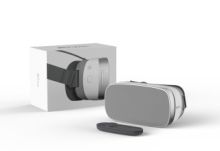 Pico Goblin, its controller and packaging.
-
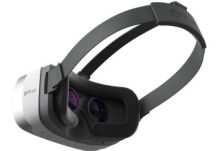 Rear view of Pico Goblin.


References
- ↑ 1.00 1.01 1.02 1.03 1.04 1.05 1.06 1.07 1.08 1.09 1.10 1.11 Jamie Feltham (2017-09-08). "Pico Goblin Review: Standalone VR For $249, Minus Google And Facebook". UploadVR. https://www.uploadvr.com/pico-goblin-review-standalone/. Retrieved 2026-10-13.
- ↑ 2.0 2.1 2.2 2.3 2.4 Brad Linder (2017-06-13). "Pico Goblin VR headset has the guts of a premium smartphone (from last year)". Liliputing. https://liliputing.com/pico-goblin-vr-headset-guts-premium-smartphone-last-year/. Retrieved 2026-10-13.
- ↑ 3.0 3.1 3.2 3.3 3.4 3.5 "Pico Goblin VR一体机,打造"VR小怪兽"!". 93913. 2017-05-12. https://www.93913.com/11942.html. Retrieved 2026-10-13.
- ↑ 4.0 4.1 4.2 4.3 4.4 4.5 Kevin Carbotte (2017-06-13). "Standalone VR On A Budget: Pico's 'Goblin' HMD". Tom's Hardware. https://www.tomshardware.com/news/pico-goblin-standalone-hmd-pre-orders,34780.html. Retrieved 2026-10-13.
- ↑ 5.0 5.1 5.2 5.3 5.4 5.5 5.6 5.7 "Pico Goblin All-in-One VR Headset Arrives for Consumers". Newswire. Pico Interactive. 2017-08-22. https://www.newswire.com/news/pico-goblin-all-in-one-vr-headset-arrives-for-consumers-19882031. Retrieved 2026-10-13.
- ↑ 6.0 6.1 6.2 Scott Hayden (2018-08-01). "Pico Raises $24M Series A Funding, Goblin 2 Standalone Headset Announced". Road to VR. https://www.roadtovr.com/pico-raises-24m-series-funding-round-goblin-2-standalone-headset-announced/. Retrieved 2026-10-13.
- ↑ 7.0 7.1 "Pico Technologyと"しのびや.com"、6月28~30日に行われる「第3回 先端コンテンツ テクノロジー展」でVR HMDの最新モデルを共同出展!". ValuePress. Pico Technology Japan. 2017-06-22. https://www.value-press.com/pressrelease/185183. Retrieved 2026-10-13.
- ↑ 8.0 8.1 8.2 8.3 "VR产业的冒险家,一文回顾PICO八年历程". VR陀螺 (VR Tuoluo). 2022-09-29. https://www.vrtuoluo.cn/532984.html. Retrieved 2026-10-13.
- ↑ 9.00 9.01 9.02 9.03 9.04 9.05 9.06 9.07 9.08 9.09 9.10 Hansen.Z (2017-07-11). "【零镜评测室】VR一体机市场打响价格战,不到2000块的Pico小怪兽一马当先". 零镜网 (0-tech). https://www.0-tech.com/archives/17798. Retrieved 2026-10-13.
- ↑ 10.0 10.1 10.2 10.3 10.4 10.5 "Pico Goblin - 技术参数 - VR一体机". Pico Interactive. Pico. https://web.archive.org/web/20191205154001/https://www.pico-interactive.com/cn/pico_goblin_spec.html. Retrieved 2026-10-13.
- ↑ 11.0 11.1 11.2 11.3 11.4 "试玩Pico小怪兽:能玩王者荣耀的VR一体机". 少数派 (Sspai). 2017-06-28. https://sspai.com/post/39764. Retrieved 2026-10-13.
- ↑ 12.0 12.1 12.2 Rik Henderson (2017-05-10). "Pico Goblin is a wire-free Android VR headset that doesn't need a smartphone". Pocket-lint. https://www.pocket-lint.com/ar-vr/news/140993-pico-goblin-is-a-wire-free-android-vr-headset-that-doesn-t-need-a-smartphone/. Retrieved 2026-10-13.
- ↑ 13.0 13.1 13.2 Mihai Matei (2017-06-13). "Pico Goblin VR Headset Up For Pre-Orders For $249". Android Headlines. https://www.androidheadlines.com/2017/06/pico-goblin-vr-headset-up-for-pre-orders-for-249.html. Retrieved 2026-10-13.
- ↑ 14.0 14.1 14.2 Jamie Feltham (2017-08-23). "Pico's Goblin Standalone VR Headset Is Now Available". UploadVR. https://www.uploadvr.com/picos-goblin-standalone-vr-headset-now-available/. Retrieved 2026-10-13.
- ↑ 15.00 15.01 15.02 15.03 15.04 15.05 15.06 15.07 15.08 15.09 15.10 15.11 15.12 "Specs - Pico Goblin - Affordable all-in-one VR". Pico Interactive. Pico. https://web.archive.org/web/20190720182827/https://www.picovr.com/en/pico_goblin_spec.html. Retrieved 2026-10-13.
- ↑ 16.0 16.1 Lulu Chang (2017-08-25). "The ultra-portable Pico Goblin is the first fully untethered VR headset". Digital Trends. https://www.digitaltrends.com/?p=1233172. Retrieved 2026-10-13.
- ↑ 17.0 17.1 17.2 17.3 Jean-Luc Aufranc (2017-06-15). "$249 Pico Goblin All-in-One VR Headset is Powered by a Qualcomm Snapdragon 820 Processor". CNX Software. https://www.cnx-software.com/2017/06/15/249-pico-goblin-all-in-one-vr-headset-is-powered-by-a-qualcomm-snapdragon-820-processor/. Retrieved 2026-10-13.
- ↑ "Pico Goblin - Affordable all-in-one VR - VR for all, instant, easy and ultra portable". Pico Interactive. Pico. https://web.archive.org/web/20190403210930/https://www.picovr.com/en/pico_goblin.html. Retrieved 2026-10-13.
- ↑ "Pico Goblin - VR一体机 - 虚拟现实小怪兽". Pico Interactive. Pico. https://web.archive.org/web/20191210073423/https://www.pico-interactive.com/cn/pico_goblin.html. Retrieved 2026-10-13.
- ↑ Lucas Matney (2018-08-01). "Pico nabs $24.7M to create VR hardware that challenges Facebook, Google". TechCrunch. https://techcrunch.com/?p=1684255. Retrieved 2026-10-13.