

Viture One Lite
More actions
| VITURE One Lite | |
|---|---|

| |
| Basic Info | |
| VR/AR | Augmented Reality |
| Type | AR Glasses |
| Subtype | Smart Glasses |
| Platform | VITURE |
| Developer | VITURE |
| Manufacturer | VITURE |
| Announcement Date | 1 January 2024 |
| Release Date | Early 2024 |
| Price | US$349 (launch price, VITURE US store) |
| Website | https://web.archive.org/web/20250427015741/https://www.viture.com/product/viture-one-lite-xr-glasses |
| Predecessor | Viture One |
| Display | |
| Display | 2x Micro-OLED (one per eye); 1,800 nits brightness; 50,000:1 contrast ratio; 129% sRGB |
| Resolution | 1920 x 1080 per eye (Full HD) |
| Refresh Rate | 60 Hz |
| Image | |
| Field of View | 43° |
| Optics | |
| Optics | Birdbath |
| Ocularity | Binocular |
| IPD Range | 57.5-69.5 mm |
| Adjustable Diopter | Yes, 0.00D to -5.00D (myopia) |
| Tracking | |
| Tracking | 3DoF head tracking (built-in IMU, used by supported apps) |
| Eye Tracking | No |
| Hand Tracking | No |
| Audio | |
| Audio | HARMAN AudioEFX speakers |
| Connectivity | |
| Connectivity | USB-C (DisplayPort Alt Mode) |
| Power | No built-in battery |
| Device | |
| Dimensions | 163.0 x 47.7 x 53.7 mm (folded) |
| Weight | 76 g |
| Color | Jet Black, Marshmallow (white) |
| Sensors | IMU, wear detection |
The VITURE One Lite is a pair of consumer augmented reality smart glasses (marketed as "XR glasses") made by VITURE. Announced on 1 January 2024 and sold at launch for US$349, it is a lower-cost version of the Viture One: it keeps the One's micro-OLED displays, myopia adjustment and HARMAN audio, but replaces the One's magnetic connector with a standard USB-C port and uses non-dimmable outer lenses in place of the One's electrochromic film, with a Lens Shade attachment included instead.[1][2][3]
The glasses are tethered display glasses with no battery or processor of their own. Connected over USB-C to a phone, laptop, tablet or handheld game console that outputs video, they show the source device's screen as a virtual display that VITURE describes as a 120-inch Full HD screen. Each eye has a 1920 x 1080 micro-OLED panel, with a 43° field of view and 55 pixels per degree, according to VITURE.[3] SlashGear reviewed the One Lite in April 2024 and gave it 8 out of 10.[4]
History and development
VITURE developed the One Lite as an entry-level option for consumers who wanted XR glasses without the price of the original VITURE One. The main differences from the original One are the removal of electrochromic dimming, the switch to a standard USB-C connection and a lower price, while the display and audio system stay the same.[4][1][3] The original VITURE One, first shipped to its Kickstarter backers on the last day of 2022, had been named one of TIME's Best Inventions of 2022. VITURE attributed that recognition to the One's patented features and singled out its tint-changing electrochromic film, the feature the One Lite drops, as the most important of them.[5][6]
Announcement and launch
VITURE announced the One Lite on 1 January 2024 and called it its "most affordable XR glasses to date".[1] In its 2023 year-in-review post, the company said the new model was "nearly $100 less" than its full-featured glasses, that it was available for pre-order, and that it would start shipping in January 2024. The same post said one of its most popular Kickstarter colors was returning for a limited time; VITURE's 2024 review identified it as the limited-edition Marshmallow colorway.[5][1] VITURE later wrote that the One Lite "arrived alongside an adapter" that lets its Neckband accessory connect to any USB-C display, including external monitors and other makers' glasses.[1]
On 7 February 2024 MacTech reported that the glasses were shipping from VITURE's website at US$349, US$100 less than the VITURE One.[2] MIXED reported the same price on 10 February 2024 and noted that it was almost US$100 below the Xreal Air 2 and one tenth of the price of the Apple Vision Pro.[7] At launch, VITURE promoted native support for Apple's spatial video format: clips recorded on an iPhone could be played in 3D in its SpaceWalker app without conversion, and VITURE said the glasses worked with any iPhone model through an adapter.[2][7]
Pricing after launch
VITURE's US store still listed the One Lite at US$349 in December 2024, when a Black Friday discount code took US$60 off, and again in April 2025.[3][8] In the United States the glasses were also sold through Best Buy, where VITURE began an online-only retail partnership in autumn 2024.[9][1]
Design and hardware
Display
The VITURE One Lite has one micro-OLED panel per eye. VITURE lists these display specifications:[3][10]
- Dual Micro-OLED displays
- 1920 x 1080 resolution per eye (Full HD)
- 55 PPD pixel density
- 120-inch virtual screen equivalent
- 1,800 nits peak brightness
- 50,000:1 contrast ratio
- 129% sRGB color gamut
- 43° field of view
- 7 levels of on-device brightness adjustment
- 60 Hz refresh rate
- Native 2D and 3D display, with binocular fusion
VITURE's support documentation states that refresh-rate selection (120, 90 or 60 Hz) is available on the VITURE Pro and that the VITURE One supports only 60 Hz; its specification comparison also lists 60 Hz for the One Lite.[10] SlashGear described the 1,800-nit peak brightness as "thrice that of the Xreal Air 2 and the RayNeo Air 2" and wrote that colors "look punchy with ample amount of contrast".[4] It described the optical design as bird bath optics, with micro-OLED projectors sending the image to the eyes through angled prism lenses rather than a flat display placed in front of them.[4]
Because the outer lenses do not dim, the One Lite ships with a clip-on Lens Shade, which VITURE says blocks all ambient light. VITURE gives the lenses' optical transmittance as 23%.[10] VITURE notes that the Lite "can turn the screen on and off" in place of electrochromic dimming;[10] MacTech reported that a single click on the short button turns off the virtual screen.[2]
Build and comfort
- 76 grams weight, according to VITURE (some launch coverage gave just under 78 grams)[10][7]
- Folded dimensions of 163.0 x 47.7 x 53.7 mm; the carrying case measures 186.0 x 76.0 x 76.0 mm and weighs 280 g[3]
- Aluminum casing on the pivotal joints, which SlashGear said aids durability and gives the side profile a two-tone contrast[4]
- Four swappable nose pads (sizes 1 to 4) in the box[3]
- Wear detection and a suggested wearing time of 3-4 hours[3]
- Available in Jet Black and Marshmallow (white)[3][7]
SlashGear called the design "textbook cool, especially the marshmallow (white) version" and said the glasses come in packaging that "rivals top-end fashion brands".[4] The box also contains a 1.2 m USB-C to USB-C cable, the lens shade, a case, an anti-clip hair cover and a cleaning cloth.[3]
Audio
The audio system was developed with HARMAN:
- HARMAN AudioEFX engineered speakers with built-in spatial sound
- Reverse sound field design, which VITURE says reduces noise leakage to 30 decibels at a distance of 20 cm from the speakers
- Built into the temple arms
- No headphones required[10]
In SlashGear's test, a person in the next seat could hear the sound when the volume was set above about 70-80 percent.[4]
Myopia adjustment
Built-in diopter adjustment for nearsighted users:
- Adjustable from 0.00D to -5.00D (500 degrees)
- Rotary knobs above the lenses; no prescription lenses are needed within that range
- Users with stronger prescriptions or astigmatism can attach a magnetic Prescription Lens Frame, which VITURE lists as compatible with the One Lite[3][10]
SlashGear wrote that the knobs let its reviewer stop wearing corrective glasses while using the One Lite.[4]
Head tracking
The glasses contain an inertial measurement unit that supported software can use for 3DoF head tracking, which keeps a virtual screen fixed in space as the wearer turns their head. VITURE's guide says a Steam Deck connected directly to the One Lite can use the glasses' IMU data through the "XR Gaming" plugin for Decky Loader, and that the plugin's 3DoF virtual display mode supports the VITURE Pro, One and One Lite.[10] Testing the SpaceWalker app on Android, SlashGear found that the native 3DoF head tracking "works well" at keeping the interface anchored, but was not as good as on dedicated VR headsets, since small head movements, even while typing, moved the virtual window. It also found that on an iPhone, head tracking and window pinning needed a separately sold adapter or the more expensive iPhone bundle.[4]
Connectivity
Compatible with USB-C devices that output video, such as devices supporting DisplayPort Alt Mode:[10]
- Smartphones: iPhone 15 and later directly; earlier iPhones through VITURE's HDMI XR Adapter and Apple's Lightning Digital AV Adapter; Android phones with DP Alt Mode[10]
- Gaming handhelds: Steam Deck, ROG Ally,[10] Legion Go
- Computers: MacBook, Windows laptops, iPad[10][4]
- Consoles: Nintendo Switch (with adapter, such as VITURE's Mobile Dock)[10]
The One Lite has no internal processing or battery and relies on the connected device for content and power.[3] VITURE's optional Neckband adds Wi-Fi, 128 GB of storage, power and Android-based streaming apps, and Bluetooth game controllers can connect to it.[7]
Software and features
VITURE's free SpaceWalker app runs on iOS, Android, macOS and Windows and adds features such as a multi-screen workspace, 3D and VR video playback and Apple spatial video playback on iPhone.[3][2] After a pilot program in early 2024, VITURE released SpaceWalker for Android and macOS, followed later by a Windows version.[1] When SlashGear tested the One Lite in early 2024, the macOS app supported up to three floating screens, SpaceWalker was not yet available for Windows, and on an M1 iPad Pro the glasses triggered Stage Manager in extended display mode. The reviewer used a third-party tool, ARMoni, for multiple screens on Windows.[4]
Comparison with VITURE One and VITURE Pro
| Feature | VITURE One Lite | Viture One | Viture Pro |
|---|---|---|---|
| Launch price (US) | US$349[2] | US$549, later discounted to US$439[4] | |
| Connector | USB-C[1] | Magnetic connector[1] | Magnetic connector[10] |
| Electrochromic dimming | No (lens shade included)[1] | Yes[6] | Yes[10] |
| Display | 1920 x 1080 per eye, 55 PPD | 1920 x 1080 per eye, 55 PPD | 1920 x 1080 per eye, 49 PPD |
| Field of view | 43° | 43° | 46° |
| Refresh rate | 60 Hz | 60 Hz | 120, 90 or 60 Hz |
| Brightness | 1,800 nits | 1,800 nits | 4,000 nits |
| Contrast ratio | 50,000:1 | 50,000:1 | 100,000:1 |
| IPD | 57.5-69.5 mm | 57.5-69.5 mm | 56.5-70.5 mm |
| Myopia adjustment | 0.0D to -5.0D | 0.0D to -5.0D | 0.0D to -5.0D |
| Optical transmittance | 23% | 3-40% | 0.5-40% |
| Weight | 76 g | 78 g | 77 g |
| 3DoF tracking | Yes (via supported apps)[4] | Yes (beta)[10] | Yes (beta)[10] |
| Colors | Jet Black, Marshmallow[3] | Jet Black, Glossy Indigo, Matte Indigo, Marshmallow[6] |
Display, field of view, refresh rate, brightness, contrast, IPD, myopia, transmittance and weight figures are from VITURE's specification comparison.[10]
Reception
SlashGear's Nadeem Sarwar gave the One Lite 8 out of 10 in April 2024, using a review unit supplied by VITURE. He praised the design, the diopter knobs that removed the need for prescription inserts, the bright and sharp display, balanced sound, and the SpaceWalker app on mobile and macOS, including its support for spatial video and 3D playback. His criticisms were the lack of a Windows SpaceWalker app at the time, a right temple that "gets hot pretty fast", iPhone features that required an extra adapter, limited window management in the macOS app, and "a certain degree of edge fuzziness" plus "a bit of shimmer effect" during head movement, although he found the edge fuzziness "significantly lower compared to rivals". He also noted that the refresh rate is capped at 60 Hz. He concluded, "I would wholeheartedly recommend it over any other option in the price bracket."[4]
A 2025 Cybernews overview of VITURE's glasses called the One Lite "a solid, entry-level option". Summarizing comments from users of VITURE glasses in general, it noted that the temples can feel warm in longer sessions, that power consumption means a power bank or dock is often needed, and that some devices require extra adapters.[11]
See also
Gallery
-
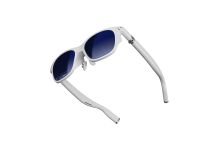 White VITURE One Lite.

References
- ↑ 1.00 1.01 1.02 1.03 1.04 1.05 1.06 1.07 1.08 1.09 "2024 In Review: VITURE's Greatest Year Yet". VITURE Blog. VITURE Inc.. https://www.viture.com/en-US/blog/2024-in-review-vitures-greatest-year-yet. Retrieved 2026-10-13.
- ↑ 2.0 2.1 2.2 2.3 2.4 2.5 Dennis Sellers (2024-02-07). "VITURE One Lite XR Glasses Are Now Shipping and Compatible with Apple Spatial Video". MacTech. https://www.mactech.com/2024/02/07/viture-one-lite-xr-glasses-are-now-shipping-and-compatible-with-apple-spatial-video/amp/. Retrieved 2026-10-13.
- ↑ 3.00 3.01 3.02 3.03 3.04 3.05 3.06 3.07 3.08 3.09 3.10 3.11 3.12 3.13 "VITURE One Lite XR Glasses". VITURE. VITURE Inc.. 2024-12-03. https://web.archive.org/web/20241203045133/https://www.viture.com/product/viture-one-lite-xr-glasses. Retrieved 2026-10-13.
- ↑ 4.00 4.01 4.02 4.03 4.04 4.05 4.06 4.07 4.08 4.09 4.10 4.11 4.12 4.13 Nadeem Sarwar (2024-04-02). "Viture One Lite Review: Immersive AX/AR Glasses For A Nearsighted Future". SlashGear. https://www.slashgear.com/1553677/viture-one-lite-review-ax-glasses-with-sight-adjustment-immersion/. Retrieved 2026-10-13.
- ↑ 5.0 5.1 "Retrospective: 2023 In Review". VITURE Blog. VITURE Inc.. https://www.viture.com/en-US/blog/retrospective-2023-in-review. Retrieved 2026-10-13.
- ↑ 6.0 6.1 6.2 "The Innovations That Won VITURE One A Spot On TIME Best Inventions Of 2022". VITURE Blog. VITURE Inc.. https://www.viture.com/en-US/blog/the-innovations-that-won-viture-one-a-spot-on-time-best-inventions-of-2022. Retrieved 2026-10-13.
- ↑ 7.0 7.1 7.2 7.3 7.4 Josef Erl (2024-02-10). "Viture One Lite: Affordable AR glasses support Apple's Spatial Videos". MIXED. https://mixed-news.com/en/viture-one-lite-affordable-ar-glasses-support-apples-spatial-videos/. Retrieved 2026-10-13.
- ↑ "VITURE One Lite XR Glasses". VITURE. VITURE Inc.. 2025-04-27. https://web.archive.org/web/20250427015741/https://www.viture.com/product/viture-one-lite-xr-glasses. Retrieved 2026-10-13.
- ↑ "Viture One Lite XR Glasses". Best Buy. https://www.bestbuy.com/site/viture-one-lite-xr-glasses-120-fhd-display-60hz-harman-sound-for-iphone-15-16-android-steam-gaming-consoles-switch-mac-pc-black/6607565.p. Retrieved 2026-10-13.
- ↑ 10.00 10.01 10.02 10.03 10.04 10.05 10.06 10.07 10.08 10.09 10.10 10.11 10.12 10.13 10.14 10.15 10.16 10.17 "Pro & One Series XR Glasses". VITURE Academy. VITURE Inc.. https://www.viture.com/en-US/academy/xr-glasses/pro-one-series. Retrieved 2026-10-13.
- ↑ "My honest review for VITURE Smart Glasses in 2025". Cybernews. 2025-02-26. https://web.archive.org/web/20251105204351/https://cybernews.com/vr-ar/viture-glasses-review/. Retrieved 2026-10-13.