

Magic Leap 2
More actions
| Magic Leap 2 | |
|---|---|

| |
| Basic Info | |
| VR/AR | Augmented Reality |
| Type | Optical head-mounted display |
| Subtype | Standalone AR |
| Developer | Magic Leap Inc. |
| Manufacturer | Magic Leap Inc. |
| Announcement Date | 11 October 2021 (name and 2022 launch announced) |
| Release Date | 30 September 2022 |
| Price | At launch (US MSRP): Base US$3,299; Developer Pro US$4,099; Enterprise US$4,999. No longer sold by Magic Leap (direct sales ended 31 March 2026) |
| Website | https://www.magicleap.com |
| Versions | Base, Developer Pro and Enterprise editions (2022 to January 2025); Magic Leap 2 and Magic Leap 2 MedTech Edition (offered from 31 January 2025) |
| Requires | Nothing |
| Predecessor | Magic Leap 1 |
| Successor | None |
| System | |
| Operating System | Magic Leap OS, based on the Android Open Source Project (Android 10, API level 29); latest version 1.12.1 |
| CPU | AMD 7nm Zen 2 x86-64, 4 cores / 8 threads, max CPU frequency 2.4 GHz, 512 kB L2 per core and 4 MB total L3 cache |
| GPU | AMD RDNA 2 @ 1.1 GHz, 1 shader array, 4 WGP (8 CU), 2 RB+, 1 MB L2 cache |
| HPU | 14-core custom Computer Vision and Image Processing (CVIP) block |
| Storage | |
| Storage | 256 GB NVMe (2-lane) |
| Memory | 16 GB LPDDR5 (128-bit, 5500) |
| Display | |
| Display | Liquid crystal on silicon (LCoS) projectors with waveguide eyepieces; Dynamic Dimming |
| Peak Brightness | 2,000 nits (manufacturer figure) |
| Resolution | 1440 x 1760 per eye, 24 bits per pixel |
| Refresh Rate | 120 Hz |
| Image | |
| Field of View | Up to 70 degrees diagonal (44.6 degrees horizontal x 53.6 degrees vertical) |
| Horizontal FoV | 44.6 degrees |
| Vertical FoV | 53.6 degrees |
| Optics | |
| Optics | Diffractive waveguide eyepieces, one waveguide per color, single focal plane |
| Tracking | |
| Tracking | Inside-out, 6DOF headpose |
| Eye Tracking | Yes, 4 eye cameras (capable of 60 Hz) |
| Hand Tracking | Yes, 60 Hz, skeleton with 25 key points |
| Tracking Volume | Content range 37 cm by default (adjustable to 25 cm minimum) to infinity |
| Audio | |
| Audio | Spatial audio, 2 on-device speakers |
| Microphone | 4 on-device microphones |
| Camera | 12.6 MP autofocus RGB camera (4206 x 3120); 3 x 1 MP world-sensing cameras; time-of-flight depth sensor (544 x 480) |
| Connectivity | |
| Connectivity | Wi-Fi 6, Bluetooth 5.0, USB-C |
| Ports | USB-C (on Compute Pack) |
| WiFi | Wi-Fi 6 |
| Bluetooth | 5.0 |
| Power | Battery in Compute Pack |
| Battery Life | Up to 3.5 hours (manufacturer figure) |
| Charge Time | 110 minutes to 90 percent, 180 minutes to 100 percent |
| Device | |
| Weight | 260 g (headset); 420 g (Compute Pack, without cable); 140 g (controller) |
| Sensors | Eye-tracking cameras, depth sensor, ambient light sensor, 4 IMUs (2 in headset, 1 in controller, 1 in Compute Pack), magnetometers, altimeters |
| Input | Optically tracked 6DoF controller, hand tracking, eye tracking, voice control, Bluetooth keyboard and virtual keyboard |
| Compliance | ANSI/CAN/UL 8400, IEC 60601-1, EN 62368, IEC 62471, IEC 60825, FCC, ISED, CE |
| Cable Length | Headset permanently tethered to the Compute Pack by a 4 mm cable |
The Magic Leap 2 is an enterprise augmented reality headset developed and manufactured by Magic Leap Inc. It is an optical see-through headset that projects images through transparent waveguide lenses, with its processor and battery in a separate Compute Pack connected to the headset by a cable.[1] Magic Leap launched it on 30 September 2022 as the successor to the Magic Leap 1, at a starting price of US$3,299 for the Base edition.[2][3]
The headset is no longer sold. Magic Leap ended direct sales on 31 March 2026 and allowed authorized resellers to deliver units to end customers until 31 December 2026.[4] As of October 2026, Magic Leap's support site states that support and warranty for existing devices continue through 31 December 2027.[5] In July 2026 the company announced that it was moving away from building its own devices to supply waveguides and device integration services to other makers of AI display glasses, and it has not announced a successor headset.[6]
The Magic Leap 2 was designed for professional and industrial use rather than for consumers.[7] In its launch announcement Magic Leap advertised a field of view of up to 70 degrees diagonal, a headset 20 percent lighter and 50 percent smaller in volume than the Magic Leap 1, and Dynamic Dimming, which darkens the lenses so that virtual content stays visible in bright rooms.[2] It runs Magic Leap OS, an operating system built on the Android Open Source Project.[8]
Announcement and release
Background
The Magic Leap 2 was developed after the commercial difficulties of the original headset, which shipped in 2018 and which Bloomberg described in 2024 as a flop.[9] In May 2020 founder Rony Abovitz told staff that the company would bring in a new chief executive to commercialize "our focused plan for spatial computing in enterprise".[10] Peggy Johnson, a former Microsoft executive, was named chief executive on 7 July 2020 and started on 1 August 2020.[11]
Announcement and early details
On 11 October 2021 Magic Leap announced that it had raised US$500 million from existing investors and that it would roll out the Magic Leap 2 in 2022. TechCrunch reported that the company had by then shifted to a focus "wholly on enterprise audiences".[7] Further details came at SPIE's AR/VR/MR conference in January 2022, where Kevin Curtis, Magic Leap's vice president of optical engineering, said the headset weighed 248 grams, had double the field of view of the 50-degree Magic Leap 1, and had a Compute Pack with two to three times the CPU and GPU performance of the first device. Road to VR reported that the dimming layer could change transmission from 22 percent to 0.3 percent, refresh at 120 Hz, and that the display was rated from 20 to 2,000 nits.[12] The production headset is listed at 260 grams.[1]
Pricing and launch
On 12 July 2022 Magic Leap announced the prices of three editions and a general availability date of 30 September 2022. Road to VR noted that the Base edition undercut Microsoft HoloLens 2 by US$200.[3] From 15 July to 29 September 2022 the company sold a Developer Pro Early Access edition in the United States through its partner Insight for US$3,299 (excluding taxes and freight), with pre-release software and a free upgrade to Developer Pro at general availability; deliveries were expected to begin in August 2022.[13]
At general availability on 30 September 2022 the headset went on sale in the United States, Canada, the United Kingdom, 15 European countries (Austria, Belgium, Denmark, Finland, France, Germany, Ireland, Italy, the Netherlands, Norway, Poland, Portugal, Spain, Sweden and Switzerland) and Saudi Arabia, with Japan and Singapore expected before the end of 2022. The launch followed an Early Access Program whose participants included Cisco, SentiAR, NeuroSync, Heru, Taqtile, PTC and Brainlab.[2] Magic Leap's later specification sheet lists regional regulatory compliance in those countries plus Japan and Singapore.[1]
Later history
In 2022 Saudi Arabia's Public Investment Fund put about US$450 million into Magic Leap through convertible preferred stock and debt, and by November 2022 it was entitled to appoint four of the company's eight directors.[14] Ross Rosenberg replaced Peggy Johnson as chief executive on 1 November 2023, as the company described its pivot to enterprise as complete.[15] Bloomberg reported in August 2024 that Magic Leap had recently cut another 75 jobs, eliminated its sales and marketing departments and shifted its focus to licensing its technology.[9]
From 31 January 2025 Magic Leap replaced the three editions with two products, the Magic Leap 2 and the Magic Leap 2 MedTech Edition, and stopped offering paid upgrades or term-based licence extensions.[16] OS 1.12.0, released to Magic Leap Hub on 31 January 2025, unlocked all enterprise features on every Magic Leap 2.[17]
Magic Leap's terms of sale, last revised on 19 February 2026, ended direct sales on 31 March 2026 unless otherwise agreed in writing.[4] On 9 July 2026 the company announced its shift "from building first-party devices to becoming the essential AR ecosystems partner, waveguide supplier, and device integration expert for the technology industry".[6] Road to VR reported that a WARN notice disclosed 193 layoffs at Magic Leap's headquarters in Plantation, Florida, effective 1 October 2026.[18]
Timeline
| Date | Event |
|---|---|
| 11 October 2021 | Magic Leap announces a US$500 million funding round and says the Magic Leap 2 will launch in 2022[7] |
| January 2022 | Optical and hardware details presented at SPIE AR/VR/MR 2022[12] |
| 12 July 2022 | Prices and the 30 September general availability date announced[3] |
| 15 July 2022 | Developer Pro Early Access edition goes on sale in the United States[13] |
| 30 September 2022 | General availability[2] |
| 4 January 2023 | Peggy Johnson announces IEC 60601 certification during AMD's CES 2023 keynote[19] |
| 25 April 2023 | Magic Leap announces OpenXR conformance[20] |
| 20 October 2023 | UL Solutions certifies the headset to ANSI/CAN/UL 8400[21] |
| 31 January 2025 | Editions replaced by Magic Leap 2 and Magic Leap 2 MedTech Edition; OS 1.12.0 unlocks enterprise features on all units[16][17] |
| November 2025 | OS 1.12.1, a security update, is issued in Magic Leap's November 2025 developer release[22] |
| 31 March 2026 | Direct sales end[4] |
| 9 July 2026 | Magic Leap announces its shift away from first-party devices[6] |
| 31 December 2026 | Last date for authorized resellers to deliver units to end customers[4] |
| 31 December 2027 | Support and warranty for existing devices continue through this date[5] |
Editions and pricing
The headset was sold in three editions from launch until January 2025. All three used the same hardware and differed in software access, licensing and warranty.[2][3]
| Edition | Launch price (US MSRP) | Warranty | Main differences |
|---|---|---|---|
| Base | US$3,299 | 1 year | For standalone use by professionals and developers[2][3] |
| Developer Pro | US$4,099 | 1 year | Developer tools, sample projects, enterprise-grade features and monthly early releases; for internal development and testing only, not commercial deployment[2][3] |
| Enterprise | US$4,999 | 2 years | Quarterly software releases manageable through UEM/MDM tools, two years of access to enterprise features and updates, commercial deployment permitted[2][3] |
From 31 January 2025 Magic Leap offered the Magic Leap 2 and the Magic Leap 2 MedTech Edition. MedTech Edition devices include the right to use certain software that Magic Leap calls the "MedTech Features", which are not sold separately.[16] Before OS 1.12.0, the Iris ID login feature required a Developer Pro or Enterprise licence.[23]
The box contains the headset, Compute Pack and controller, two USB-C chargers and cables, a fit kit of extra nose and forehead pads, an overhead strap, a shoulder strap for the Compute Pack, a wrist strap for the controller, a cleaning cloth and a carry case.[24]
Specifications
Values are from Magic Leap's product specification (version 6.2) unless another source is given.
| Component | Specification |
|---|---|
| Display | 1440 x 1760 pixels per eye at 24 bits per pixel; angular resolution 1.875 arcmin per pixel; 120 Hz; sRGB color[1] |
| Field of view | Up to 70 degrees diagonal (44.6 degrees wide x 53.6 degrees high)[1] |
| Brightness | 20 to 2,000 nits (manufacturer figure)[3] |
| Dimming | Dynamic Dimming, 0.3 to 20 percent transmission[1] |
| Content range | 37 cm by default (adjustable to 25 cm minimum) to infinity[1] |
| CPU | AMD 7nm Zen 2 x86-64, 4 cores / 8 threads, max 2.4 GHz, 512 kB L2 per core, 4 MB L3[1] |
| GPU | AMD RDNA 2 at 1.1 GHz, 1 shader array, 4 WGP (8 CU), 2 RB+, 1 MB L2 cache[1] |
| Computer vision | 14-core custom Computer Vision and Image Processing (CVIP) block, not accessible to application developers[1] |
| Memory and storage | 16 GB LPDDR5 5500 (128-bit); 256 GB 2-lane NVMe[1] |
| World cameras | 3 x 1 MP (1016 x 1016), 100 x 100 degree field of view, global shutter, 30 fps nominal[1] |
| Depth sensor | Time-of-flight, 544 x 480, 75 x 70 degree field of view[1] |
| RGB camera | 12.6 MP (4206 x 3120), autofocus, 65 x 51 degree field of view, 30 fps nominal, 60 fps maximum at 3.3 MP[1] |
| Eye tracking | 4 eye cameras, capable of 60 Hz; iris authentication[1] |
| Hand tracking | 60 Hz, skeleton with 25 key points[1] |
| Other sensors | Ambient light sensor (5 to 1,000 lux); 4 IMUs (2 in headset, 1 in controller, 1 in Compute Pack)[1] |
| Audio | 2 speakers, 4 microphones, dedicated HiFi3z DSP core[1] |
| Wireless | Wi-Fi 6; Bluetooth 5.0[1] |
| Headset weight | 260 g[1] |
| Compute Pack | 106 mm diameter, 420 g without cable, active cooling[1] |
| Battery | Up to 3.5 hours of use, 7 hours in sleep mode; 110 minutes to 90 percent and 180 minutes to 100 percent charge[1] |
| Controller | 127 x 62 x 61 mm, 140 g; 2 cameras and 1 IMU; up to 6 hours of battery life[1] |
| Operating environment | 10 to 30 C, 5 to 95 percent relative humidity[1] |
Design and hardware
Physical design
The Magic Leap 2 uses a split design. The headset holds the optics, display components and sensors, while the processor, memory and battery sit in a round Compute Pack that is permanently attached to the back of the headset by a cable. The Compute Pack clips onto a pocket or the included shoulder strap.[1] Engadget wrote that the Compute Pack "can now be worn across your body like a messenger bag".[25] The headset weighs 260 grams and the Compute Pack 420 grams without the cable.[1]
Magic Leap states that the headset was sized to fit 98 percent of women and 99 percent of men in a representative North American sample of 936 men and 799 women, measured by interpupillary distance, forehead breadth, head length and head breadth. It has a flexible torsion band for different head sizes.[1] The headset cannot be worn over glasses; users wear contact lenses or magnetic prescription inserts sold by Frame of Choice (Rochester Optical), with single-vision and progressive lenses covering sphere values from -10.0 to +5.0 and cylinder up to -5.0.[1][26]
Display technology
The Magic Leap 2 uses Liquid crystal on silicon (LCoS) microdisplays with diffractive waveguide eyepieces. Magic Leap says it expanded its own manufacturing to make the diffractive eyepiece with high precision at scale.[27] Display analyst Karl Guttag reported after the SPIE 2022 presentation that Magic Leap had chosen LCoS after it could not meet its requirements with laser scanning, and that the headset uses three waveguides, one for each color, with separate LED illumination for each.[28] This lets digital content be projected into the user's view while the real world stays visible through the lenses.
Each eye sees 1440 x 1760 pixels at 120 Hz. The field of view is up to 70 degrees diagonal, 44.6 degrees wide by 53.6 degrees high, which Magic Leap says is enough to show a full person or a full-scale CAD model.[1] Magic Leap describes this as twice the field of view of the Magic Leap 1 in a smaller form factor, and claims "2x image quality, 2-3x color uniformity, and 100x reduction in front rainbows" compared with its first headset.[27] Specifications published at the July 2022 price announcement list a brightness range of 20 to 2,000 nits and support for 16.8 million colors.[3]
The Magic Leap 1 used two focal planes to reduce vergence-accommodation conflict. For the Magic Leap 2 the company moved to a single focal plane and instead relied on eye tracking, a chosen focal plane and a near clipping distance of 37 cm, plus automatic display calibration to correct binocular misalignment.[27] Road to VR's Ben Lang noted that the headset supports only a single focal plane, unlike the Magic Leap 1.[29]
Dynamic Dimming
Dynamic Dimming is Magic Leap's name for a dimming layer built into the optical stack that reduces how much outside light passes through the lenses. Magic Leap describes the Magic Leap 2 as the first general-purpose AR device with dimmers integrated into the optical stack.[27] The current specification lists a transmission range of 0.3 to 20 percent;[1] the figure reported from the January 2022 SPIE presentation was 22 to 0.3 percent.[12] Engadget wrote that the dimmer module can reduce light across the whole view, or in specific areas, by a factor of 100.[25]
Magic Leap describes two modes:[27]
- Global dimming darkens the whole view automatically so that content stays solid in bright areas.
- Segmented dimming lets applications dim only specific regions of the display, such as the area behind text or video. Magic Leap says this also makes it possible to render black, which an optical see-through display cannot show without a dimmer.
The company says the display alone, at up to 2,000 nits, is not bright enough to compete with direct sunlight, which is why it added dimming rather than a brighter and more power-hungry display.[27] In a hands-on reported by MIXED, The Verge's Adi Robertson found that dimming could almost fully block out the surroundings but that the view was always slightly obscured.[30]
Processing
The Compute Pack contains an AMD 7nm Zen 2 x86-64 processor with 4 cores and 8 threads and an AMD RDNA 2 graphics processor at 1.1 GHz with 8 compute units. Magic Leap's current specification lists a maximum CPU frequency of 2.4 GHz.[1] Engadget identified the chips as "a quad-core AMD Zen 2 processor and RDNA 2 graphics".[25] A separate 14-core Computer Vision and Image Processing block handles sensor processing; it includes six vector computer vision and machine learning cores, two dedicated machine learning cores and six Arm A55 cores, and is not accessible to application developers.[1] Magic Leap's developer documentation gives applications a GPU budget of 12 ms and reserves 2 ms for the system.[8]
At SPIE 2022 Magic Leap said the Compute Pack would have two to three times the CPU and GPU performance of the Magic Leap 1, which used an Nvidia Tegra chipset.[12] The specification sheet claims more than twice the GPU performance per watt of the Magic Leap 1.[1]
Sensors and tracking
The headset uses inside-out tracking for six degrees of freedom (6DOF) and has these sensors:[1]
- Three 1 MP world-sensing cameras with global shutters for sensing the environment.
- A 544 x 480 time-of-flight depth sensor.
- A 12.6 MP autofocus RGB camera for "see-what-I-see" capture and QR and barcode scanning. Magic Leap listed video recording at 4K and 30 fps or 1080p and 60 fps at the 2022 price announcement.[3]
- Four eye-tracking cameras (two per eye), with six LEDs that illuminate the eyes.[27]
- An ambient light sensor and four inertial measurement units, plus magnetometers and altimeters that developers can access with user permission.[1]
Magic Leap uses eye tracking to estimate the center of perspective for rendering and for gaze and blink input. Its support documentation says eye tracking is most accurate within about 15 degrees of the eye's neutral gaze and degrades steadily beyond that, and that looking downward is harder to track because the upper eyelid can block the infrared reflections.[31] Hand tracking runs at 60 Hz and reports a skeleton with 25 key points.[1]
Controller and input
The included controller is tracked optically. It has two cameras and an IMU, uses computer vision for 6DoF tracking, and can be tracked outside the display's field of view, including behind the user. Magic Leap says optical tracking keeps it working near ferrous metal. Inputs are a touchpad, trigger, bumper, a developer-assignable menu button and a Home button, with haptic feedback. Magic Leap rates the controller at 140 g and up to 6 hours of battery life.[1][32] The device supports one controller at a time.[8]
Other input methods are hand tracking, eye tracking, voice control, and Bluetooth or virtual keyboards for text entry.[1]
Audio
Two speakers on the headset provide spatial audio without covering the ears, and four microphones pick up voice. Audio processing runs on a dedicated HiFi3z DSP core.[1] In a 2022 hands-on summarized by MIXED, VentureBeat's Dean Takahashi praised the quality of the 3D audio.[30]
Battery and power
Magic Leap rates the Compute Pack battery at up to 3.5 hours of use, and 7 hours in sleep mode.[1] Its support documentation says heavier compute applications cut battery life to about two hours, and that a fully charged Compute Pack lasts about five hours in standby. It offers battery modes that trade performance for battery life.[32] Charging to 90 percent takes about 110 minutes and to 100 percent about 180 minutes.[1]
Connectivity
The headset supports Wi-Fi 6 with WPA3 Enterprise and EAP-TLS security, Bluetooth 5.0, and USB-C for charging and data. Ethernet works through an Android-compatible USB-C adapter, which is not included.[1]
Software and platform
Operating system
The Magic Leap 2 runs Magic Leap OS, which is built on the Android Open Source Project, Android 10 (API level 29). Applications are standard APKs that can be deployed and debugged with Android tools.[8] This replaced Lumin OS, the in-house platform of the Magic Leap 1. CNET's Scott Stein noted the switch to Android in an early hands-on reported by MIXED.[30]
Devices on OS 1.4.1 or later can download updates directly with an on-device OS Updater; older versions must be updated through Magic Leap Hub.[33] Magic Leap's update path lists OS 1.12.1 as the newest version.[34]
| OS version | Build | Notes |
|---|---|---|
| 1.12.0 | B3E.241219.01 | Available on Magic Leap Hub from 31 January 2025; unlocks all enterprise features on every Magic Leap 2; Developer Mode is off by default after updating[17] |
| 1.12.1 | B3E.251015.01 | Patches a security vulnerability that Unity identified in October 2025 in several Unity-built system apps, including Custom Fit, Eye Calibration, Display Calibration, Spaces, Fundamentals, Model Viewer and Home Menu[22] |
Development environment
Magic Leap lists support for Unity, Unreal Engine, WebXR, Vuforia Engine, OpenXR, and C/C++, Java and Kotlin through the Android SDK. Support for the Mixed Reality Toolkit (MRTK) and OpenXR is intended to make it easier to port applications between the Magic Leap 2 and other headsets such as HoloLens and Meta Quest.[1]
Magic Leap announced on 25 April 2023 that the Magic Leap 2 was conformant with OpenXR. The company said it was vice chair of the OpenXR Working Group and had contributed a vendor extension for its dimming feature.[20]
Magic Leap Hub is a desktop application for Windows and Mac that bundles a device bridge, OS installer, device streaming, performance profilers and debugging tools, SDK access and package management.[1] Magic Leap Hub 3 is the current version and requires Developer Mode on the headset.[35]
Enterprise features
Magic Leap's specification lists these features:[1]
- Support for third-party mobile device management (MDM) software.
- Custom start screens and app launchers, and a locked task (kiosk) mode.
- Single-user mode, and multi-user mode with local accounts and directory-managed users (for example Active Directory).
- Iris ID authentication with iris-based login and single sign-on for applications.
- On-device spatial mapping, and mixed reality capture and streaming.
Magic Leap says the platform can run without connecting to a central server, cloud service or telemetry collection, which it calls cloud autonomy.[20] Iris ID stores an encrypted template on the device and requires the user to set a PIN first.[23]
Built-in applications
Magic Leap may pre-install "Spotlight Experiences", which it describes as ready-to-use apps that show the device's main features. Its supplemental terms name them as Magic Leap Assist and Magic Leap Workshop.[36] Magic Leap's app listing describes Workshop as a way to "Collaborate in AR from anywhere" and Assist as "Remote assistance and guidance in AR".[37] Assist connects a headset user with a remote expert who joins through a web browser, and supports sharing videos, images, PDF files and GLB or glTF 3D models.[38]
Safety and certification
During AMD's keynote at CES 2023 on the evening of 4 January 2023, Peggy Johnson announced that the Magic Leap 2 had received IEC 60601 certification, a series of technical standards for the safety and effectiveness of medical electrical equipment; Magic Leap published the announcement the next day. Magic Leap called it the first AR device to earn the certification and said it allowed use in operating rooms and other clinical settings.[19] Road to VR wrote that the certification gave software developers an inroad toward FDA certification for apps that could be used during surgery, not only for pre-surgical training.[39]
On 20 October 2023 UL Solutions announced that the Magic Leap 2 was the first device certified in the United States and Canada to ANSI/CAN/UL 8400, a safety standard for virtual, augmented and mixed reality equipment.[21] Magic Leap's specification also lists EN 62368, IEC 62471 photobiological safety for IR LEDs, IEC 60825 laser safety, ISO 10993 biocompatibility, FDA 21 CFR 801.410 impact-resistant lens requirements, and FCC, ISED, CE and Japanese radio certifications. It also lists the U.S. Trade Agreements Act under U.S. government contracting.[1]
Applications and use cases
Healthcare
Magic Leap marketed the headset to employers in healthcare, among other sectors.[40] Participants in its launch Early Access Program included SentiAR and Brainlab.[2] SentiAR built software that shows physicians a 3D map of a patient's heart and the real-time position of a catheter; in January 2023 Magic Leap said the product was under FDA review.[19]
Researchers have also used the headset in clinical studies:
- A 2024 feasibility study in Frontiers in Neurology tested Reality DTx, a home-based augmented reality gait and balance exergaming program, with 24 people with Parkinson's disease using either the Magic Leap 2 or HoloLens 2; the research was funded through a Eurostars grant to Vrije Universiteit Amsterdam and Strolll Limited. Session adherence was 104 percent, no falls and four near falls were reported, and usability scores ranged from above average to excellent. HoloLens 2 scored higher on perspicuity and dependability, and the authors did not name an overall winner between the headsets.[41]
- A 2026 study in Healthcare Technology Letters compared HoloLens 2, Magic Leap 2 and Apple Vision Pro for a mixed reality guided needle insertion task, using sacral nerve stimulation as the scenario, with 11 users including nine clinicians. The authors found the Magic Leap 2 the most effective platform, with significantly higher success rates and better usability scores, which they attributed to its ergonomic design and stable tracking.[42]
Industrial and retail
TIME reported in 2022 that Lowe's had begun equipping workers with the Magic Leap 2 to see how a store shelf should look and adjust displays, and that manufacturers were using it to train technicians on factory floors.[40] Magic Leap's launch announcement listed training, communication and remote assistance in clinical settings, industrial environments, defense and retail as target uses.[2]
A 2025 study in Virtual Reality compared the tracking of the Magic Leap 2 and the HTC Vive XR Elite against an eight-camera Vicon motion capture system over a 6 m by 4 m area. The Magic Leap 2 had a mean position error of 68.188 mm against 124.510 mm for the Vive XR Elite, a depth error of 7.3 cm against 19.2 cm at a point 5 m away, and less anchor drift. The authors also reported that the Magic Leap 2 rebooted without warning when it lost tracking, was less comfortable over spectacles, and lost tracking more easily than the Vive XR Elite in their lab.[43] In a paper for the IEEE ISMAR 2025 adjunct proceedings, researchers used a robot arm and an optical tracking system to measure the accuracy and repeatability of the Magic Leap 2 controller's tracking, including motion paths taken from a hydrogen leak inspection use case.[44]
Reception
The Magic Leap 2 was named one of TIME's Best Inventions of 2022 in the entry "Augmented Job Training", which cited its field of view, its smaller size compared with the first headset and its dimming technology.[40]
In its November 2022 review, Engadget called the Magic Leap 2 "the first one that's delivered a genuine sense of presence", praised the 70-degree field of view and the dimmer's ability to add the color black, and said the 260-gram headset felt more like glasses. The review concluded that "it's still unclear if the company's new business plan will pay off," but that "ML2 is still a significant achievement."[25]
Early hands-on reports in March 2022, summarized by MIXED, were broadly positive with reservations:[30]
- The Verge's Adi Robertson called it a significantly improved device but not a revolution. She found the images sharp with easy-to-read text but slightly transparent, and noted the long cable to the Compute Pack and the single focal plane.
- CNET's Scott Stein named the adjustable dimming the most impressive feature. He noted the Compute Pack was still noisy and that regular glasses could not be worn under the headset.
- VentureBeat's Dean Takahashi praised the larger field of view, the dimming, controller tracking, 3D audio and the lower weight, and reported battery life of 3.5 hours compared with two hours on the first headset.
Road to VR's Ben Lang wrote in June 2022 that tracking was "on-par with HoloLens 2" and that the larger field of view began to make the headset feel immersive, but he saw some blurring during head movement and noted that the design blocks much of the wearer's real-world peripheral vision, an area where he said HoloLens 2 kept an advantage.[29]
Support and end of sale
Magic Leap stopped selling the headset directly on 31 March 2026. Authorized resellers could keep delivering units through 31 December 2026; units sold or delivered after that date get no support from Magic Leap Customer Care, and their limited warranty is void.[4] Magic Leap's support site, updated in October 2026, says the Magic Leap 2 is no longer for sale and that support and warranty for existing devices continue through 31 December 2027.[5] Since the July 2026 pivot to supplying waveguides for other companies' glasses, Magic Leap has not announced another headset of its own.[6][18]
Images
-

-

-

-

-

-

-

-

-

-

-
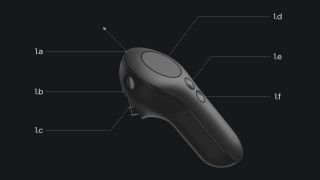 Magic Leap 2 controller button layout.


See also
References
- ↑ 1.00 1.01 1.02 1.03 1.04 1.05 1.06 1.07 1.08 1.09 1.10 1.11 1.12 1.13 1.14 1.15 1.16 1.17 1.18 1.19 1.20 1.21 1.22 1.23 1.24 1.25 1.26 1.27 1.28 1.29 1.30 1.31 1.32 1.33 1.34 1.35 1.36 1.37 1.38 1.39 1.40 1.41 1.42 1.43 1.44 1.45 "Magic Leap 2 Product Specification, Version 6.2". Magic Leap Customer Care. Magic Leap. 2025. https://www.magicleap.care/hc/article_attachments/33734272340493. Retrieved 2026-10-14.
- ↑ 2.00 2.01 2.02 2.03 2.04 2.05 2.06 2.07 2.08 2.09 "Magic Leap 2 Now Available to Customers as the Most Immersive Augmented Reality Headset for Enterprise". Magic Leap. 2022-09-30. https://web.archive.org/web/20220930182413/https://www.magicleap.com/news/magic-leap-2-now-available-to-customers-as-the-most-immersive-augmented-reality-headset-for-enterprise. Retrieved 2026-10-14.
- ↑ 3.00 3.01 3.02 3.03 3.04 3.05 3.06 3.07 3.08 3.09 Ben Lang (2022-07-12). "Magic Leap 2 Starting Price Positioned Slightly Less Than HoloLens 2, Release Date Set for September". Road to VR. https://www.roadtovr.com/magic-leap-2-release-date-price-specs/. Retrieved 2026-10-14.
- ↑ 4.0 4.1 4.2 4.3 4.4 "Terms of Sale for Magic Leap 2". Magic Leap. 2026-02-19. https://www.magicleap.com/legal/terms-of-sale. Retrieved 2026-10-14.
- ↑ 5.0 5.1 5.2 "Magic Leap 2 Availability". Magic Leap Customer Care. Magic Leap. 2026-10-07. https://www.magicleap.care/hc/en-us/articles/42141361534093-Magic-Leap-2-Availability. Retrieved 2026-10-14.
- ↑ 6.0 6.1 6.2 6.3 "Magic Leap Accelerates the Future of AI Display Glasses with Waveguide Expertise". Magic Leap. 2026-07-09. https://www.magicleap.com/newsroom/magic-leap-accelerates-the-future-of-ai-display-glasses-with-waveguide-expertise. Retrieved 2026-10-14.
- ↑ 7.0 7.1 7.2 Lucas Matney (2021-10-11). "Seven years after raising $542M at a $2B valuation, Magic Leap raises $500M at a $2B valuation". TechCrunch. https://techcrunch.com/2021/10/11/seven-years-after-raising-542m-at-a-2b-valuation-magic-leap-raises-500m-at-a-2b-valuation/. Retrieved 2026-10-14.
- ↑ 8.0 8.1 8.2 8.3 "Hardware Overview". Magic Leap Developer Documentation. Magic Leap. https://developer-docs.magicleap.cloud/docs/device/hardware/hardware-specs/. Retrieved 2026-10-14.
- ↑ 9.0 9.1 Mark Bergen (2024-08-06). "Saudi PIF Has Poured $750 Million Into Depleted AR Firm Magic Leap". Bloomberg (via Yahoo Finance). https://finance.yahoo.com/news/saudi-pif-poured-750-million-125838503.html. Retrieved 2026-10-14.
- ↑ Lucas Matney (2020-05-28). "Magic Leap CEO Rony Abovitz is out". TechCrunch. https://techcrunch.com/2020/05/28/magic-leap-ceo-rony-abovitz-is-out/. Retrieved 2026-10-14.
- ↑ Jonathan Shieber (2020-07-07). "Magic Leap has a new chief executive and it's former Microsoft exec Peggy Johnson". TechCrunch. https://techcrunch.com/2020/07/07/magic-leap-has-a-new-chief-executive-and-its-former-microsoft-exec-peggy-johnson/. Retrieved 2026-10-14.
- ↑ 12.0 12.1 12.2 12.3 Ben Lang (2022-01-27). "Tons of New Magic Leap 2 Details Shed Light on Dynamic Dimming & More". Road to VR. https://www.roadtovr.com/magic-leap-2-details-dynamic-dimming-kevin-curtis/. Retrieved 2026-10-14.
- ↑ 13.0 13.1 "Magic Leap 2 Developer Pro - Early Access Edition Now Available". Magic Leap. 2022-07-15. https://web.archive.org/web/20220715221335/https://www.magicleap.com/news/magic-leap-2-developer-pro-early-access-edition-now-available. Retrieved 2026-10-14.
- ↑ "Saudi Arabia Gains Majority Stake in Magic Leap in $450M Deal". Road to VR. 2023-01-03. https://www.roadtovr.com/saudi-arabia-majority-control-magic-leap-450m/. Retrieved 2026-10-14.
- ↑ "Magic Leap Appoints Ross Rosenberg as Chief Executive Officer". Magic Leap. 2023-10-25. https://www.magicleap.com/newsroom/magic-leap-appoints-ross-rosenberg-as-chief-executive-officer. Retrieved 2026-10-14.
- ↑ 16.0 16.1 16.2 "Magic Leap 2 Supplemental Terms and Conditions". Magic Leap. 2025-03-29. https://www.magicleap.com/ml2-sla-supplemental-terms. Retrieved 2026-10-14.
- ↑ 17.0 17.1 17.2 "1.12.0 OS Release Notes". Magic Leap Developer Documentation. Magic Leap. 2025-11-11. https://developer-docs.magicleap.cloud/docs/releases/release-2025-january/os-release-notes/. Retrieved 2026-10-14.
- ↑ 18.0 18.1 Scott Hayden (2026-07-20). "Magic Leap Cuts Nearly 200 Jobs as AR Pioneer Pivots Into Waveguide Supplier". Road to VR. https://roadtovr.com/magic-leap-lay-off-2026-waveguide-pivot/. Retrieved 2026-10-14.
- ↑ 19.0 19.1 19.2 "Magic Leap 2 Is The First AR Device to Receive 60601 Certification For Use In The Operating Room". Magic Leap. 2023-01-05. https://web.archive.org/web/20230105195553/https://www.magicleap.com/news/magic-leap-2-is-the-first-ar-device-to-receive-60601-certification-for-use-in-the-operating-room. Retrieved 2026-10-14.
- ↑ 20.0 20.1 20.2 "Magic Leap 2 now natively supports OpenXR". Magic Leap. 2023-04-25. https://web.archive.org/web/20230425184141/https://www.magicleap.com/news/magic-leap-2-now-natively-supports-openxr%EF%B8%8F. Retrieved 2026-10-14.
- ↑ 21.0 21.1 "UL Solutions Issues First XR Equipment Safety Certification". UL Solutions. 2023-10-20. https://www.ul.com/news/ul-solutions-issues-first-virtual-augmented-and-mixed-reality-technology-equipment-safety. Retrieved 2026-10-14.
- ↑ 22.0 22.1 "1.12.1 OS Release Notes". Magic Leap Developer Documentation. Magic Leap. 2025-11-11. https://developer-docs.magicleap.cloud/docs/releases/release-2025-november/os-release-notes/. Retrieved 2026-10-14.
- ↑ 23.0 23.1 "Magic Leap 2 Devices - Learn More". Magic Leap. 2025-03-29. https://www.magicleap.com/legal/devices-ml2. Retrieved 2026-10-14.
- ↑ "What's in the Box". Magic Leap Customer Care. Magic Leap. 2026-09-30. https://www.magicleap.care/hc/en-us/articles/4416957425805-What-s-in-the-Box. Retrieved 2026-10-14.
- ↑ 25.0 25.1 25.2 25.3 Devindra Hardawar (2022-11-11). "Magic Leap 2 is the best AR headset yet, but will an enterprise focus save the company?". Engadget. https://www.engadget.com/magic-leap-2-ar-headset-tech-dive-143046676.html. Retrieved 2026-10-14.
- ↑ "Prescription Inserts". Magic Leap Customer Care. Magic Leap. 2026-02-09. https://www.magicleap.care/hc/en-us/articles/6050238731021-Prescription-Inserts. Retrieved 2026-10-14.
- ↑ 27.0 27.1 27.2 27.3 27.4 27.5 27.6 "Magic Leap 2 Optics Breakthroughs Empower Enterprise AR". Magic Leap. 2022-08-30. https://web.archive.org/web/20220830142134/https://www.magicleap.com/news/magic-leap-2-optics-breakthroughs-empower-enterprise-ar. Retrieved 2026-10-14.
- ↑ Karl Guttag (2022-01-31). "Magic Leap 2 at SPIE AR/VR/MR 2022". KGOnTech. https://kguttag.com/2022/01/31/magic-leap-2-at-spie-ar-vr-mr-2022/. Retrieved 2026-10-14.
- ↑ 29.0 29.1 Ben Lang (2022-06-10). "Hands-on: Magic Leap 2 Shows Clear Improvements, But HoloLens 2 Retains Some Advantages". Road to VR. https://www.roadtovr.com/magic-leap-2-hands-on-vs-hololens-2-impressions/. Retrieved 2026-10-14.
- ↑ 30.0 30.1 30.2 30.3 Tomislav Bezmalinovic (2022-03-11). "Magic Leap 2: This is what the first reviewers say". MIXED. https://mixed-news.com/en/magic-leap-2-this-is-what-the-first-reviewers-say/. Retrieved 2026-10-14.
- ↑ "Eye Tracking Overview". Magic Leap Customer Care. Magic Leap. 2026-02-09. https://www.magicleap.care/hc/en-us/articles/23630055927437-Eye-Tracking-Overview. Retrieved 2026-10-14.
- ↑ 32.0 32.1 "Battery Life". Magic Leap Customer Care. Magic Leap. 2026-02-09. https://www.magicleap.care/hc/en-us/articles/5972956758413-Battery-Life. Retrieved 2026-10-14.
- ↑ "Updating Your Device". Magic Leap Customer Care. Magic Leap. 2026-02-09. https://www.magicleap.care/hc/en-us/articles/5341445649805-Updating-Your-Device. Retrieved 2026-10-14.
- ↑ "Magic Leap OS Update Path". Magic Leap Customer Care. Magic Leap. 2026-07-20. https://www.magicleap.care/hc/en-us/articles/10731234815757-Magic-Leap-OS-Update-Path. Retrieved 2026-10-14.
- ↑ "Magic Leap Hub 3". Magic Leap Customer Care. Magic Leap. 2026-09-10. https://www.magicleap.care/hc/en-us/articles/28357653624461-Magic-Leap-Hub-3. Retrieved 2026-10-14.
- ↑ "Magic Leap 2 Supplemental Terms and Conditions". Magic Leap. 2025-03-29. https://www.magicleap.com/legal/sla-supplemental-terms-ml2. Retrieved 2026-10-14.
- ↑ "Magic Leap Apps". Magic Leap. https://resources.magicleap.cloud/apps. Retrieved 2026-10-14.
- ↑ "Assist - Troubleshooting and Frequently Asked Questions". Magic Leap Customer Care. Magic Leap. 2026-02-09. https://www.magicleap.care/hc/en-us/articles/12575065432205-Assist-Troubleshooting-and-Frequently-Asked-Questions. Retrieved 2026-10-14.
- ↑ "Magic Leap 2 Gains Certification so Doctors Can Use AR During Surgery". Road to VR. 2023-01-06. https://www.roadtovr.com/magic-leap-2-60601-certification-operating-room/. Retrieved 2026-10-14.
- ↑ 40.0 40.1 40.2 Chad de Guzman (2022-11-10). "Magic Leap 2: The 200 Best Inventions of 2022". TIME. https://time.com/collection/best-inventions-2022/6228828/magic-leap-2/. Retrieved 2026-10-14.
- ↑ L. E. S. Hardeman, D. J. Geerse, E. M. Hoogendoorn, J. Nonnekes, M. Roerdink (2024). "Remotely prescribed, monitored, and tailored home-based gait-and-balance exergaming using augmented reality glasses: a clinical feasibility study in people with Parkinson's disease". Frontiers in Neurology, vol. 15, 1373740. https://doi.org/10.3389/fneur.2024.1373740. Retrieved 2026-10-14.
- ↑ A. Iribar-Zabala, J. Ruiz-Olalla-Del-Fresno, I. Rubio-Pérez, R. Moreta-Martínez, A. Beristain-Iraola, J. Pascau, M. García-Sevilla (2026). "A Comparative Study of MR-Guided Needle Insertion for Surgical Procedures: Insights From HoloLens 2, Magic Leap 2 and Apple Vision Pro". Healthcare Technology Letters, vol. 13, no. 1, e70037. https://doi.org/10.1049/htl2.70037. Retrieved 2026-10-14.
- ↑ S. Singh, Y. Sharma, A. Liaqat, R. S. Kalawsky (2025). "Evaluation of XR device's real-world tracking accuracy and depth perception from an industrial point of view". Virtual Reality, vol. 29, no. 3, 118. https://doi.org/10.1007/s10055-025-01192-3. Retrieved 2026-10-14.
- ↑ C. Masuhr, J. Koch, T. Schüppstuhl (2025-09-05). "Evaluating Magic Leap 2 Tool Tracking for AR Sensor Guidance in Industrial Inspections". arXiv (2025 IEEE ISMAR-Adjunct). https://arxiv.org/abs/2509.05391. Retrieved 2026-10-14.